The CJP Gen-Z Protests began with a grievance that deserved national attention: the alleged leak of the NEET-UG 2026 examination paper and the wider crisis of trust in India’s competitive examination system. For millions of young Indians, competitive examinations are not simply tests. They represent years of preparation, enormous financial sacrifices, and the hope of building a secure future.
The Cockroach Janta Party (CJP) transformed that frustration into a youth-led movement. What began as online satire developed into street demonstrations, national headlines, and demands for accountability from the Union government. The campaign culminated in the resignation of Education Minister Dharmendra Pradhan on July 25, 2026, amid the examination controversy. Reuters reported on the movement’s origins and political impact.
That was a significant political achievement. Yet a movement’s early success does not guarantee that it will preserve its original purpose.
The CJP Gen-Z Protests subsequently became entangled in controversies involving personal attacks, alleged derogatory social media posts about Hindu deities, clashes at demonstrations, and legal action against activists and internet personalities. These developments raised uncomfortable questions about the movement’s direction, the behaviour of some people associated with it, and the increasingly hostile atmosphere surrounding its activities.
A crucial distinction must be made. Criticising the CJP’s conduct does not mean dismissing the grievances that brought young people onto the streets. Nor should allegations against individual participants automatically be attributed to every protester.
The central concern is more specific: when a movement begins with a legitimate demand for accountability, but controversy increasingly competes with that demand, has it sacrificed its larger mission for the immediate rewards of outrage?
The six issues below help explain why the CJP Gen-Z Protests deserve a closer, more critical examination.
Table of Contents
CJP Gen-Z Protests: How a Promising Youth Movement Lost Its Original Mission
The CJP Gen-Z Protests gained momentum because they connected with a genuine public frustration. Students wanted answers about examination security, recruitment fairness, and institutional accountability. The movement’s satirical identity gave that frustration an accessible voice, particularly among younger audiences who were comfortable using social media to organise political action.
But rapid mobilisation creates its own problems. A movement can attract thousands of supporters before developing the organisational discipline needed to manage competing demands, controversial statements, and confrontational situations.
The CJP’s early campaign focused on the NEET paper-leak controversy and the resignation of the education minister. After that resignation, the movement continued to pursue other demands. By October, its activities included protests over alleged irregularities in electoral rolls and demands for the resignation of Chief Election Commissioner Gyanesh Kumar. The Election Commission disputed allegations of bias in the voter-list revision process.
This evolution does not automatically mean that the CJP abandoned its principles. Movements can legitimately broaden their agendas as new concerns emerge. Nevertheless, every expansion brings a strategic question: can the organisation maintain a clear message when its objectives multiply?
The CJP Gen-Z Protests illustrate how easily a movement’s identity can become defined by its most controversial moments rather than by the problems it originally promised to solve. That is the first warning sign.
1. The Original Cause Risked Being Buried Beneath Political Theatre
The examination controversy was the reason the CJP initially captured national attention. NEET-UG 2026 was cancelled following allegations of a paper leak, affecting approximately 22.79 lakh candidates who had appeared for the examination. The resulting crisis triggered demands for accountability, examination reform, and the education minister’s resignation. The Indian Express documented the sequence of events.
These were not abstract political arguments. Every compromised examination can damage confidence in the fairness of a system that determines access to higher education and professional opportunities.
For a student from a modest-income family, preparing for a competitive examination may require years of sacrifice. A leaked paper or an unreliable recruitment process can undermine that effort in a single day. Demanding answers is not extremism; it is a reasonable expectation of public institutions.
The CJP deserves recognition for bringing these concerns into the national conversation. But the movement’s long-term credibility depended on keeping those concerns at the centre of its activities.
How many discussions focused on examination security, independent investigations, transparent recruitment, and compensation for affected candidates? How much public attention was consumed by confrontations, provocative content, and disputes between rival groups?
Those questions matter because political visibility is not the same as institutional reform.
A minister’s resignation can represent accountability at the highest political level. It cannot, by itself, guarantee that examination failures will never happen again. The real work requires stronger testing procedures, credible investigations, and mechanisms that protect candidates from administrative failures.
The CJP Gen-Z Protests risked losing their strategic advantage whenever the surrounding controversy overshadowed those practical objectives.
A movement that forces the government to respond has achieved something important. A movement that also secures lasting reforms achieves something far more valuable.
2. Personal Attacks on the Prime Minister Risked Replacing Policy Criticism
Political leaders must be open to scrutiny. Prime Minister Narendra Modi is no exception. Citizens have every right to question his government’s policies, challenge official explanations, and demand accountability for failures involving education, employment, or public administration.
The same standard applies to opposition leaders, ministers, judges, and other powerful public figures.
The problem begins when political criticism becomes a contest over who can deliver the most humiliating insult. Personal abuse may energise supporters, but it rarely provides a convincing answer to a difficult policy question.
The CJP Gen-Z Protests emerged from a serious grievance. Their strongest arguments concerned examination security, institutional credibility, and the future of young Indians. Those arguments did not require personal attacks on the prime minister to stand on their own merits.
A well-supported criticism of government policy can expose contradictions, demand measurable improvements, and remain relevant long after a political confrontation ends. A purely insulting message often produces the opposite result: the insult becomes the story, while the policy failure disappears from view.
This distinction is particularly important in online activism, where short clips and provocative posts can spread much faster than detailed explanations.
It would be inaccurate to claim that every criticism of Modi was abusive or that every CJP supporter participated in personal attacks. Political satire and sharp criticism are legitimate parts of democratic debate. The issue is whether provocative rhetoric becomes so dominant that it weakens the movement’s ability to communicate its original demands.
The CJP Gen-Z Protests needed a disciplined message capable of attracting people beyond their existing supporters. Turning every political disagreement into a personal battle could instead harden divisions and make meaningful dialogue more difficult.
A government should be challenged on its record, not merely insulted for political entertainment. When a movement forgets that distinction, its rhetoric can become louder while its arguments become weaker.
3. Alleged Insults Against Hindu Deities Created a Serious Religious Controversy
Political disagreement can be intense without becoming an attack on people’s religious identities. That boundary matters in a diverse country where faith remains central to family life, community traditions, and personal identity.
The CJP Gen-Z Protests became associated with a separate controversy involving social media posts allegedly derogatory towards Hindu deities.
In September 2026, a Delhi court sought an action-taken report from police concerning a complaint seeking registration of an FIR against student activist Nishu Azad and her father, Sanjay Azad. The complaint referred to four posts allegedly published between September 2023 and August 2026 and involving Hindu religious figures, including Shiva, Krishna, Durga, and Saraswati. The New Indian Express reported on the proceedings.
The legal distinction is essential. The court’s request for a police report was not a conviction or a final determination that the alleged offences had occurred. The claims must be assessed through the appropriate legal process.
Nevertheless, the controversy raises an important question about political responsibility.
For many Hindus, religious deities are not abstract symbols. They are central to worship, cultural traditions, and personal belief. Content that appears to ridicule or demean those figures can provoke deep offence and intensify existing social tensions.
Freedom of expression protects robust debate about religion, including criticism of religious institutions and ideas. But political movements should recognise the difference between a substantive argument and deliberately humiliating believers.
If the allegations are substantiated, the conduct deserves serious criticism. If they are disputed, evidence and due process must determine the outcome. Neither online outrage nor political loyalty should replace those safeguards.
The CJP Gen-Z Protests should not be judged by attributing every alleged post to every supporter. Yet a movement that seeks public accountability must also be willing to address controversies involving people associated with its activities.
Religious respect should not depend on political affiliation. Hindu beliefs deserve the same consideration for dignity that other religious communities rightly expect.
A movement loses moral credibility when it demands respect for its own grievances but appears indifferent to the legitimate concerns of others. That principle applies regardless of which political camp is involved.
4. Online Toxicity Turned Political Engagement Into a Contest of Outrage
Social media can help young people organise, challenge authority, and draw attention to neglected problems. The CJP Gen-Z Protests demonstrated that a movement does not need a traditional political party’s machinery to generate national attention.
But the internet also rewards behaviour that can undermine serious public debate.
A detailed proposal for improving examination security requires explanation. A provocative meme requires only a few seconds to consume. An inflammatory allegation can spread across thousands of accounts before anyone verifies its accuracy, while a correction may struggle to reach the same audience.
This creates a dangerous incentive. Activists and influencers may discover that controversy attracts more attention than constructive engagement. Supporters may begin treating viral reach as proof of political success, even when the content does little to advance the movement’s objectives.
The result is an online environment in which personal attacks, sweeping accusations, and hostile exchanges can overwhelm meaningful discussion.
The CJP Gen-Z Protests operated in precisely this attention-driven environment. Their satirical origins helped make the movement accessible, but satire can become counterproductive when provocation turns into the principal measure of relevance.
Not every offensive statement is illegal, and not every heated political exchange amounts to harassment. Context matters. However, threats, targeted intimidation, deliberate misinformation, and calls for violence should not be excused simply because they appear within a political campaign.
Movement organisers cannot control every independent account. They can still establish standards for their official platforms, correct false claims, discourage harassment, and publicly reject threats.
The larger problem is not that young people use humour or satire. It is that a political culture built around constant outrage can make thoughtful disagreement seem less valuable than public humiliation.
The CJP Gen-Z Protests had an opportunity to use their online reach to explain examination reform, investigate institutional failures, and encourage informed participation. When controversy becomes the dominant attraction, that opportunity is wasted.
A movement should use social media to strengthen its argument—not allow the platform’s appetite for outrage to dictate what the movement becomes.
5. Violent Confrontations Shifted Attention Away From the Cause
Peaceful protest is a democratic right. Citizens must be able to assemble, express dissent, and demand answers from public authorities. At the same time, violence and intimidation can put protesters, police officers, bystanders, and journalists at risk.
The CJP Gen-Z Protests encountered serious confrontations during demonstrations in Delhi in July 2026. On July 20, protesters attempted to march towards Parliament, and police used force to stop the demonstration. The subsequent dispute over police action became part of the wider controversy surrounding the movement.
The Indian Express reported on the protest and its aftermath. ↓
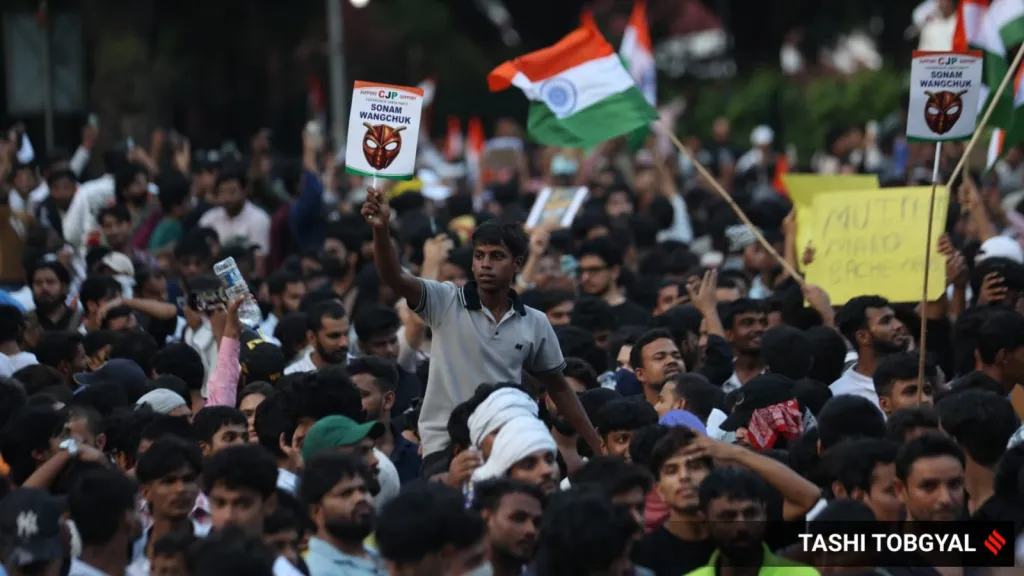
It is important not to reduce that incident to a simplistic claim that all protesters were violent. Nor should allegations of excessive police force be dismissed without investigation. Responsibility must be established from the evidence, including the conduct of individual participants and the actions of the authorities.
Yet the political consequences of confrontations are difficult to ignore.
When a protest becomes associated with injuries, clashes, or allegations of unlawful conduct, public attention shifts. Instead of examining examination security and institutional accountability, audiences begin debating crowd control, police tactics, and responsibility for the confrontation.
That shift can weaken the original campaign.
Organisers should prepare participants for peaceful demonstrations, communicate clear instructions, and discourage actions that place others at risk. Police should facilitate lawful assembly and use force only within the limits of the law.
Neither side should receive a blanket exemption from scrutiny.
The CJP Gen-Z Protests needed to demonstrate that their demands could be pursued firmly without allowing confrontations to become the defining feature of the campaign. Discipline is not a sign of weakness. It helps preserve public support and protects the credibility of the cause.
When a movement allows its public image to become dominated by clashes, it risks handing its opponents an opportunity to avoid the substantive issues altogether.
The strongest protest is not necessarily the one that creates the greatest disruption. It is the one that makes its demands impossible to ignore while preserving the rights and safety of others.
6. Arrests and Legal Controversies Became Another Test of the Movement’s Credibility
The CJP Gen-Z Protests later faced a new wave of legal controversy. In September, self-styled influencer Swatantra Bhardwaj was arrested after a video circulated in which he appeared to boast about assaulting Sanjay Kumar, the father of CJP activist Nishu Azad, during a July demonstration. A Delhi court subsequently granted Bhardwaj interim bail. The allegations and court proceedings must be distinguished from a final finding of guilt. The Indian Express reported on the arrest and interim bail.
This incident illustrated how a protest environment can become dangerous when political hostility spills into alleged physical violence. It also showed why alleged assaults must be investigated regardless of the political identity of the person accused.
The legal developments continued in October.
On October 13, CJP leaders Saurav Das, Ashutosh Ranka, and other party volunteers were detained after entering the Jantar Mantar protest area, which police had recently removed from its list of designated protest venues. Das and Ranka were subsequently remanded to judicial custody. They were released later after signing an undertaking not to call protests at the site until it was legally designated again. Reuters reported on the October detention, while The Indian Express reported on their release.
These were separate incidents involving different allegations and legal issues. The detention of CJP leaders over the protest site must not be confused with the case involving alleged religiously derogatory posts or the assault allegations against Bhardwaj.
An arrest does not establish guilt. Equally, a person’s political cause does not place them above the law.
Authorities must respect the right to peaceful assembly, follow legal procedures, and justify restrictions on protest. Activists must comply with lawful requirements and pursue remedies through appropriate legal channels when they challenge official decisions.
The CJP Gen-Z Protests therefore face a test that extends beyond their original political demands: can the movement defend democratic freedoms while maintaining discipline and accepting scrutiny of its own conduct?
The answer matters because a movement’s credibility depends on the standards it applies to itself as well as to the institutions it challenges.
Legal accountability must never become a tool for suppressing peaceful dissent. But democratic activism cannot treat every legal restriction as illegitimate simply because it obstructs a preferred demonstration.
The proper standard is consistent: protect peaceful protest, investigate alleged offences fairly, and hold individuals accountable only through lawful procedures.
What the CJP Gen-Z Protests Need to Learn From Their Controversies
The CJP Gen-Z Protests should not be remembered solely for their most inflammatory online moments or their most confrontational demonstrations. Their original campaign drew attention to a serious examination crisis, mobilised young people, and contributed to political pressure that culminated in a ministerial resignation.
Those achievements deserve to be acknowledged.
But a movement’s early success does not excuse later mistakes. Political credibility must be maintained, not assumed. If controversy, personal attacks, and internal discipline problems repeatedly compete with the original demands, supporters have every reason to ask whether the organisation is still prioritising the people it claims to represent.
The path forward requires a return to clear objectives. Examination security, transparent investigations, reliable recruitment procedures, and protection for affected students should remain central to any campaign that began with those concerns.
It also requires responsible communication. Criticism of the prime minister should focus on policy and performance. Religious disagreements should be handled without demeaning believers. Online platforms should not become spaces where harassment and threats are normalised. Demonstrations should remain peaceful, and allegations of misconduct should be addressed through evidence and due process.
These standards are not demands for political silence. They are the foundations of credible dissent.
The CJP Gen-Z Protests also offer a wider lesson for India’s youth movements. Social media can bring neglected issues into public view, but it cannot substitute for organisation, policy expertise, or sustained institutional pressure. Viral attention is a tool, not an objective.
A movement that wants lasting reform must be willing to do the less glamorous work: track government commitments, evaluate policy changes, publish evidence, and remain focused after the headlines fade.
The strongest criticism of the CJP is therefore not that young Indians protested. Their frustration deserved to be heard. It is that a promising movement must be judged by whether its conduct continues to serve its original purpose.
A protest can win a headline, force a resignation, and still fall short of lasting reform. The real measure of success is whether it leaves public institutions more accountable and citizens better protected.
The CJP Gen-Z Protests now face that larger test. Their legacy will depend not only on what they challenged, but also on whether they can demonstrate the discipline, fairness, and responsibility required to turn public anger into meaningful change.
Frequently Asked Questions About the CJP Gen-Z Protests
1. What started the CJP Gen-Z Protests?
The Cockroach Janta Party began as online satire following a controversial remark about unemployed young people. It developed into a youth-led campaign after the NEET-UG 2026 paper-leak controversy, with demands for examination reforms and accountability from the Union government’s education leadership.
2. Did the CJP Gen-Z Protests achieve their original objective?
The campaign achieved a major political outcome when Education Minister Dharmendra Pradhan resigned on July 25, 2026. However, a resignation does not automatically resolve examination-security problems or guarantee lasting reform. The movement’s broader success must be assessed against concrete improvements in transparency, recruitment, and accountability.
3. Why did the CJP Gen-Z Protests face criticism over Hindu deities?
A complaint filed in Delhi alleged that social media posts attributed to student activist Nishu Azad and her father contained derogatory references to Hindu deities. A court sought a police action-taken report in September 2026. That procedural step did not establish guilt, and the allegations must be distinguished from proven findings.
4. Why were CJP leaders detained in October 2026?
CJP leaders Saurav Das and Ashutosh Ranka were detained after entering the Jantar Mantar protest area, which police had removed from its list of designated protest venues. They were remanded to custody and later released after signing an undertaking concerning protests at that site. The legal proceedings related to the protest and should not be confused with separate social media allegations.
5. What is the biggest lesson from the CJP Gen-Z Protests?
The central lesson is that legitimate grievances require responsible methods. A movement can challenge government policy, demand accountability, and use satire without normalising personal abuse, religious humiliation, intimidation, or violence. Lasting success depends on translating public attention into verifiable institutional reform while respecting democratic rights and due process.
Editorial note: This article distinguishes reported events from allegations and legal findings. Before publication, verify the latest status of the relevant cases and any subsequent developments, particularly where proceedings remain ongoing.