Washington has entered a politically uncomfortable new phase. Donald Trump, who returned to the White House promising to project American strength, now faces a dramatically different political landscape following the November 3, 2026, US midterm elections. Democrats have secured control of both chambers of Congress, delivering a major setback to the Republican administration.
The implications extend far beyond domestic politics.
But the political equation has changed.
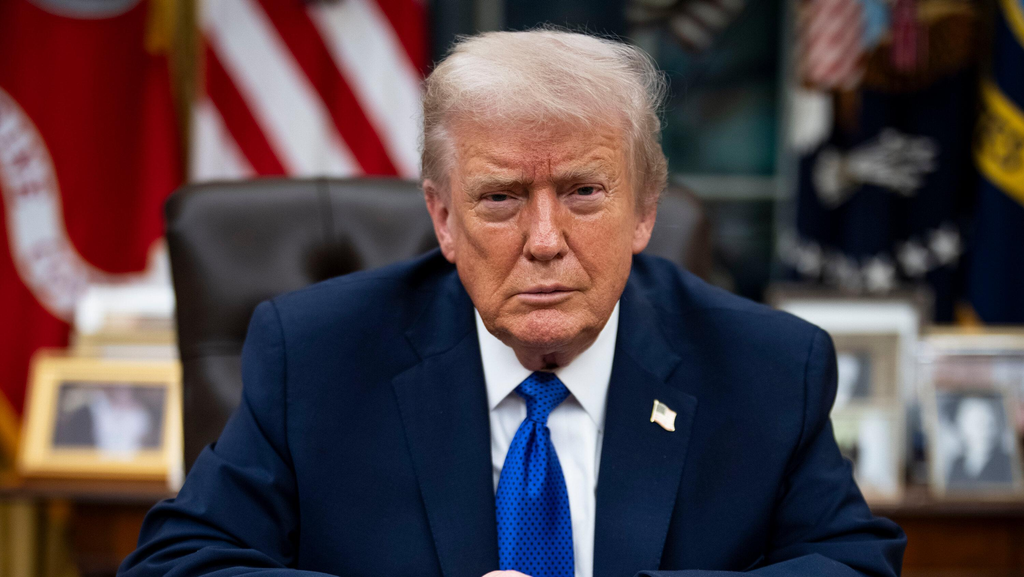
Does this mean his Iran strategy has finally encountered a serious roadblock? Can Democratic lawmakers prevent another military escalation? And, most importantly, is Iran finally getting some breathing room?
There is an important distinction to establish before examining these questions: Trump’s threats over Iran’s nuclear programme should not automatically be confused with a direct threat to use American nuclear weapons against Iran. In August 2026, Trump explicitly said he ruled out using a nuclear weapon against the country. His military threats and the possibility of further conventional strikes are a different matter. The Washington Post+1
The distinction is essential to understanding the actual danger, the limits of presidential authority, and what the Democratic victory could mean for the future of US-Iran relations.
Table of Contents
Trump’s Iran Policy: From Nuclear Pressure to the Possibility of Another War
Çfarë është alergjia ndaj polenit dhe si ta trajtojmë! – Shëndet
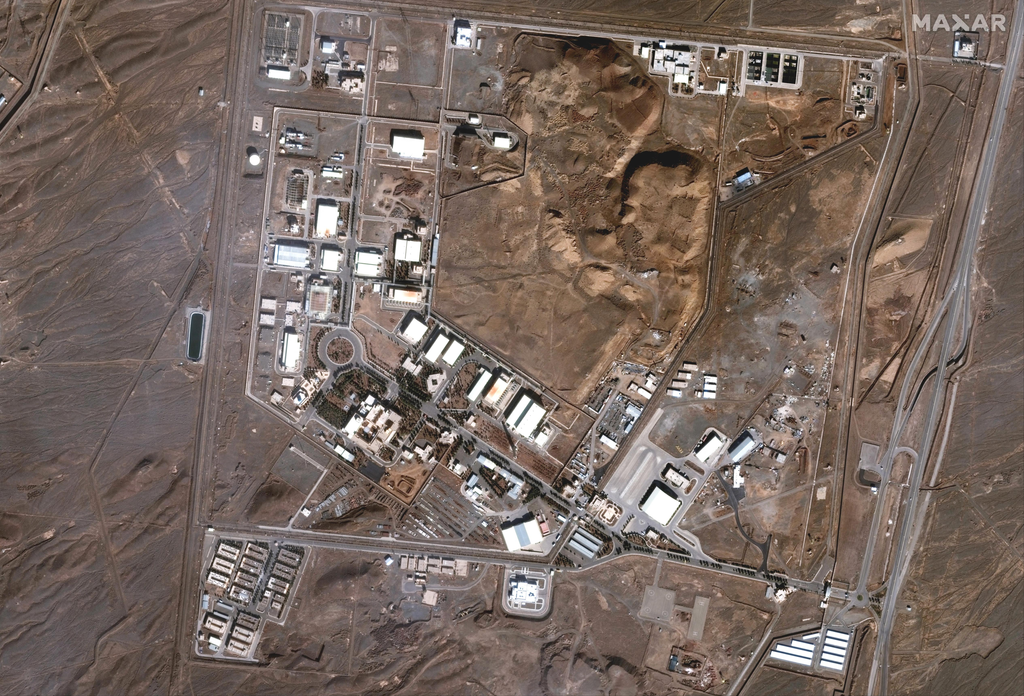
What nuclear capabilities does Iran have and where are its key sites? | The Independent

AS Perkuat Militer di Timur Tengah, Iran Ingatkan Risiko Eskalasi Terbuka – TIMES Indonesia
To understand why the Democratic victory matters, it is necessary to examine how Trump’s Iran policy has developed.
The confrontation did not begin with the latest political developments in Washington. It has involved years of disagreements over Iran’s nuclear programme, American sanctions, regional security, and Tehran’s relationship with Israel.
Trump’s return to office brought a more confrontational approach.
His administration made preventing Iran from developing nuclear weapons a central justification for military pressure. The confrontation eventually escalated into direct military operations.
By August 2026, the conflict had entered a prolonged and unstable phase. According to The Washington Post, American and Iranian forces continued exchanging attacks even after the intensity of the initial fighting had declined.
Efforts to negotiate a truce had broken down in July, leaving the region in a dangerous situation somewhere between an uneasy ceasefire and full-scale war. The Washington Post
Trump continued to insist that Iran would never obtain nuclear weapons.
But preventing Iran from acquiring a nuclear weapon and threatening to use one against Iran are two entirely different propositions.
On August 31, Trump explicitly ruled out using an American nuclear weapon against Tehran. He nevertheless left open the possibility of further conventional military strikes. The Washington Post
This distinction is important because the danger surrounding Trump’s Iran policy is not limited to nuclear weapons.
A conventional military escalation could still trigger Iranian retaliation, threaten American military installations, disrupt international shipping, and destabilise an already volatile Middle East.
The question is whether Washington has the political will and institutional capacity to prevent another dangerous escalation.
The 2026 Midterm Elections: A Political Earthquake for Donald Trump

Democratic Congressional Campaign Committee Holds Its Midterm Election Night Watch Party
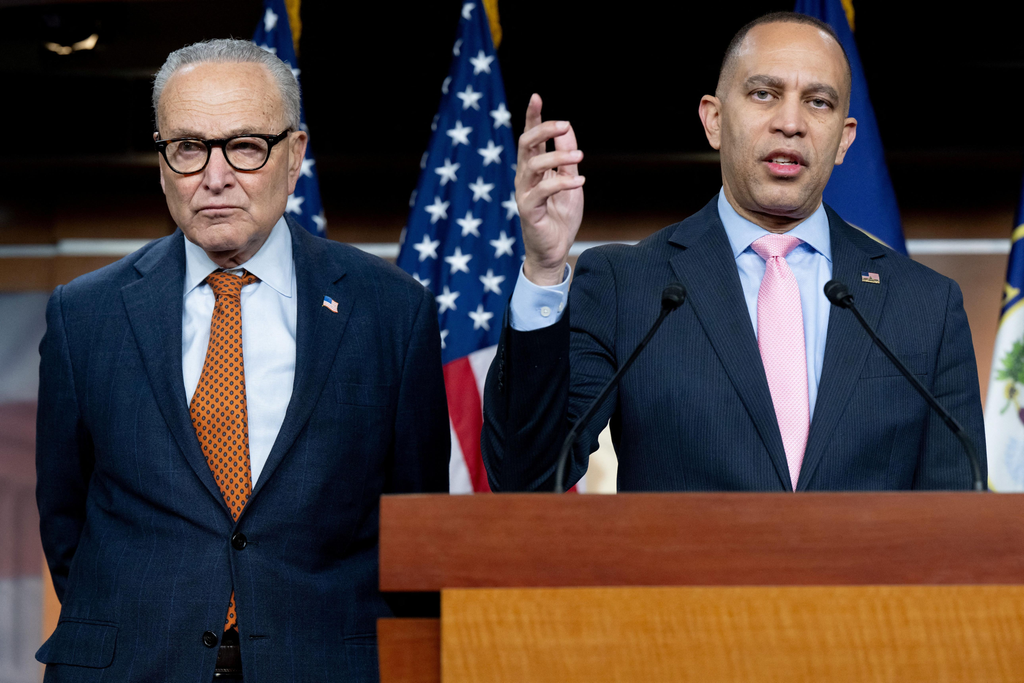
Democrats outline demands to Republicans in ICE funding fight
Higher-Ed Lobbying Group, Eyeing an In-Person Fall, Asks Congress for Liability Shields
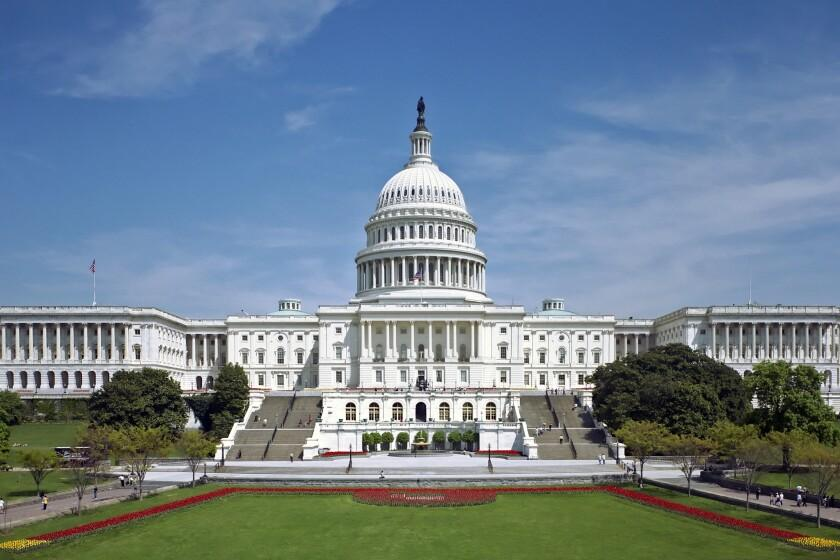
The November 3 midterm elections have fundamentally changed the political equation in Washington.
Democrats did not simply improve their electoral position. They captured control of both chambers of Congress, delivering a significant political rebuke to Trump and his Republican administration.
According to the Associated Press, Democrats made substantial gains in traditionally Republican territory, including Texas, South Carolina, Kansas, Iowa, and Ohio.
The election also exposed growing dissatisfaction with the administration’s economic and foreign policies.
High living costs, inflation, concerns about government corruption, and the war with Iran all contributed to voter frustration.
The new congressional balance
HOUSE OF REPRESENTATIVES
257
Democrats
171 Republicans in called races, with some results outstanding
SENATE
55
Democrats
44 Republicans, with one seat outstanding in the November 16 snapshot
Congress Countdown / AP race calls, November 16, 2026. Includes independents aligned with Democrats in the Senate. congresscountdown.com
This is a major setback for Trump.
For the first time during his current presidency, he will face a Congress in which Democrats control both legislative chambers.
The consequences will become especially significant when the new Congress takes office on January 3, 2027.
Trump will no longer enjoy the same legislative support that accompanied his administration’s earlier policy decisions.
Democrats will control congressional committees, legislative priorities, budget negotiations, and important oversight proceedings.
That creates a considerably more difficult environment for the White House.
However, it would be premature to declare Trump politically powerless.
He remains President of the United States, commands the executive branch, and retains considerable authority over military operations.
The Democratic victory has weakened his political position, but it has not removed his constitutional powers.
Has Trump Become a Sitting Duck in Washington?
The expression may sound dramatic, but it captures an important political reality.
Trump now faces a Congress that has a strong incentive to challenge his administration.
Democratic leaders have already indicated that they intend to use their new majority to investigate the administration, scrutinise executive decisions, and challenge policies they consider unlawful or damaging.
Senate Democratic Leader Chuck Schumer has promised an aggressive approach towards presidential actions that defy the law or public expectations. CBS News
For Trump’s Iran strategy, this could create three major difficulties.
First, congressional scrutiny will intensify.
Democratic lawmakers can demand explanations about military operations, their objectives, their costs, and the administration’s long-term strategy.
They can also investigate whether military actions have exceeded the authority available to the President.
Second, military funding could become a political battleground.
Congress controls federal appropriations. This gives lawmakers considerable influence over the resources available to the executive branch.
Democrats could attempt to attach restrictions or conditions to defence spending, particularly funding associated with continued military operations.
Third, Trump’s political freedom will become more expensive.
Even where Congress cannot legally prevent an operation, sustained opposition can increase the political cost of military escalation.
A president preparing for the final two years of his term cannot simply ignore a hostile Congress, especially when the conflict is already unpopular among sections of the electorate.
Nevertheless, Trump is not a sitting duck in the literal sense.
The distinction between political vulnerability and military authority will define the next phase of this confrontation.
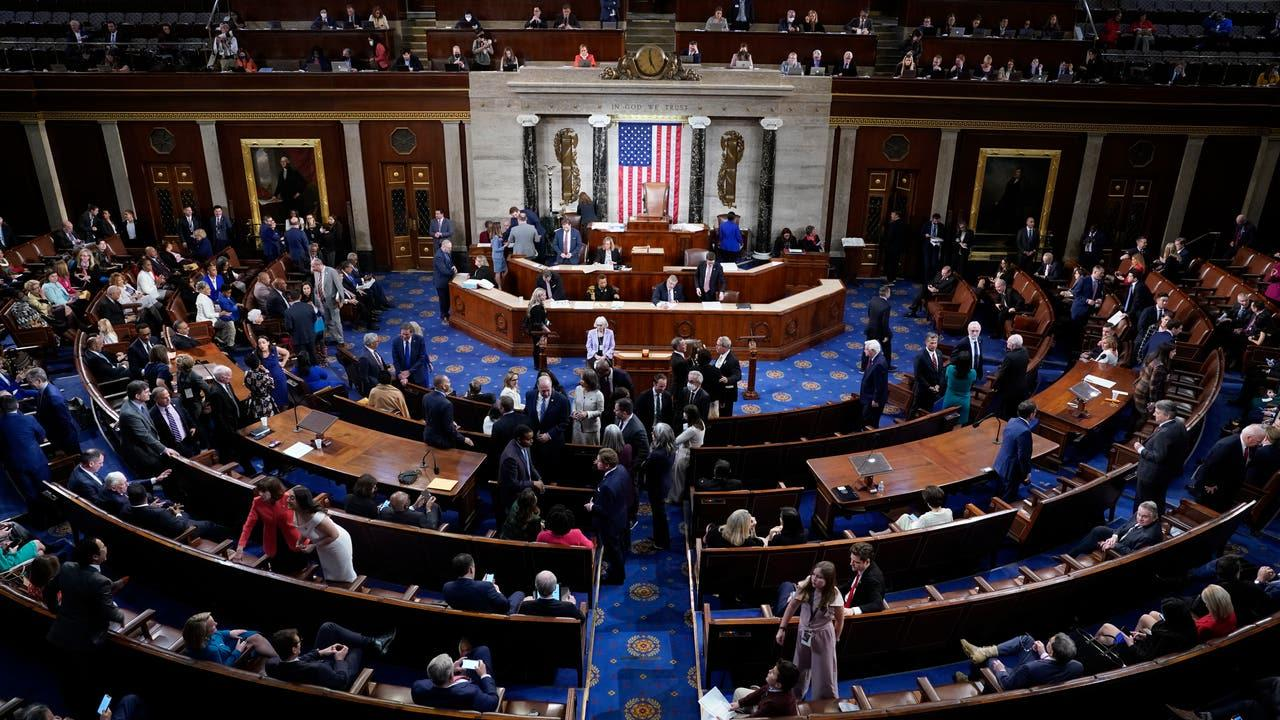
Can a Democrat-Dominated Congress Actually Stop Trump’s Military Operations Against Iran?
This is arguably the most important question surrounding the new political situation.
Congress has constitutional authority over declaring war and appropriating federal funds. The President, meanwhile, serves as Commander in Chief of the armed forces.
This division of responsibility creates an important institutional tension.
Democrats could use several mechanisms to challenge Trump’s military strategy.
1. War Powers Resolution
The War Powers Resolution provides a framework for congressional oversight of presidential decisions to introduce American forces into hostilities.
Lawmakers could pursue a resolution seeking to restrict or terminate unauthorised military involvement.
2. Defence spending restrictions
Congress could attempt to limit funding for particular military operations or impose conditions on the use of appropriated funds.
This could become a significant obstacle if the administration seeks additional resources for a prolonged confrontation.
3. Congressional investigations
Committees could investigate the administration’s decision-making, military objectives, intelligence assessments, and potential violations of domestic or international law.
4. Legislative pressure
Democrats could introduce legislation requiring greater congressional involvement before further military escalation.
However, there is a serious limitation.
The Carnegie Endowment for International Peace has highlighted that Democrats may have enough votes to pass a War Powers Resolution, but Trump could veto it.
Neither chamber currently appears to have the two-thirds majority necessary to override such a veto.
The organisation also notes that neither the administration nor Congress formally declared war on Iran, and Congress did not pass a specific authorisation for the use of military force in the conflict. Carnegie Endowment for International Peace+1
This makes the situation considerably more complicated than simply having Democrats vote against Trump.
Congress has powerful tools, but using them successfully requires political unity and, in several circumstances, support beyond the Democratic majority.
The uncomfortable reality is that Democrats can make Trump’s military strategy considerably harder to sustain without necessarily being able to stop him immediately.
Is Iran Finally Getting Some Breathing Room?

Cityscape of Tehran city from Milad tower, Tehran, Iran
Iran’s response to Israeli strike could be mass casualty event: U.S. envoy

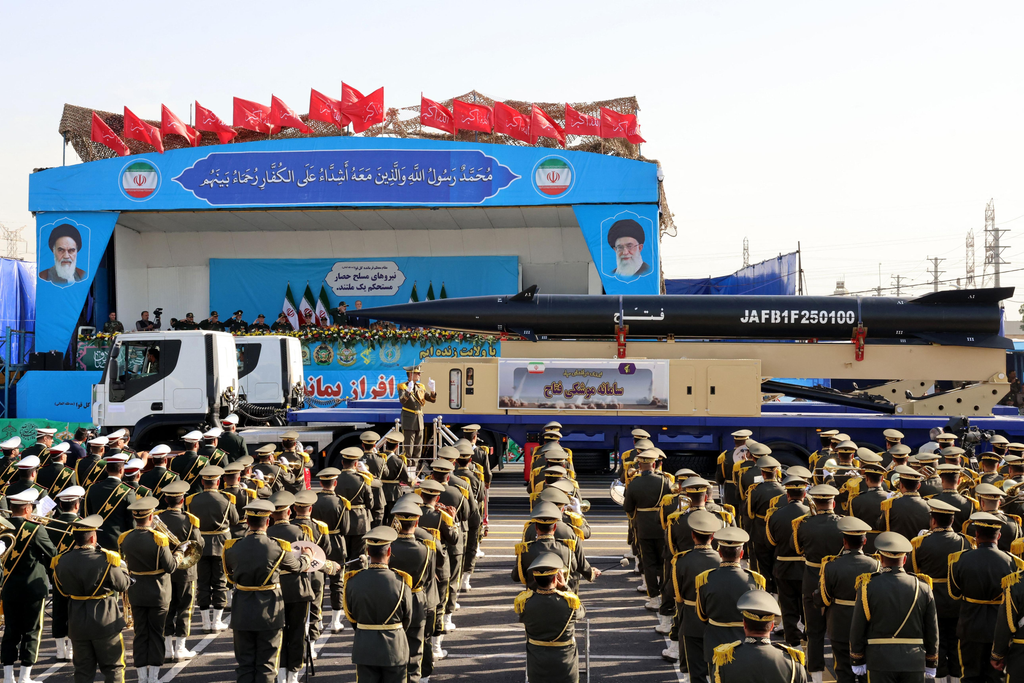
For Tehran, the Democratic victory presents an opportunity.
It does not necessarily represent a military victory or a diplomatic breakthrough, but it could create additional political constraints on Washington.
Iran has faced substantial military and economic pressure. Its infrastructure and military capabilities have been damaged, while international sanctions and prolonged conflict have intensified economic difficulties.
Nevertheless, the Iranian leadership has survived.
The August reporting by The Washington Post also indicated that Iran retained the ability to launch attacks and threaten shipping through the Strait of Hormuz, despite suffering significant military losses. The Washington Post
This is important because Iran does not need to defeat the United States militarily to impose considerable costs on American interests.
Its ability to retaliate, threaten regional shipping, and create instability can complicate American military planning.
The Democratic-controlled Congress could strengthen this constraint by demanding a clearer exit strategy.
If Washington cannot demonstrate that continued military operations are producing meaningful strategic results, congressional opposition could become increasingly difficult for the administration to ignore.
However, Iran should not mistake political disagreement in Washington for immunity from American military action.
Trump retains executive authority, and the United States continues to possess overwhelming conventional military capabilities.
For Tehran, the opportunity is diplomatic rather than an assurance of safety.
It must decide whether to use the changing political environment to pursue negotiations or continue a confrontation that could eventually produce another escalation.
Could Trump’s Nuclear Threat to Iran Still Become a Reality?
This is where the discussion requires particular care.
The possibility of further American military action against Iran is real. The possibility of an American nuclear strike, however, is a separate and much more extreme question.
Trump has explicitly ruled out using nuclear weapons against Iran, at least in his August 31 public remarks.
There is no verified basis for presenting an American nuclear strike as an announced or confirmed operational plan.
Nevertheless, the broader nuclear confrontation remains dangerous.
Iran’s nuclear programme has been at the centre of the dispute for years. Washington fears that Tehran could eventually develop the capability to produce nuclear weapons, while Iran has maintained that its nuclear activities serve peaceful purposes.
Military attacks, threats, and the breakdown of negotiations can make diplomatic solutions harder to achieve.
There are several reasons why further escalation remains possible:
- Nuclear uncertainty: Disagreements over Iran’s enrichment activities and its future nuclear capabilities remain unresolved.
- Military retaliation: Iranian attacks against American or allied targets could trigger further American strikes.
- Regional instability: Israel’s security concerns and the involvement of regional actors could complicate efforts to contain the conflict.
- Diplomatic breakdown: Without credible negotiations, both countries could become trapped in a cycle of military pressure and retaliation.
- Presidential discretion: Congressional opposition does not automatically eliminate the President’s ability to direct military operations.
The greatest danger is that a conventional military confrontation could expand beyond its original objectives.
A conflict intended to prevent nuclear proliferation could ultimately make nuclear diplomacy more difficult.
That would be a strategic failure, regardless of how much military damage either side inflicted.
The Democrats Must Prove They Can Do More Than Oppose Trump
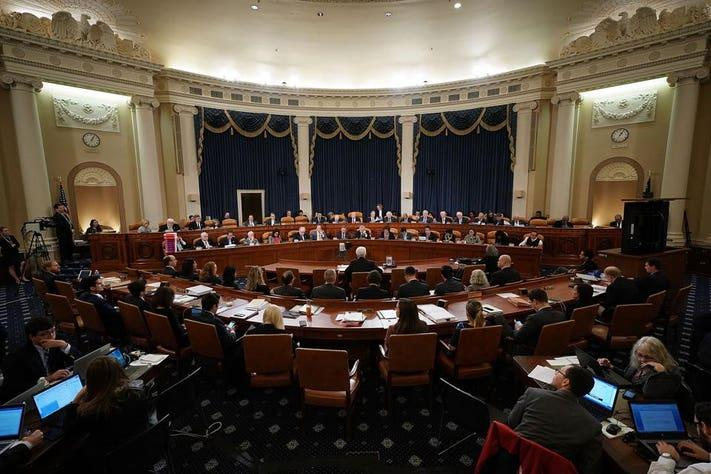
The Democratic victory creates an opportunity, but it also creates responsibility.
For years, American politics has increasingly revolved around opposition to the other party. That approach may generate electoral victories, but it does not necessarily produce effective governance.
If Democrats genuinely want to prevent another dangerous escalation with Iran, they must offer a credible alternative.
Simply opposing Trump’s decisions will not be enough.
They need to establish clear objectives.
First, they must demand transparency about the military campaign and its financial and human costs.
Second, they must insist that any further military engagement has a clear legal basis and defined objectives.
Third, they must push for diplomatic engagement that addresses nuclear concerns without creating unnecessary incentives for further conflict.
Finally, they must work towards a sustainable regional security framework.
This will not be easy.
Democrats themselves are not politically united on every aspect of American foreign policy, particularly the relationship between Washington, Israel, and Iran.
The Carnegie Endowment has cautioned that congressional resolutions and investigations can create political pressure without necessarily forcing the White House to change course. Carnegie Endowment for International Peace
The new majority must therefore demonstrate that it can turn political opposition into meaningful institutional action.
Otherwise, its victory could become another missed opportunity.
What Trump’s Congressional Defeat Means for the Future of US-Iran Relations
The consequences of the 2026 midterms will extend beyond the immediate confrontation.
American foreign policy depends heavily on perceptions of stability, credibility, and consistency.
When a president’s military strategy faces sustained domestic opposition, foreign governments begin reassessing Washington’s ability to maintain its policies over the long term.
Iran will undoubtedly watch the new Congress closely.
Its leadership will want to understand whether Democrats can meaningfully restrict Trump’s military options or whether their opposition will remain largely symbolic.
Israel and other American partners will also be watching.
A more divided Washington could complicate regional security calculations and make diplomatic negotiations more unpredictable.
For the international community, the most immediate concern is the possibility of further disruption to energy markets and shipping routes.
The Strait of Hormuz remains particularly important because of its role in international oil transportation.
Any prolonged escalation in the region could have consequences extending well beyond the Middle East.
For countries such as India, which depend heavily on imported energy, another serious confrontation would create additional economic uncertainty.
The stakes are therefore much larger than the political rivalry between Trump and congressional Democrats.
The future of US-Iran relations will depend on whether both sides recognise the limits of military pressure and the importance of a workable diplomatic solution.
Conclusion: Has Congress Finally Put the Brakes on Trump’s Nuclear Ambitions?
The Democratic victory in the 2026 midterm elections has changed the political landscape of Washington.
Donald Trump will enter the final two years of his presidency facing a Congress controlled by his political opponents.
That is a significant setback for an administration already dealing with an unpopular and complicated confrontation with Iran.
However, declaring that Democrats have completely stopped Trump’s military ambitions would be premature.
Congress can investigate, restrict funding, pass legislation, and pursue War Powers measures. But presidential veto powers, executive authority, and the absence of a veto-proof Democratic majority create substantial limitations.
Iran, meanwhile, has gained a potentially more favourable political environment in Washington, but it remains exposed to military and economic pressure.
The nuclear question also requires perspective. Trump has explicitly rejected the use of an American nuclear weapon against Iran. The more immediate danger is the continuation or expansion of conventional military operations and the possibility that retaliation could produce a wider regional conflict.
Ultimately, Trump’s Nuclear Threat to Iran is as much a question of presidential power, congressional accountability, and diplomatic failure as it is about nuclear weapons themselves.
The midterm elections have given Democrats the opportunity to challenge the White House in a meaningful way.
Whether they can turn that opportunity into an effective restraint on American military policy remains to be seen.
For now, Trump is politically weakened, Iran is not out of danger, and the possibility of another escalation has not disappeared.
The real test of the new Congress will not be how loudly it opposes Trump, but whether it can prevent another costly military confrontation before it becomes impossible to control.
Important Editorial Source
- Associated Press – Democrats Win Both Chambers in the 2026 Midterms.
- Carnegie Endowment – What the New Democratic Congress Can and Can’t Do on Foreign Policy.
- The Washington Post – Trump Says Major Escalation Against Iran Is Unlikely.
- CBS News – Democratic Senate Victory and Congressional Leadership.
Editorial accuracy note: The article deliberately distinguishes Trump’s threats of military action from a direct threat to deploy nuclear weapons. This distinction is important for credibility, particularly given Trump’s explicit August 2026 rejection of nuclear weapon use against Iran.
Learn More Of Our Recent Work about Infrastructure Bottlenecks India Must Eliminate: Critical Roadblocks Standing Between India and a $10 Trillion Economy _
Also On _ Racism Against Indians: 7 Disturbing Ways Online Hate Is Poisoning America’s Social Fabric