How India Viewed Traditional U.S. Kashmir Policy can be summarized in one sentence: Kashmir should not be treated as an international dispute requiring outside mediation between India and Pakistan.
For decades, this principle shaped one of the most significant disagreements between India and the United States. New Delhi viewed American involvement in Kashmir with growing concern, particularly when Washington encouraged mediation or approached the issue primarily through India-Pakistan relations.
Washington often approached Kashmir through the lens of India-Pakistan relations, regional stability, and conflict prevention. New Delhi, however, increasingly regarded this approach as intrusive, unbalanced, and disconnected from India’s core position that Jammu & Kashmir was an integral part of India.
The result was a long diplomatic story shaped by suspicion, frustration, negotiations, strategic adjustments, and eventually a major transformation in U.S.-India relations.
Understanding How India Viewed Traditional U.S. Kashmir Policy is essential to understanding why New Delhi became increasingly resistant to third-party mediation and why Washington’s approach toward Kashmir gradually evolved.
Table of Contents
How India Viewed Traditional U.S. Kashmir Policy
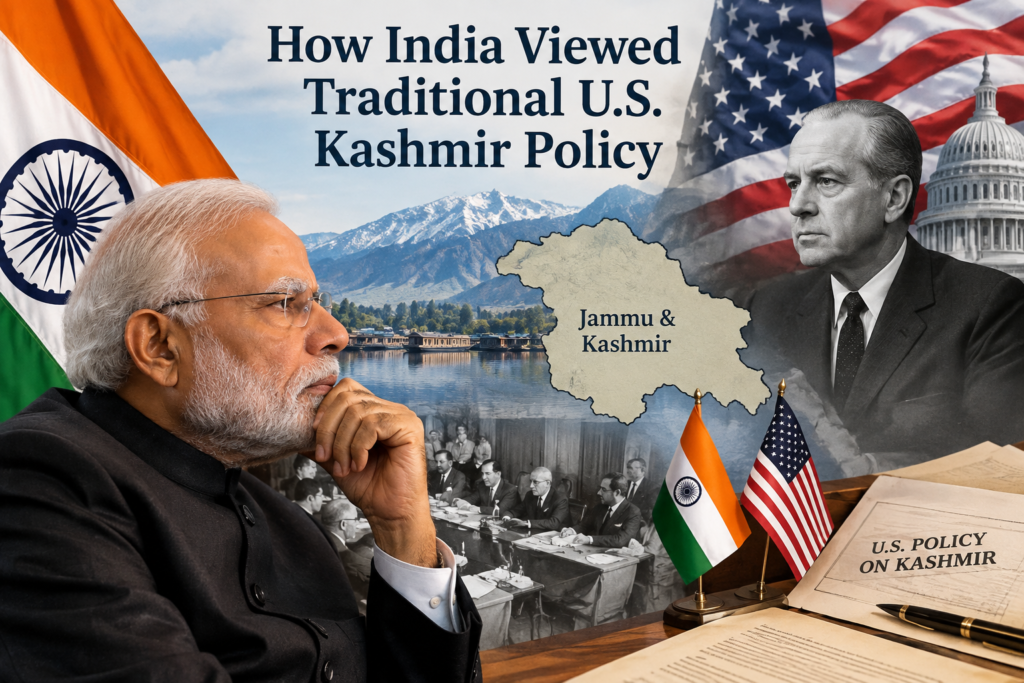
India’s traditional view of U.S. Kashmir policy can be summarized through one central concern: Kashmir should not be treated as an international dispute requiring outside mediation between India and Pakistan.
For New Delhi, Kashmir was closely connected to the history of Partition, Pakistan’s involvement in the conflict, India’s constitutional framework, and the country’s territorial sovereignty.
Washington’s tendency to frame Kashmir primarily through India-Pakistan relations created considerable discomfort in New Delhi.
Indian policymakers feared that international attention could encourage Pakistan to internationalize the issue and place pressure on India to accept solutions that it did not consider appropriate.
This difference in perspective became one of the defining features of U.S.-India relations during the Cold War.
Why Kashmir Became a U.S. Diplomatic Concern
The Kashmir dispute emerged soon after the Partition of British India in 1947.
India and Pakistan went to war over the territory, and the issue eventually reached the United Nations.
For the United States, Kashmir was not simply a territorial disagreement. It was also connected to the stability of South Asia.
During the Cold War, Washington was concerned about maintaining regional stability while dealing with its broader geopolitical competition with the Soviet Union.
Pakistan became an important U.S. strategic partner, particularly after joining Western-backed security arrangements.
This complicated America’s relationship with India.
New Delhi pursued a policy of non-alignment and maintained close relations with Moscow. Washington, meanwhile, increasingly saw Pakistan as an important strategic partner.
Kashmir therefore became part of a much larger geopolitical equation.
The Indian Frustration With American Mediation
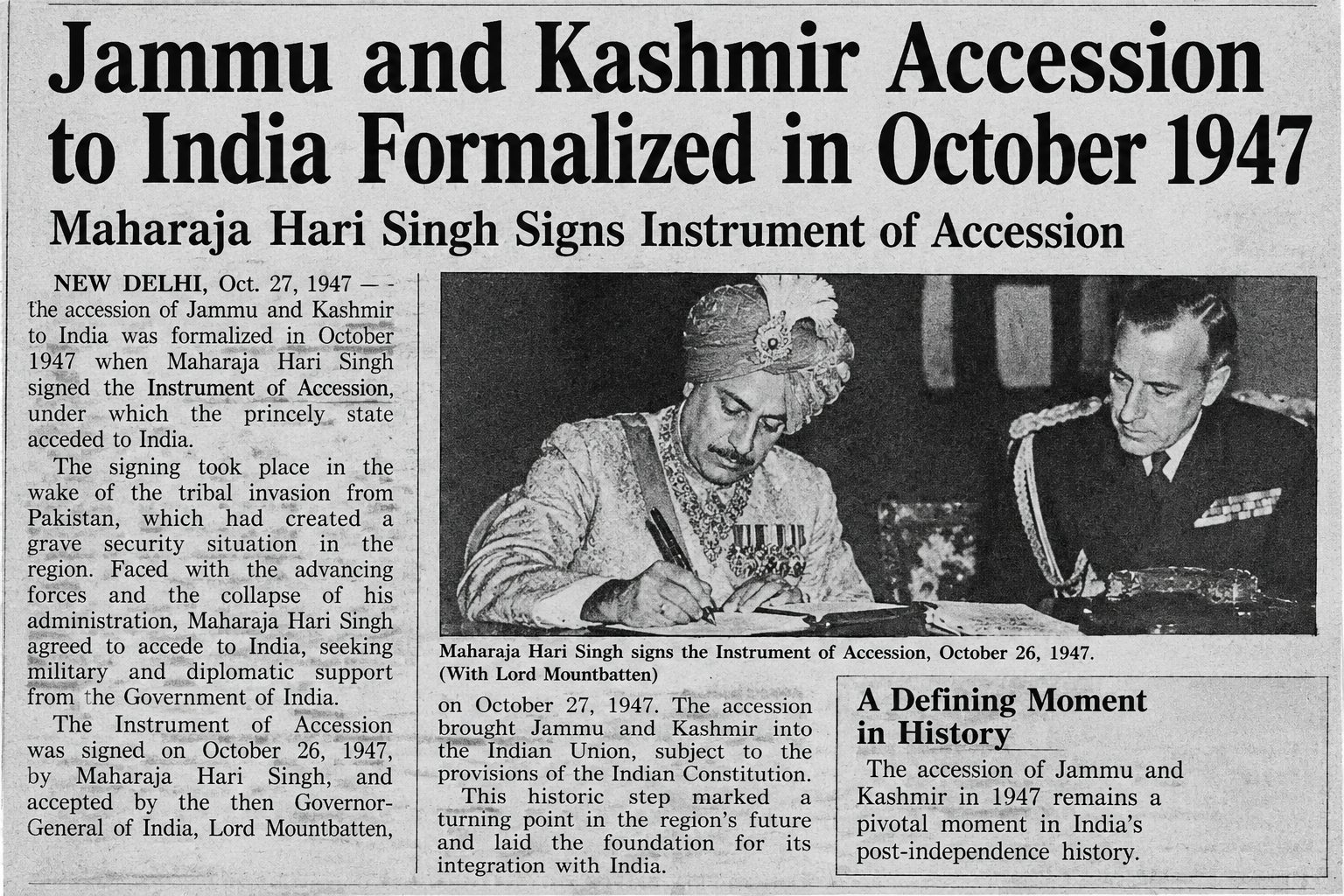
One of the most important elements in How India Viewed Traditional U.S. Kashmir Policy was India’s resistance to third-party intervention.
New Delhi generally preferred that India and Pakistan address their disputes directly.
The United States, however, periodically supported mediation, negotiations, or international efforts aimed at reducing tensions between the two countries.
From India’s perspective, this approach created an uncomfortable diplomatic dynamic.
New Delhi regarded the Instrument of Accession as the legal foundation of Jammu and Kashmir’s accession to India and became increasingly uncomfortable with international demands surrounding a plebiscite.
American support for elements of the UN framework therefore appeared to challenge India’s understanding of the dispute.
The issue became even more sensitive as Pakistan entered Western security arrangements and Washington developed a close strategic relationship with Islamabad.
Indian suspicion was reinforced by the wider Cold War environment.
American officials wanted to preserve Pakistan as an important ally, while India wanted to maintain its strategic autonomy.
This meant that even carefully worded American statements could be interpreted through a much larger geopolitical lens.
The result was a growing perception in New Delhi that Washington’s Kashmir policy was not simply neutral diplomacy but part of a broader American strategy in South Asia.
Whenever Washington discussed Kashmir alongside India-Pakistan relations, Indian officials could interpret it as suggesting that Kashmir was an unresolved international dispute rather than an issue that should primarily be addressed according to India’s preferred framework.
The disagreement was therefore not simply about territory.
It was about who had the legitimacy and authority to shape the conversation.
The Cold War Made the Problem Worse
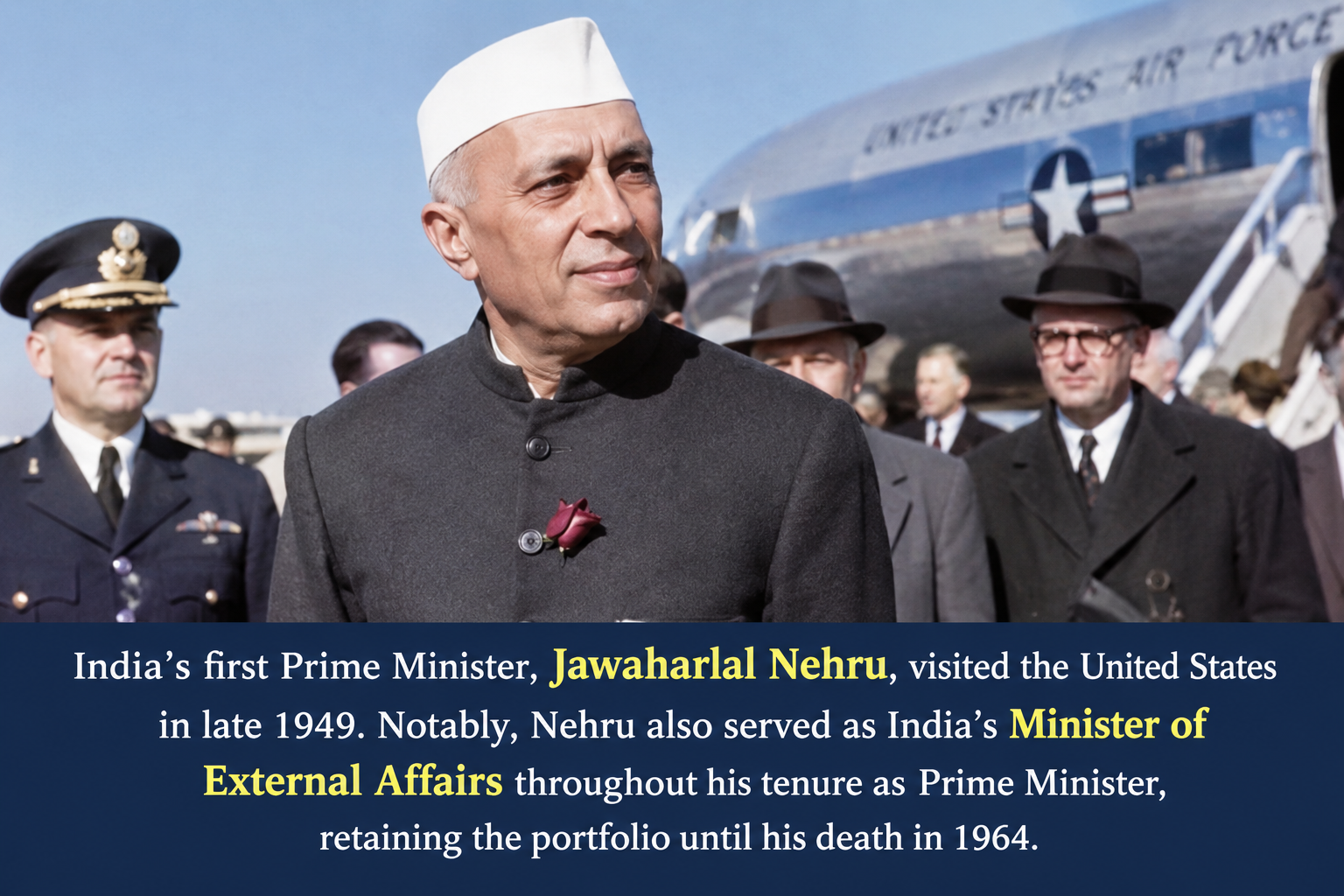
The Cold War dramatically influenced how India interpreted American policy.
Washington’s close relationship with Pakistan made Indian policymakers skeptical of American neutrality.
India believed that Pakistan’s strategic importance to the United States could influence Washington’s approach to Kashmir.
From New Delhi’s standpoint, this created an uneven diplomatic environment.
Even when Washington presented its Kashmir policy as an effort to encourage peace, Indian policymakers could see the underlying strategic relationship between Washington and Islamabad.
This perception became particularly important during periods of heightened India-Pakistan tensions.
How India Viewed Traditional U.S. Kashmir Policy During Wars
The wars of 1947–48, 1965, and 1971 reinforced India’s sensitivity toward international involvement.
The 1965 India-Pakistan war was especially significant because Kashmir once again became central to a major military confrontation.
The United States attempted to manage the broader conflict and supported efforts to restore peace.
But from India’s perspective, Washington’s approach did not always reflect India’s understanding of the origins of the conflict.
The 1971 war and the creation of Bangladesh further transformed South Asian geopolitics.
India’s relationship with the United States became especially strained during this period.
These experiences contributed to a broader Indian perception that Washington’s South Asia policy could not always be separated from its relationship with Pakistan.
Simla Changed India’s Diplomatic Argument
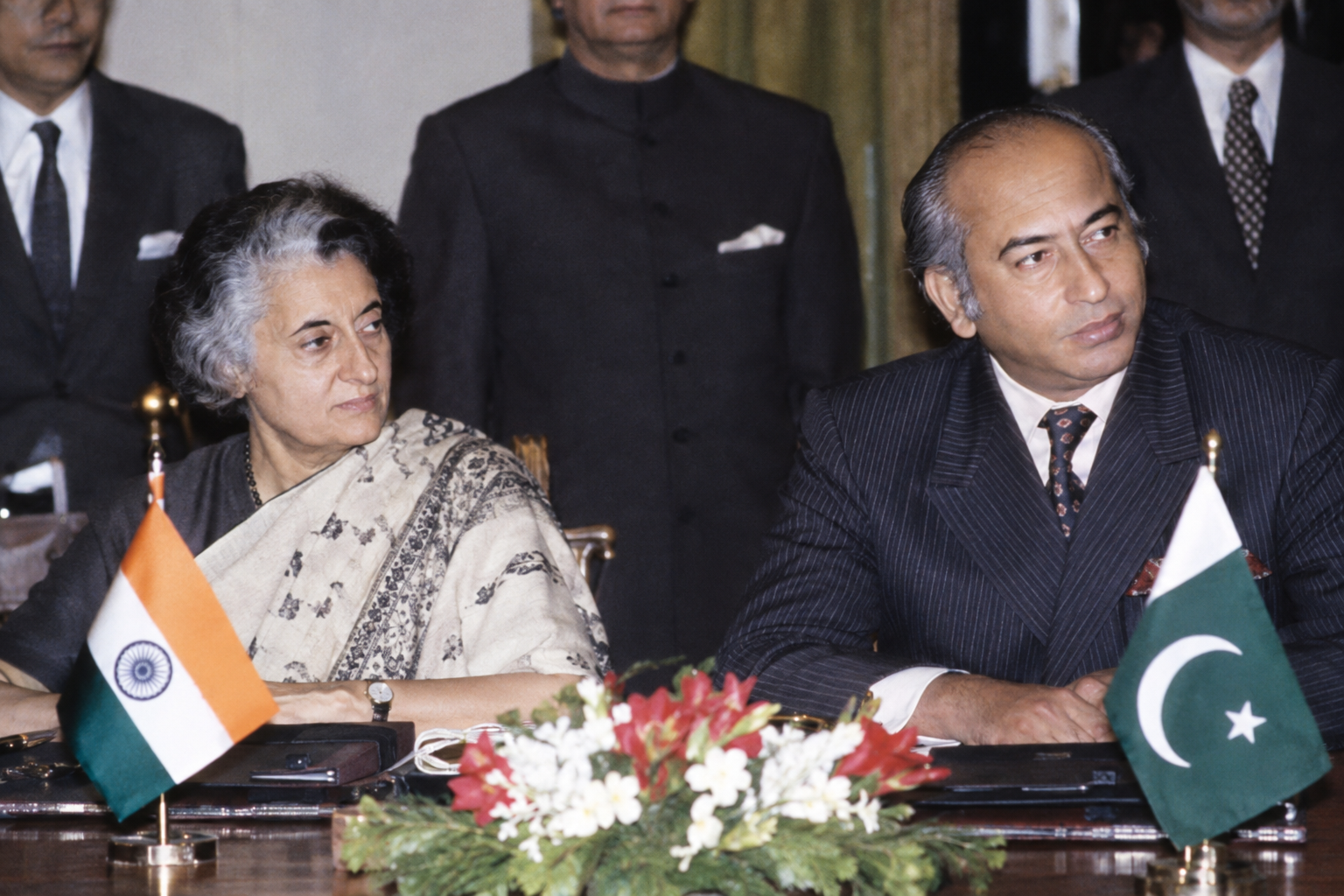
The 1972 Simla Agreement became a major reference point for India’s position on Kashmir.
India and Pakistan agreed to resolve their differences through peaceful means, including bilateral negotiations.
For New Delhi, this strengthened the argument that Kashmir should primarily be addressed by the two countries rather than through external mediation.
This became an important pillar of India’s diplomatic strategy.
Whenever foreign governments discussed mediation, India could point to the bilateral framework established at Simla.
Consequently, How India Viewed Traditional U.S. Kashmir Policy increasingly revolved around the principle that external involvement was unnecessary and could potentially complicate the dispute.
Why New Delhi Distrusted the Idea of a “Kashmir Solution”
India’s concern was not simply that mediation might fail.
There was also concern about what an internationally promoted settlement might produce.
A negotiated settlement promoted by powerful outside countries could, from India’s perspective, create pressure for territorial or political concessions.
India therefore preferred diplomacy based on bilateral dialogue and existing agreements.
This position became deeply embedded in Indian foreign policy.
Over time, opposition to third-party mediation became more than a temporary diplomatic preference.
It became a central principle of India’s approach to Kashmir.
The U.S. Human Rights Dimension
Another source of tension emerged as American attention increasingly included human-rights concerns.
As violence and insurgency intensified in Jammu & Kashmir, Washington periodically expressed concern about human rights, civilian suffering, and the treatment of affected communities.
India viewed some of these statements through the broader history of U.S. involvement in Kashmir.
Indian officials could interpret international criticism as an extension of external pressure over an issue New Delhi considered closely connected to its sovereignty and national security.
At the same time, American policymakers argued that human rights and civilian protection were legitimate concerns.
This created another layer of disagreement between the two countries.
The 1990s: Kashmir Returned to the Center
The insurgency in Jammu & Kashmir during the late 1980s and 1990s brought Kashmir back into international diplomatic attention.
Washington became increasingly concerned about the possibility of conflict between two nuclear-capable states.
These concerns became even more significant after India and Pakistan conducted nuclear tests in 1998.
Kashmir was no longer viewed solely as a regional territorial dispute.
It had become part of a wider international debate about nuclear stability and security in South Asia.
For India, however, international concern about Kashmir continued to carry an uncomfortable implication: outside powers might seek a role in managing a dispute that New Delhi wanted to address primarily through bilateral channels.
The Kargil War and a Major Diplomatic Shift
The 1999 Kargil conflict marked an important moment in the evolution of U.S. policy toward India and Pakistan.
The conflict began after Pakistani forces and fighters crossed the Line of Control and occupied positions on the Indian side.
The United States, under President Bill Clinton, strongly encouraged Pakistan to withdraw its forces from the occupied positions.
This was significant for India’s perception of Washington.
Rather than simply treating India and Pakistan as equally responsible for the immediate crisis, Washington increasingly recognized the circumstances surrounding Pakistan’s actions.
The episode demonstrated that U.S. policy could evolve according to changing circumstances.
It also contributed to a gradual improvement in U.S.-India relations.
From Pakistan-Centric Balance to India-U.S. Strategic Partnership
The transformation accelerated after the September 11, 2001 terrorist attacks.
The United States once again needed Pakistan for important regional security objectives, but Washington’s relationship with India also expanded rapidly.
Economic ties grew.
Defense cooperation increased.
Technology partnerships developed.
The two countries increasingly viewed each other as important strategic partners in the Indo-Pacific.
This broader transformation affected the Kashmir question.
Washington gradually became more cautious about supporting forms of third-party mediation that India strongly opposed.
For India, this represented an important diplomatic shift.
The United States was increasingly treating its relationship with New Delhi as strategically important in its own right.
How India Viewed Traditional U.S. Kashmir Policy After 2001
By the beginning of the 21st century, How India Viewed Traditional U.S. Kashmir Policy was no longer defined solely by Cold War disagreements.
The strategic environment had changed.
India had become increasingly important to U.S. calculations in Asia.
Counterterrorism cooperation also created greater convergence between Washington and New Delhi.
The United States increasingly emphasized direct India-Pakistan dialogue rather than actively pursuing an externally imposed Kashmir settlement.
For India, this represented an important diplomatic improvement.
The older concern that Washington might actively internationalize Kashmir became less prominent.
The Obama and Trump Years
The United States continued to express concern about India-Pakistan tensions, particularly during periods of military escalation.
However, American policy increasingly emphasized de-escalation and dialogue rather than imposing a political solution on Kashmir.
The Trump administration occasionally generated controversy by mentioning possible mediation, particularly when President Donald Trump publicly offered to help facilitate dialogue between India and Pakistan.
India consistently rejected the idea of third-party mediation.
This demonstrated how deeply established India’s position had become.
Even as U.S.-India relations expanded dramatically, Kashmir remained an area where New Delhi maintained clear diplomatic boundaries.
Why Traditional U.S. Kashmir Policy Frustrated India
Ultimately, How India Viewed Traditional U.S. Kashmir Policy can be understood through several recurring Indian concerns:
- Internationalization: India feared that external involvement would elevate Kashmir into an international dispute.
- Pakistan: New Delhi questioned whether America’s strategic relationship with Pakistan influenced Washington’s Kashmir policy.
- Mediation: India consistently resisted third-party mediation.
- Sovereignty: Kashmir was viewed by India as fundamentally connected to territorial sovereignty.
- Bilateralism: The Simla framework reinforced India’s preference for direct India-Pakistan negotiations.
- Security: India increasingly emphasized terrorism and cross-border violence when discussing Kashmir.
These issues explain why American statements about Kashmir could generate significant diplomatic frustration in New Delhi.
The disagreement was rarely limited to the wording of a particular statement.
It was also shaped by the history behind that statement.
A Policy Built on Changing Strategic Realities
The story of Kashmir policy is ultimately also a story about changing American priorities.
During the Cold War, Washington viewed South Asia largely through the competition between the United States and the Soviet Union.
Pakistan’s strategic importance influenced American calculations.
India’s non-aligned foreign policy created additional distance between New Delhi and Washington.
After the Cold War, the strategic landscape changed dramatically.
After September 11, counterterrorism became central to American foreign policy.
In the 21st century, the rise of China increasingly encouraged Washington and New Delhi to strengthen their strategic partnership.
Kashmir did not disappear from U.S. diplomacy.
But the broader context surrounding it changed significantly.
The Legacy of the Traditional Era
The legacy of traditional American Kashmir policy remains important because it helps explain why Indian policymakers became so sensitive to foreign involvement.
For decades, Washington’s approach could appear to New Delhi as an attempt to balance India and Pakistan rather than recognize India’s preferred diplomatic framework.
That history created institutional memory.
Even as the United States and India developed a powerful strategic relationship, India’s resistance to third-party mediation remained firm.
This is perhaps the most important lesson in understanding How India Viewed Traditional U.S. Kashmir Policy.
The disagreement was never simply about American statements.
It reflected fundamentally different interpretations of sovereignty, diplomacy, regional stability, and the Kashmir dispute itself.
Conclusion: From Diplomatic Frustration to Strategic Convergence
The history of How India Viewed Traditional U.S. Kashmir Policy is a story of transformation.
For much of the Cold War, India viewed Washington’s Kashmir approach with considerable suspicion.
America’s relationship with Pakistan, its interest in mediation, and its emphasis on regional stability frequently conflicted with New Delhi’s insistence on sovereignty and bilateral diplomacy.
But the relationship did not remain frozen.
The end of the Cold War, the Kargil conflict, the post-9/11 security environment, and the rise of the India-U.S. strategic partnership gradually changed Washington’s approach.
Today, understanding this history remains important for understanding why India continues to be deeply cautious about international mediation over Kashmir.
The old diplomatic era left behind a powerful lesson for New Delhi: foreign involvement may change its form, but India’s preference for bilateralism has remained remarkably consistent.
And that is the deeper story behind How India Viewed Traditional U.S. Kashmir Policy—a diplomatic era defined by frustration, strategic mistrust, gradual adjustment, and eventually a profound transformation in the relationship between Washington and New Delhi.
1 thought on “How India Viewed Traditional U.S. Kashmir Policy: The Powerful Story of a Deeply Frustrating Diplomatic Era”