The longstanding U.S. position emphasized peaceful negotiations between India and Pakistan while taking into account the wishes of the people of Jammu & Kashmir. The Congressional Research Service described this as the established American position, while also noting India’s opposition to third-party mediation and Pakistan’s efforts to internationalize the dispute.
Table of Contents
What Was the Traditional U.S. Position on Kashmir?
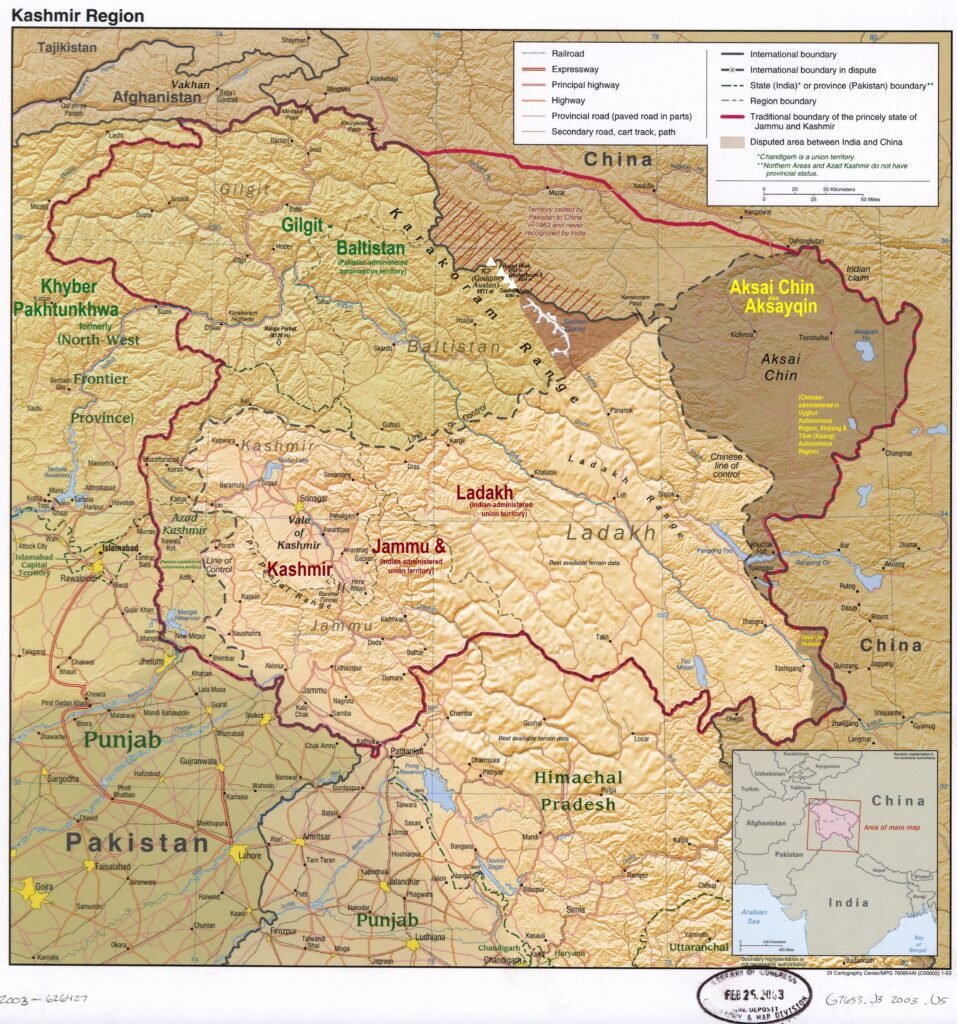
The Traditional U.S. Position on Kashmir emerged from the extraordinary circumstances surrounding the partition of British India in 1947.
When British rule ended, India and Pakistan became independent states, but the future of the princely state of Jammu and Kashmir quickly became disputed.
The state had a Muslim-majority population, a Hindu ruler, and borders connecting it with both the newly created dominions. Fighting broke out in 1947, and the dispute soon moved beyond a bilateral argument between India and Pakistan into the United Nations and the wider international system.
U.S. officials therefore approached Kashmir not simply as a territorial disagreement but as a problem with implications for regional stability, international security, and the developing postwar order. A 1947 U.S. State Department position paper shows that Washington initially preferred direct negotiations between India and Pakistan, but it was also prepared to support UN involvement, including a referendum, if the circumstances made that route necessary.
The American calculation was shaped by a basic concern: another major conflict in South Asia could destabilize a strategically important region only two years after the end of World War II.
Washington also wanted the dispute handled through an international framework rather than allowing the United States to become the sole mediator between the two new states.
This helps explain an important feature of the Traditional U.S. Position: It was neither simply an Endorsement of India’s sovereignty claim nor an Unconditional Backing of Pakistan’s territorial claim.
Learn more about this topic on: What Was the Traditional U.S. Position on Kashmir?
The 1947 Partition and the Kashmir Dispute
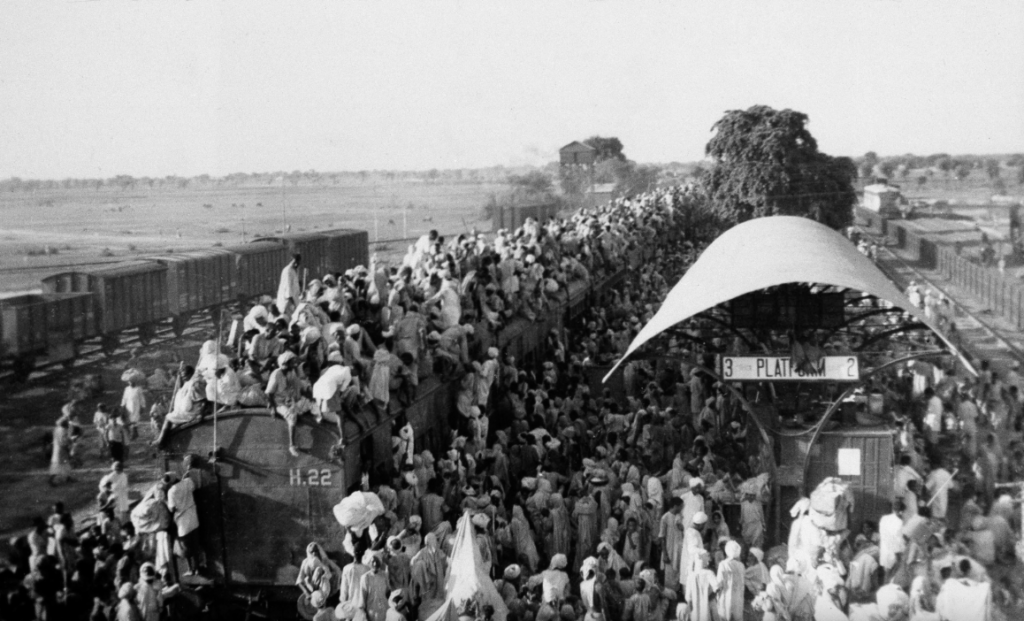
The immediate background is essential because the United States did not create the Kashmir question. The dispute developed in the chaotic aftermath of partition, when princely states had to determine their political future and violence was spreading across the subcontinent.
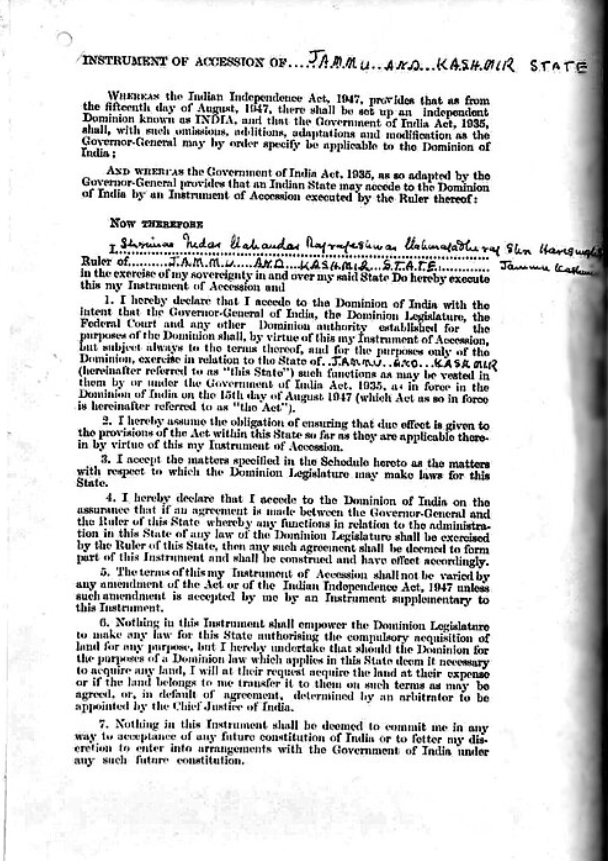
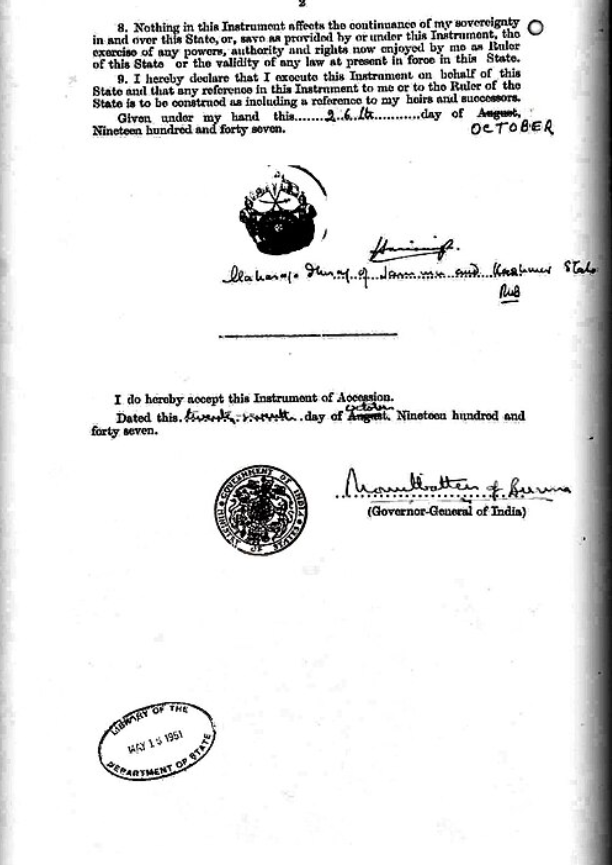
Jammu and Kashmir’s ruler, Maharaja Hari Singh, initially sought to maintain independence, but the situation changed dramatically after armed forces and tribal fighters entered the state in October 1947.
The Maharaja subsequently signed an Instrument of Accession to India, after which Indian troops were deployed.
Pakistan disputed the circumstances and consequences of the accession, while India argued that the accession was legally valid and that military intervention was justified in response to the invasion.
The first India-Pakistan war followed, turning Kashmir into one of the earliest major international crises involving the two new states.
The traditional U.S. position on Kashmir demanded the U.S government to wait and watch, as the dispute was an internal matter of between two newly formed Independent countries with democratic governments.
But well over time The American counterparts recognized that the dispute could not easily be separated from the violence surrounding partition, yet they also understood that a permanent settlement would require more than simply stopping the fighting.
The State Department’s December 1947 position paper stated that Washington preferred direct negotiations but would support a UN resolution for a referendum under appropriate circumstances.
The same document emphasized the importance of a broadly representative electorate rather than a restricted voting system. That is significant because it shows that the early American position was already built around two ideas that would remain important for years: negotiated settlement and popular participation.
The Maharaja, Accession, and the First War
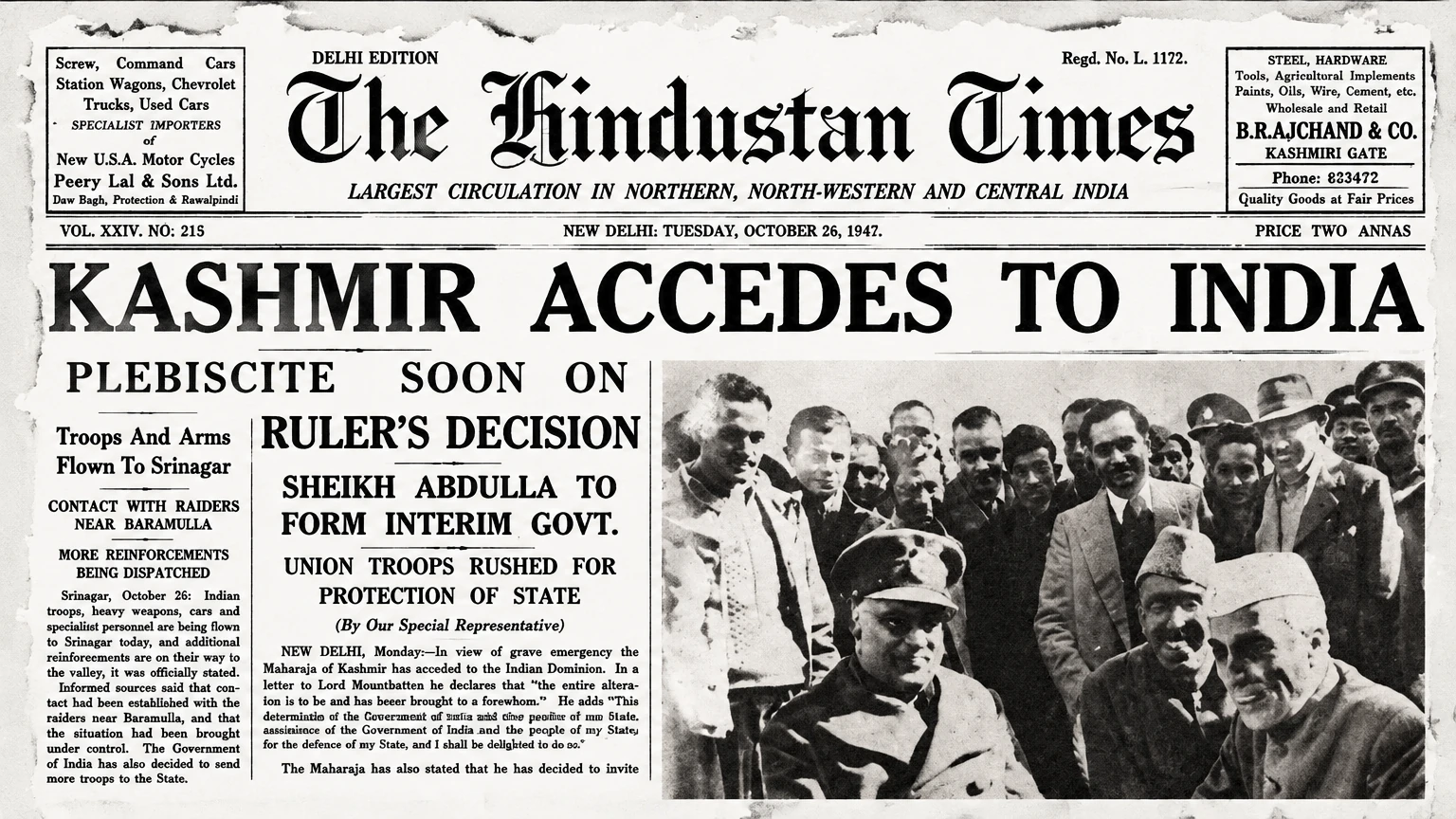
The accession question became the legal and political foundation of the competing Indian and Pakistani narratives.
India maintained that the Maharaja’s accession legally brought Jammu and Kashmir into India, while Pakistan challenged that interpretation and emphasized the state’s Muslim-majority character and the wishes of its population.
The United States did not initially resolve the dispute simply by declaring one side’s legal argument correct. Instead, Washington increasingly looked toward a process through which the population could participate in determining the final disposition of the territory.
This is why describing the traditional U.S. position merely as “America supported Pakistan” is historically too simplistic.
American policymakers were also conscious that the dispute could become a source of repeated military confrontation.
A 1950 State Department memorandum described an early settlement as important to peace and security in South Asia and examined several possible approaches, including partition, plebiscite, and other arrangements.
It concluded that the original UN approach rested on the idea that Kashmir’s fate should be decided through an overall plebiscite, while also recognizing the enormous practical difficulties involved.
Washington’s Early Preference for India-Pakistan Dialogue
Although the Kashmir dispute eventually became strongly associated with UN diplomacy, the earliest U.S. preference was actually more restrained.
Washington believed India and Pakistan had the strongest reason and incentive to resolve their own disagreement. Direct negotiations had the potential to produce a settlement without turning Kashmir into a permanent international confrontation.
This preference also reflected an American desire to avoid assuming responsibility for a dispute whose historical, political, and emotional dimensions were deeply rooted in South Asian affairs. In other words, the United States did not initially approach Kashmir with the idea that Washington should dictate the answer.
The problem was that direct negotiations repeatedly struggled to overcome the fundamental disagreement between India and Pakistan. The war had already created a dangerous military situation, and neither side was prepared to simply accept the other’s interpretation of Kashmir’s future.
The United States therefore became more comfortable with UN involvement. The UN Commission for India and Pakistan, or UNCIP, became central to international efforts, and the United States participated in that process.
The American position was consequently evolving from “let the parties negotiate” toward “let the parties negotiate within an internationally supported framework.” since India did not want the case of Kashmir internationalized, this led to disagreements between the Indian side and the American position.
Why the United States Turned Toward the United Nations
The United Nations offered Washington something bilateral diplomacy could not easily provide: an international mechanism for reducing the danger of another war.
Kashmir had already demonstrated how quickly India-Pakistan tensions could become military tensions.
By placing the dispute within the UN framework, American officials hoped that cease-fire arrangements, demilitarization, mediation, and a future political settlement could be pursued without requiring Washington to impose its own solution.
The UN approach also gave the United States a way to work with Britain and other countries while avoiding the appearance that Kashmir was an American project.
The American government therefore supported the broad UN architecture that developed around Kashmir. The 1948 and 1949 arrangements were particularly important because they connected the cessation of hostilities with the possibility of determining the territory’s future through a free and impartial vote.
This was not a minor detail.
It became the foundation upon which Washington’s traditional Kashmir position was repeatedly described during the 1950s.
The Case for an Internationally Supervised Referendum
For American policymakers, an internationally supervised plebiscite offered an apparent compromise between competing claims. Rather than asking Washington to determine whether Kashmir was inherently Indian or Pakistani, the proposed process would allow the population to express its preference.
In theory, that could give the final settlement greater legitimacy and reduce the likelihood that either country would regard the outcome as simply the product of military coercion. The United States saw the plebiscite as a mechanism of self-determination, rather than simply as a diplomatic favor to Pakistan.
The State Department’s 1957 records make the American position unusually explicit.
Washington stated that its support for a Kashmir solution based on a plebiscite under UN auspices rested partly on the fact that this approach was consistent with earlier UN decisions and was the method to which the parties had previously agreed.
What was the Traditional U.S. Position
That wording captures the essence of the traditional position: the United States believed the Kashmir question should be settled through an internationally credible political process rather than unilateral action.
The Traditional U.S. Position: Self-Determination
At the heart of the traditional U.S. position was self-determination.
Washington argued that the future of Kashmir should not be decided solely by military power or by one government’s unilateral declaration.
The idea fit comfortably within the broader American postwar emphasis on international institutions and political legitimacy.
Yet Kashmir was unusually complicated because self-determination had to be reconciled with questions surrounding accession, territorial sovereignty, demilitarization, and the competing claims of India and Pakistan.
This is why the Traditional U.S. Position on Kashmir cannot be reduced to the slogan “America wanted a referendum.”
The referendum was part of a larger sequence. First, hostilities had to stop. Then the conditions surrounding military forces and administration had to be addressed. Only after those steps could a free and impartial vote realistically occur.
The 1950 State Department analysis emphasized demilitarization as an essential part of moving toward a settlement and recognized that both sides had serious objections to the arrangements required for a plebiscite. The American position was therefore principled but conditional.
Self-Determination required an Environment in which Self-Determination could actually be Exercised.
The Central Role of the Plebiscite
During the 1950s, American officials repeatedly referred to a free and impartial vote under UN auspices as the preferred mechanism for determining whether Kashmir should ultimately align with India or Pakistan. In 1955, the State Department instructed its embassy in Pakistan that the United States believed earlier Indian assurances and UN commitments supported the plebiscite framework.
In 1956, U.S. Ambassador Henry Cabot Lodge Jr. went even further in an internal communication, saying that the American commitment to the plebiscite had not changed, even while acknowledging that Washington doubted the vote would actually occur.
That distinction between formal policy and practical expectations is extremely important.
American policymakers could continue supporting the principle while privately recognizing that implementation was becoming increasingly unrealistic.
The United States was not operating in a vacuum.
India objected to international pressure for a plebiscite, Pakistan regarded the plebiscite as central to its case, and the Soviet Union increasingly supported India’s position in the international arena.
What Washington Thought About India’s Position
India’s position presented the United States with a difficult diplomatic problem. New Delhi argued that the Maharaja’s accession was legally valid and that Kashmir had therefore become part of India.
Over time, Indian officials increasingly rejected the idea that the future of the territory remained open to an internationally supervised vote. From Washington’s perspective, however, India’s changing position appeared difficult to reconcile with earlier statements and commitments associated with the UN process.
A 1955 State Department cable explicitly said the United States believed India had not formally repudiated its earlier plebiscite commitment, even while recognizing that India preferred other solutions.
The issue was not simply legal.
American officials also worried about the political consequences of prolonged international pressure on India. India was a large, newly independent democracy with an influential nonalignment policy, and Washington did not want Kashmir to push New Delhi toward closer relations with Moscow.
A 1957 State Department communication acknowledged precisely this danger, noting that strong UN action against India’s position could encourage the perception in India that the Soviet Union was its only friend.
Thus, even while Washington maintained ‘its traditional position’, it increasingly understood that excessive pressure could damage the wider U.S.-India relationship.
Why U.S.-India Relations Became Complicated
Indian leaders viewed American support for a UN-centered Kashmir settlement as evidence that the United States did not sufficiently understand India’s legal and political position.
The Kashmir question became one of the earliest sources of serious mistrust between Washington and New Delhi.
The Cold War intensified those suspicions because Pakistan was becoming an important American strategic partner.
From the Indian perspective, a supposedly neutral American position could therefore appear less neutral when Washington was simultaneously building military and diplomatic ties with Pakistan.
This perception mattered enormously. U.S. policymakers might have considered their policy balanced because they were supporting a general principle rather than Pakistan’s territorial claims. Indian policymakers, however, could look at the same policy and see international pressure being applied disproportionately to India.
The result was a widening gap between how Washington described its policy and how New Delhi experienced it.
What Washington Thought About Pakistan’s Position
Pakistan became increasingly important to the United States during the early Cold War. The Americans saw Pakistan as strategically useful because of its geographic position and its willingness to participate in Western security arrangements.
This did not automatically mean that the U.S. accepted every Pakistani argument on Kashmir, instead, it created a complicated diplomatic relationship in which Pakistan expected stronger American support, while Washington wanted to preserve enough flexibility to maintain relations with India.
The traditional U.S. policy nevertheless provided Pakistan with something valuable: American recognition that a plebiscite was a legitimate and important route toward resolving the dispute.
By the mid-1950s, Pakistani officials repeatedly pressed Washington to defend that principle in international forums.
Why Pakistan Became an Important Cold War Partner
The Cold War transformed the Kashmir dispute from a regional territorial conflict into part of a much larger strategic equation. Pakistan joined Western-backed security arrangements, including SEATO and the Baghdad Pact, and Washington increasingly valued Pakistani cooperation in containing Soviet influence.
India, by contrast, pursued nonalignment and maintained an independent foreign policy that sometimes brought it closer to Soviet positions. This did not eliminate American interest in India, but it made Pakistan more immediately useful to U.S. strategic planners.
That strategic alignment created a major contradiction in American policy. Washington wanted to maintain the credibility of its self-determination position, but it also wanted Pakistan to remain a reliable partner without pushing India completely toward the Soviet camp.
The 1956 U.S. diplomatic record illustrates this tension: American officials discussed the need to reassure Pakistan while also worrying about the political consequences of appearing to force India into a corner. In practice, Kashmir became a test of whether Cold War strategy and diplomatic neutrality could coexist.
Kashmir and the Early Cold War
The Cold War did not create the Kashmir dispute, but it changed the meaning of the dispute for Washington. A regional conflict that might otherwise have remained primarily a South Asian diplomatic issue became connected to questions about Soviet influence, Western alliances, and the strategic balance across Asia.
U.S. officials increasingly had to consider not only what settlement might be fair but also what consequences American pressure would have for India’s foreign policy and Pakistan’s alliance commitments.
This helps explain why American policy sometimes looked inconsistent from the outside. One day Washington might emphasize the principle of a UN-supervised plebiscite; another day it might encourage bilateral discussions or caution against forcing India into an anti-American position.
These were not necessarily contradictory from the perspective of policymakers who were juggling several objectives at once. They reflected the growing tension between principle, diplomacy, and Cold War strategy.
Strategic Interests Changed the Diplomatic Context
By the mid-1950s, Kashmir was no longer simply about the wishes of Kashmiris, the legal status of accession, or the relationship between India and Pakistan. It had become part of a larger contest over influence in Asia.
Pakistan’s alignment with the West increased its expectations of American backing, while India’s nonalignment increased its sensitivity to any appearance of Western interference. Washington had to navigate both realities.
The historical record shows that American officials understood the danger. In 1957, the State Department recognized that India might view a strong U.S.-backed UN initiative as evidence that the Soviet Union was its only dependable friend.
At the same time, Washington did not want to abandon Pakistan’s expectations or completely retreat from its longstanding support for an internationally supervised settlement. The result was a cautious policy that increasingly emphasized diplomacy rather than coercion.
The U.S. Position in the 1950s
The 1950s were arguably the clearest period of the traditional American Kashmir policy. Washington repeatedly supported a UN-centered settlement and maintained that a free and impartial plebiscite was the preferred mechanism. The United States also emphasized peaceful negotiations and attempted to prevent the dispute from triggering renewed warfare.
A 1956 SEATO record shows Secretary of State John Foster Dulles maintaining that the U.S. position remained consistent with the earlier formulation concerning Kashmir, while the organization affirmed the continuing relevance of UN resolutions and the need for an early settlement.
Yet this was also the decade when the policy’s practical limitations became obvious. The conditions required for a plebiscite were never fully established. India and Pakistan disagreed over demilitarization, sequencing, security arrangements, and the political environment necessary for a legitimate vote.
Each side increasingly viewed the other’s position as evidence that the other was acting in bad faith. Washington could continue repeating the principle, but it had limited ability to make the underlying conditions appear.
Washington Continued to Back a UN-Based Settlement
The American commitment during this period was not merely rhetorical. U.S. officials actively discussed draft UN resolutions, negotiations with India and Pakistan, and ways to move the dispute toward a settlement.
In 1957, the State Department explicitly stated that Washington supported a Kashmir solution based on a plebiscite under UN auspices because it was consistent with previous UN decisions and represented the only method to which the parties had agreed. This provides perhaps the clearest historical answer to the question of what the traditional U.S. position actually was.
At the same time, American officials increasingly recognized that repeating the formula would not necessarily produce the desired outcome. Washington began exploring whether bilateral discussions might be more productive than endlessly returning the issue to the Security Council. This was an important transition.
The United States was not yet abandoning its traditional principles, but it was becoming more realistic about the difference between supporting a settlement framework and actually achieving a settlement.
Why the Plebiscite Became Difficult to Implement
A plebiscite sounds straightforward when reduced to a single sentence: ask the people whether they want India or Pakistan. In reality, the proposed process depended on a complicated sequence of military and political conditions.
Who would control security? Which forces would withdraw first? What administration would govern the territory during the process? How would displaced people participate? What would happen if either side believed the conditions were unfair? These questions made the plebiscite much harder to organize than the basic principle suggested.
The 1950 U.S. analysis recognized precisely these difficulties. It discussed the need for demilitarization and an impartial environment and noted that neither India nor Pakistan was easily willing to accept the arrangements necessary to create such conditions.
The result was a classic diplomatic trap: the vote could not happen without agreement on the conditions for the vote, but the parties could not agree on the conditions because they disagreed about the political meaning of the vote itself.
Demilitarization and Conflicting Interpretations
India and Pakistan also interpreted the UN framework differently. Pakistan emphasized the plebiscite as the ultimate mechanism of self-determination, while India increasingly emphasized the accession and the changed political circumstances inside Jammu and Kashmir.
Questions about troop withdrawals and administrative authority became central. Even if Washington believed the plebiscite was the correct principle, it could not simply order the two governments to accept the same interpretation of the necessary preliminary steps.
This explains why U.S. policymakers increasingly began looking for alternative diplomatic routes. The traditional policy remained officially important, but practical diplomacy was becoming more flexible.
The historical record reveals that American officials could simultaneously defend the plebiscite in principle and acknowledge privately that it might never actually be held. That distinction is crucial for anyone studying the evolution of U.S. Kashmir policy.
Was the United States Pro-Pakistan?
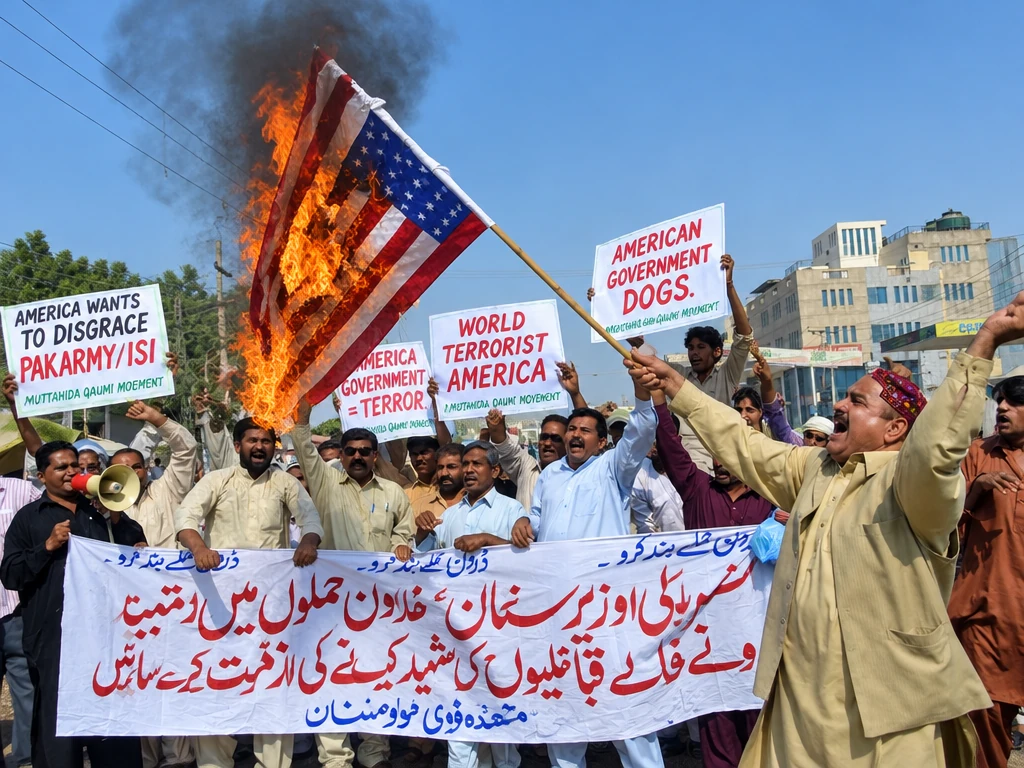
While America’s stance cannot be entirely called a pro-Pakistan narrative, India also wished to improve relations with Pakistan, there is no question that Washington’s policy often appeared more favorable to Pakistan than India, particularly because Pakistan strongly supported the plebiscite and the United States repeatedly endorsed the principle.
Pakistan became a major American Cold War partner, giving the relationship a strategic dimension that went beyond Kashmir. Yet the U.S. government did not officially adopt Pakistan’s broader argument that Kashmir simply belonged to Pakistan because it had a Muslim-majority population.
The American position was instead framed around a process. Washington wanted the final status to emerge through a peaceful, internationally credible mechanism rather than simply accepting one country’s claim.
The Difference Between Supporting a Principle and Supporting a Country
The difference between principle and alignment is one of the most important points in understanding the history.
Pakistan interpreted American support for the plebiscite as evidence that Washington recognized the legitimacy of its position. India interpreted the same policy as an unacceptable challenge to its sovereignty and legal claims. Washington, meanwhile, tried to describe its position as a commitment to an internationally supported settlement.
The reality was more complicated because American strategic interests increasingly favored Pakistan. That created an unavoidable perception problem. Even if U.S. diplomats believed they were supporting a neutral principle, the broader geopolitical relationship could make that principle appear politically tilted.
The Kashmir issue thus became an early example of how foreign-policy credibility depends not only on what a government says its policy is, but also on how its partners and rivals interpret the policy in context.
The U.S. Position Was Not Completely Static
It is a mistake to imagine that Washington announced one Kashmir policy in 1947 and repeated it unchanged for decades. The basic themes remained remarkably durable—peace, negotiations, international legitimacy, and self-determination—but the emphasis shifted as circumstances changed.
The United States moved from preferring direct India-Pakistan negotiations to supporting UN involvement, then toward a combination of UN diplomacy and bilateral engagement. By the late 1950s and early 1960s, the practical focus increasingly moved toward preventing war and encouraging the two countries to negotiate.
This evolution reflected experience. The plebiscite framework had not produced a final settlement, and the political environment had changed significantly since 1947.
From International Mediation Toward Bilateral Diplomacy
The shift toward bilateral diplomacy did not mean that Washington suddenly declared the Kashmir dispute irrelevant. Rather, American officials increasingly recognized that India and Pakistan themselves would ultimately have to agree on a workable settlement.
The U.S. government continued to encourage peaceful resolution while becoming less confident that another round of international pressure would produce a plebiscite.
This gradual change is visible in the historical record. Even in the 1950s, American officials sometimes argued that bilateral discussions might be more productive than further UN consideration. The traditional position therefore evolved not through one dramatic announcement but through a gradual adjustment from internationally supervised self-determination toward pragmatic diplomacy between India and Pakistan.
The 1960s and a Changing American Approach
The 1960s brought another major transformation.
The India-Pakistan relationship remained tense, and the second India-Pakistan war in 1965 demonstrated that Kashmir could still trigger large-scale military conflict.
The U.S. historical record describes the 1965 fighting as part of the broader Cold War environment and notes that American relations with India had been complicated by India’s nonalignment. By this stage, preventing another war had become important and urgent.
The traditional plebiscite language therefore gradually lost some of its centrality in practical American diplomacy. Washington increasingly supported negotiation and regional stability rather than attempting to force a particular constitutional outcome.
This was not an overnight abandonment of the earlier position. Instead, it was the result of decades of experience showing that the original framework could not be implemented without India and Pakistan’s voluntary cooperation.
How India Viewed Traditional U.S. Kashmir Policy
India’s traditional view of U.S. Kashmir policy can be summarized in one central concern: Kashmir should not be treated as an international dispute requiring outside mediation between India and Pakistan.
For New Delhi, Kashmir was deeply connected to the history of Partition, Pakistan’s involvement in the conflict, India’s constitutional framework, and its territorial sovereignty.
Washington often approached Kashmir through the lens of India-Pakistan relations, regional stability, and conflict prevention. New Delhi, however, increasingly viewed this approach as intrusive, unbalanced, and disconnected from India’s core position that Jammu & Kashmir was an integral part of India.
Learn more on this topic, with our post: How India Viewed Traditional U.S. Kashmir Policy: The Powerful Story of a Deeply Frustrating Diplomatic Era
How Pakistan Viewed Traditional U.S. Kashmir Policy
Pakistan generally welcomed the traditional U.S. approach because it gave international legitimacy to the demand for a plebiscite.
Pakistani leaders repeatedly urged Washington to reaffirm that position, particularly when they believed India was moving away from earlier commitments.
U.S. documents from the 1950s show Pakistani officials treating American support as strategically important and seeking stronger American action at the United Nations.
Why Washington Eventually Moved Away From the Old Formula
The traditional formula became harder to sustain because the political circumstances that had made it attractive in 1947–49 had changed. India developed further and stronger and Pakistan entered into more entrenched positions with Afghanistan and Iran, Kashmir’s political and administrative realities evolved, and the international balance shifted with the Cold War.
The proposed plebiscite remained a recognizable diplomatic principle, but the practical path toward implementing it became increasingly remote.
Washington also learned that international pressure could have unintended consequences. Pushing India too hard could strengthen anti-American sentiment and encourage closer Indian relations with the Soviet Union.
Pressuring Pakistan too little could undermine American credibility with an important ally. The United States therefore gradually moved toward a policy centered more heavily on conflict prevention, bilateral negotiations, and regional stability.
Traditional Policy Versus the Modern U.S. Approach
The contrast between the traditional and modern American approaches is striking. The traditional position placed considerable emphasis on the UN framework and a plebiscite, particularly during the 1950s. Modern U.S. diplomacy generally does not advocate an internationally supervised plebiscite as the central American solution. Instead, Washington has tended to encourage India and Pakistan to address their differences through dialogue and peaceful means while treating Kashmir primarily as an issue for the two countries to manage.
That evolution does not mean the United States has forgotten the history of self-determination or the UN role. Rather, it reflects a fundamental change in strategic circumstances. The modern U.S.-India relationship is far more strategically important than it was during the early Cold War, particularly in the context of the Indo-Pacific and China’s rise. Pakistan remains important to American regional calculations, but the geopolitical structure surrounding South Asia is dramatically different from the 1950s.
Conclusion
The traditional U.S. position on Kashmir was fundamentally built around the idea that the dispute should be resolved peacefully and that the people of Kashmir should have a meaningful role in determining the territory’s final status.
In the earliest period, Washington preferred direct negotiations between India and Pakistan, but it increasingly supported UN involvement when bilateral diplomacy failed.
The United States then became closely associated with the proposed free and impartial plebiscite under UN auspices, particularly during the 1950s. Official American records from the period repeatedly confirm that this was a central part of Washington’s policy.
“The traditional U.S. position on Kashmir supported Pakistan.” saying that here, makes the story appear way simpler than original.
India’s legal and political arguments were non- negotiable but due to Pakistan’s position with the United States, the U.S. simply couldn’t ignore Pakistan’s claim int Jammu & Kashmir. The Pakistani alliance with Washington made American policy appear more favorable to Islamabad, while India’s nonalignment made New Delhi especially sensitive to perceived Western pressure.
The phrase “Traditional U.S. position on Kashmir” refers to a specific period and diplomatic philosophy rather than a permanent American doctrine. The United States once viewed a UN-supervised plebiscite as the preferred route to resolving the dispute; over time, it became clear that the conditions necessary for such a process did not exist.
Understanding that transition helps explain the much different role Washington plays in the Kashmir question today.
Also Do Follow — The Kashmir Policy of the United States: A Study of the Perceptions, Conflicts and Dilemmas
Parama Sinha Palit, Researcher, IDSA
Also Follow our latest article titled “America’s Kashmir Version: The Evolution Of U.S. Policy toward Jammu & Kashmir — From Cold War diplomacy and India-Pakistan Mediation to Washington’s Increasingly India-centric Strategic Relationship and the 2026 Srinagar moment“
FAQs About the Traditional U.S. Position on Kashmir
1. Did the United States traditionally support a plebiscite in Kashmir?
Yes. During much of the early post-independence period, particularly the 1950s, the United States supported the concept of a free and impartial plebiscite under UN auspices as a way to determine Kashmir’s final status. U.S. State Department records explicitly describe this as the basis of the American position during the period. Read More.>
2. Was the United States traditionally on Pakistan’s side over Kashmir?
Not officially in the sense of accepting Pakistan’s entire territorial claim. Washington supported a process of self-determination rather than declaring that Kashmir automatically belonged to Pakistan. However, because Pakistan strongly favored the plebiscite and was also a U.S. Cold War partner, American policy often appeared more sympathetic to Pakistan than India considered acceptable. Read More.>
3. Why did the United States support UN involvement?
Washington believed the Kashmir dispute threatened peace and stability in South Asia. The UN offered an international framework for a cease-fire, negotiations, demilitarization, and a potential plebiscite while reducing the need for the United States to act as the sole mediator. The United States was also directly involved in the UN Commission for India and Pakistan. Read More.>
4. Why was the Kashmir plebiscite never held?
The proposed plebiscite depended on agreement over several difficult preliminary issues, especially demilitarization and political conditions. India and Pakistan disagreed over how those conditions should be implemented and what each side was required to do first. Read More.>
5. When did the traditional U.S. position begin to change?
The shift was gradual rather than tied to one single date. During the late 1950s and 1960s, Washington increasingly recognized that a plebiscite was difficult to implement and that renewed conflict between India and Pakistan posed a major strategic danger. The United States consequently placed greater emphasis on bilateral negotiations, peaceful settlement, and regional stability, while moving away from the earlier plebiscite-centered approach. Read More.>
1 thought on “What Was the Traditional U.S. Position on Kashmir? 5 Powerful and Controversial Facts”