India’s urban story is changing. Cities that once stood in the shadow of Delhi, Mumbai, Bengaluru, and Hyderabad are attracting new businesses, expanding residential areas, and becoming important centres of education, trade, manufacturing, and employment. From growing district headquarters to ambitious Tier 2 and Tier 3 cities, economic activity is spreading beyond the traditional metropolitan centres.
But there is an uncomfortable question behind this progress: Are our cities developing their civic foundations as quickly as they are expanding their economies?
A new commercial complex can transform a neighbourhood’s appearance. A highway can reduce travel time between two districts. A residential township can attract thousands of families. Yet none of these developments automatically guarantees clean streets, safe public spaces, reliable drainage, breathable air, or efficient municipal services.
This is where the debate about Indian Infrastructure needs a sharper focus. Infrastructure is not simply about building roads, bridges, railway stations, and impressive government projects. It is also about the less glamorous systems that determine whether ordinary people can live safely and comfortably.
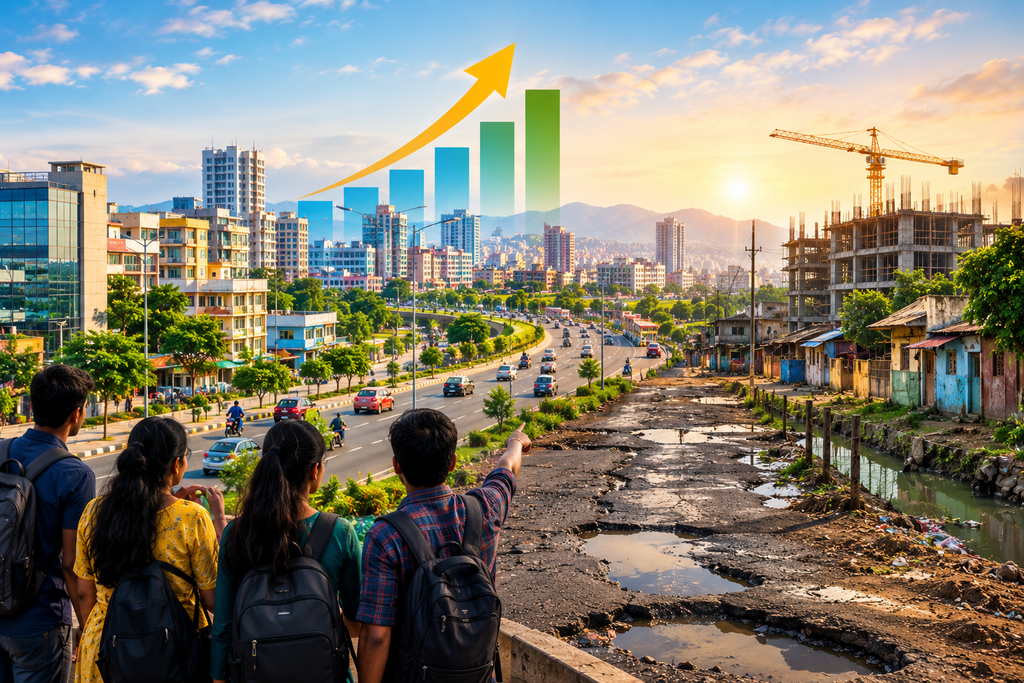
For residents of smaller cities, the difference between development on paper and development in practice can be painfully obvious. Traffic grows faster than road capacity. Waste accumulates faster than municipal systems can process it. Public gatherings attract enormous crowds without sufficient arrangements for safe movement. Administrative procedures turn straightforward civic complaints into prolonged exercises in frustration.
These problems do not mean that every smaller Indian city is failing. Many have improved their public services, introduced innovative waste-management systems, and invested in cleaner mobility. The problem is that progress remains uneven, and economic growth can conceal serious weaknesses in local governance.
Here are nine areas where India’s urban ambitions need stronger civic foundations.
Table of Contents
Indian Infrastructure: The Growing Gap Between Urban Ambition and Civic Reality
The most visible side of Indian infrastructure is often the easiest to celebrate. A new flyover, railway station, industrial corridor, or shopping district provides a tangible sign of progress. Such projects can improve connectivity, attract investment, and create employment.
Civic infrastructure works differently. Its success is often invisible because people notice it most when it fails. A functioning drainage system rarely makes headlines, but a flooded neighbourhood can disrupt thousands of lives. Efficient waste collection attracts little attention, while overflowing bins quickly become a public complaint.
India’s Economic Survey 2025–26 highlights the importance of improving urban infrastructure and moving beyond isolated projects towards better-performing urban systems. It also points to the substantial investment required to accommodate the country’s growing urban population.
The challenge is particularly important for smaller cities because their growth frequently extends beyond the areas originally designed to accommodate it. New housing colonies, industrial estates, educational institutions, and commercial developments can spread into surrounding areas before essential services catch up.
A city may therefore appear more prosperous while becoming harder to navigate and less comfortable to live in. Its property values may rise even as its drainage remains unreliable. Its commercial activity may increase even as public transport struggles to keep pace.
The real measure of Indian infrastructure is not how quickly a city expands, but how effectively it supports the people who live and work there.
1. Rapid Urbanisation Without Adequate Planning
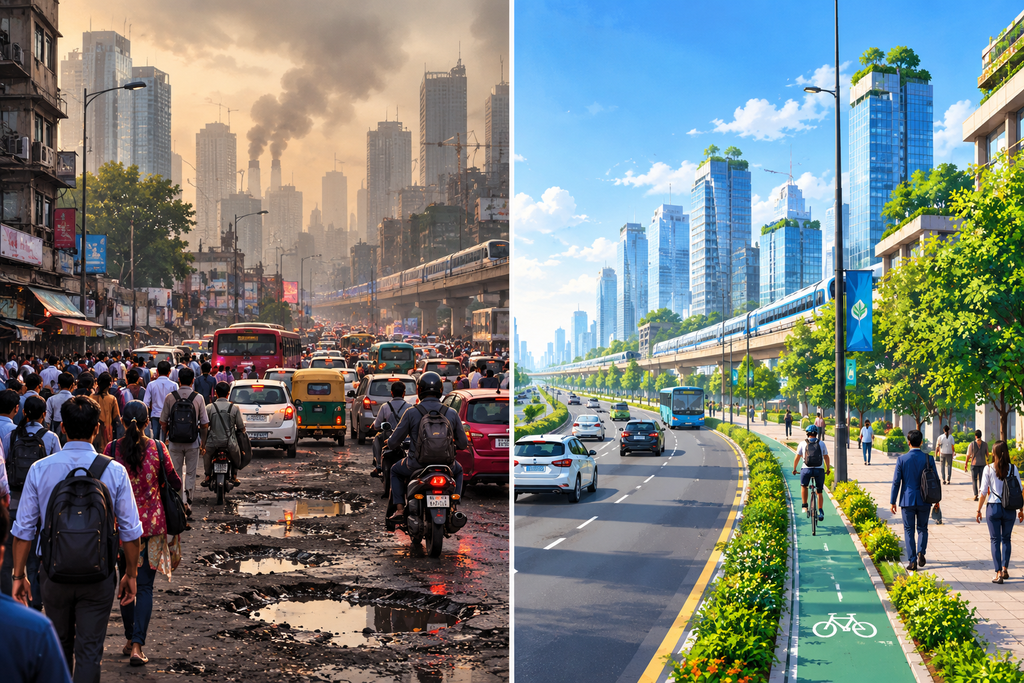
Urban expansion is not inherently a problem. In fact, well-managed urbanisation can improve access to employment, education, healthcare, and public services. Smaller cities have a genuine opportunity to distribute economic growth more widely and reduce some of the pressures facing India’s largest metropolitan areas.
The danger arises when construction moves ahead without corresponding investment in the systems that make urban life function.
Consider a city where a new residential colony accommodates several thousand families. The development may include wide internal roads, landscaped entrances, and modern apartment buildings. But what happens when residents leave for work each morning? Can nearby junctions handle the additional traffic? Is there an adequate water supply? Where will sewage go? Can ambulances and fire engines reach the buildings without obstruction?
These questions should be answered before a development becomes occupied, not after residents begin filing complaints.
Unfortunately, urban planning can become fragmented. One department approves roads, another manages water supply, and a third handles drainage. Developers may complete their projects while the surrounding public systems remain inadequate. The result is a collection of modern buildings connected to an urban environment that has not been upgraded to support them.
This is a fundamental weakness in Indian infrastructure planning. Construction decisions, population projections, environmental assessments, and municipal service capacity must be considered together.
Smaller cities need enforceable master plans, regularly updated population estimates, transparent land-use rules, and stronger coordination between development authorities and municipal bodies. They also need to protect natural drainage channels, wetlands, and public spaces before rising land prices make preservation politically and financially difficult.
Growth without planning does not eliminate the cost of development. It simply transfers that cost to residents.
2. When Religious Gatherings Become Public Safety Emergencies
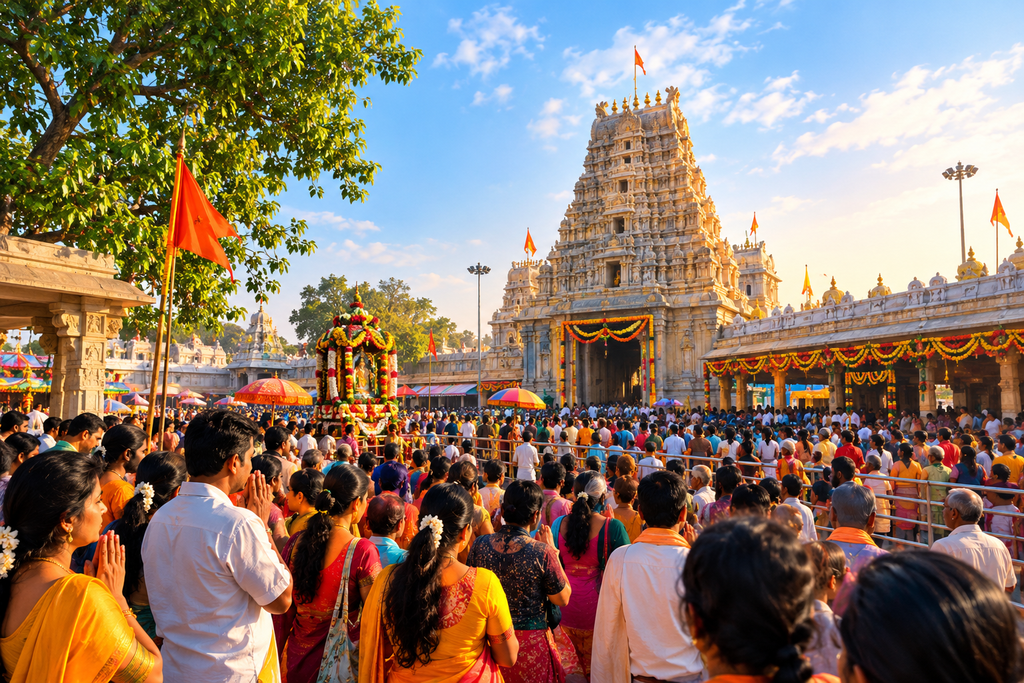
India’s religious traditions bring millions of people together every year. Pilgrimages, festivals, temple celebrations, and other gatherings are important expressions of faith and community life. They also create demanding logistical challenges, particularly when large crowds converge on locations with narrow entrances, limited roads, and insufficient emergency facilities.
The danger is not religious participation itself. The danger is treating crowd management as a temporary administrative arrangement rather than a serious public-safety responsibility.
A gathering can become hazardous when the number of people exceeds a site’s safe capacity, entry and exit routes are poorly separated, or crowd movement is not monitored effectively. Confusing announcements, sudden changes in weather, inadequate barricades, and blocked emergency routes can make a dangerous situation worse.
India received a stark reminder of these risks in October 2026, when a crowd surge at Kolkata’s Chorbagan Sarbojanin Durga Puja pandal killed at least 19 people and injured around 25 others, according to contemporary reporting. The incident again raised questions about crowd density, movement restrictions, coordination, and emergency preparedness.
Such tragedies must not be reduced to a debate about which political party deserves blame. The essential questions are practical: Was the expected attendance assessed realistically? Were safe capacity limits enforced? Could emergency services reach the site? Were organisers and public authorities prepared to respond when conditions changed?
The answers should emerge from transparent investigations rather than premature political claims.
Why Crowd Management Must Come Before Political Credit
Public officials often receive recognition for organising large festivals and religious events. Yet successful administration should be judged by more than attendance figures, temporary facilities, publicity, or the visible presence of senior officials.
It should also be judged by whether people can enter, move around, and leave safely.
Authorities must assess the capacity of the entire surrounding area, including roads, railway stations, bus terminals, pedestrian routes, and nearby medical facilities. A venue may have sufficient space inside but still become dangerous if thousands of people are forced through a narrow approach road.
Effective preparation requires trained personnel, real-time crowd monitoring, clearly marked evacuation routes, controlled entry, reliable public-address systems, and coordination between police, municipal authorities, organisers, and emergency medical teams.
There must also be clear accountability when safety arrangements fall short. Independent investigations should establish what happened, identify failures, and recommend changes that can be verified.
This is an essential test of Indian infrastructure because public safety depends on more than permanent buildings. Temporary barriers, pedestrian corridors, communication systems, and emergency access routes are also infrastructure.
Faith deserves respect. So do the people who gather to practise it. No religious celebration, political spectacle, or administrative achievement should be considered successful if preventable failures expose visitors to unacceptable danger.
3. Traffic Congestion and the Growing Cost of Poor Mobility
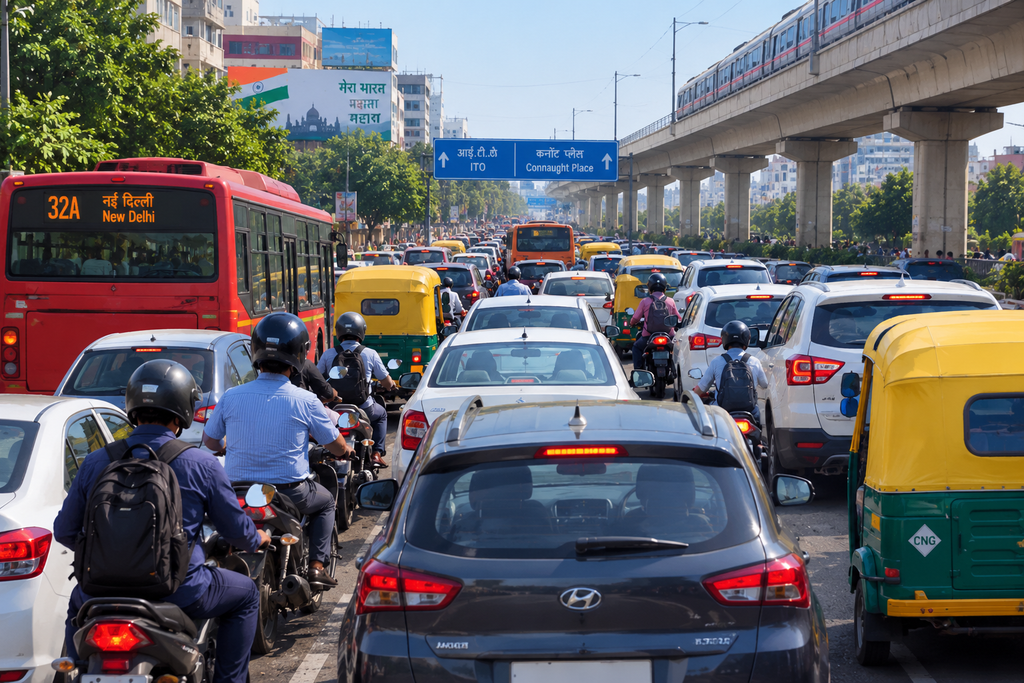
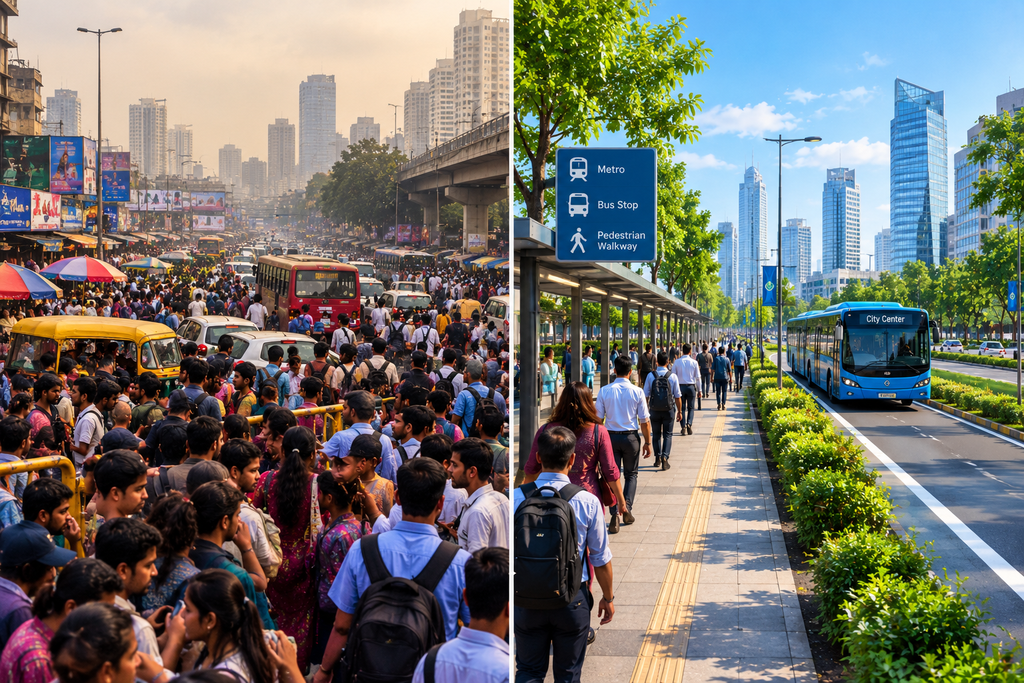
In many smaller Indian cities, owning a vehicle has become a practical necessity rather than a lifestyle choice. Public transport may be limited, residential areas may lie far from employment centres, and pedestrian infrastructure may be inadequate.
As incomes rise, more households purchase motorcycles, scooters, and cars. Commercial vehicles also increase as construction, retail, deliveries, and industrial activity expand. When road capacity and public transport do not grow at a similar pace, congestion becomes part of everyday life.
A road that once handled local traffic may suddenly serve new housing colonies, school buses, delivery vehicles, and long-distance traffic. Intersections become bottlenecks. Vehicles occupy footpaths. Informal parking reduces usable road space. Pedestrians are forced to walk close to moving traffic because continuous, accessible pavements are missing.
The consequences extend beyond inconvenience. Congestion wastes time, increases fuel consumption, delays emergency vehicles, and contributes to air pollution. It can also reduce productivity when workers spend a substantial part of their day travelling short distances.
The mistake is to assume that building more roads will solve every traffic problem. Additional road capacity may offer temporary relief, but demand can grow again when private vehicles remain the easiest option for most journeys.
Indian infrastructure policy needs to prioritise connected public transport, reliable bus services, safe walking routes, protected cycling infrastructure where appropriate, organised parking, and better junction design. Traffic enforcement must address dangerous driving and obstruction rather than focusing exclusively on issuing fines.
Smaller cities also need to plan transport around actual travel patterns. A city with expanding colleges, hospitals, industrial areas, and markets needs affordable routes connecting these destinations, not merely isolated road upgrades.
The goal should be straightforward: make daily travel predictable, safe, and affordable without forcing every household to depend on a private vehicle.
4. Air Pollution: The Invisible Price of Urban Growth
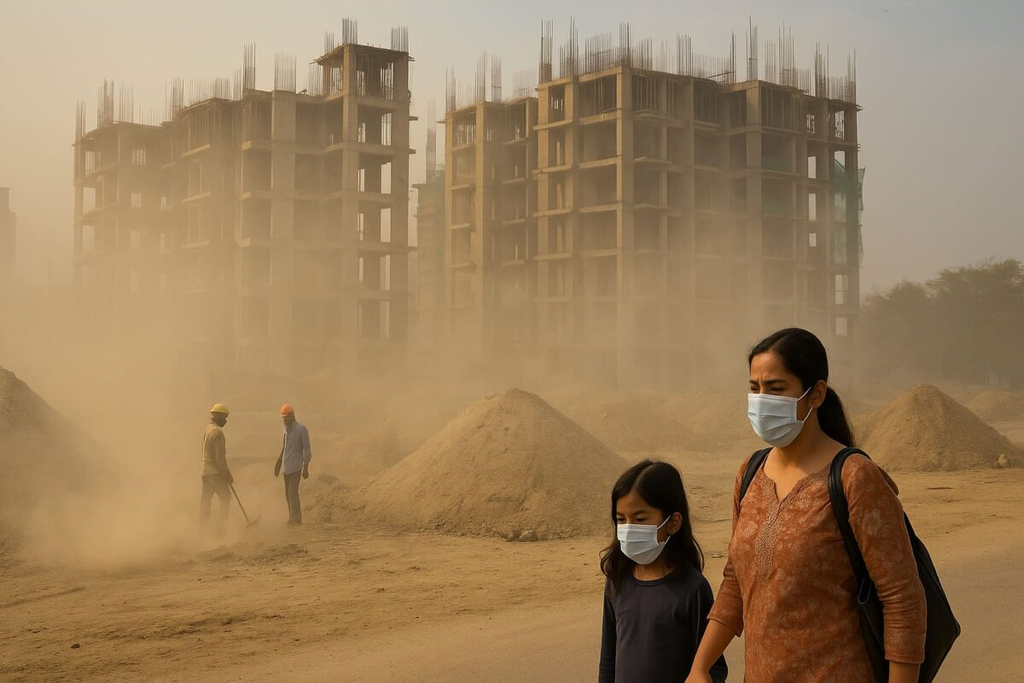
Economic development is often visible in the form of construction cranes, new factories, busier roads, and expanding commercial districts. Air pollution is less visible, but its effects can be far more serious.
Vehicle exhaust, road dust, construction activity, industrial emissions, waste burning, and household fuel use can all contribute to poor air quality. The relative importance of these sources varies between cities, which is why local evidence matters.
Smaller cities are not automatically protected from pollution simply because they have fewer skyscrapers or less traffic than major metropolitan centres. Industrial activity, dusty roads, heavy vehicles, seasonal burning, and weak pollution monitoring can create significant local problems.
The scale of India’s monitoring challenge remains important. A Centre for Science and Environment analysis published in February 2026 reported that continuous air-quality monitoring was concentrated in a limited number of urban areas, leaving many districts and smaller population centres without adequate real-time coverage.
Without reliable measurements, officials cannot confidently identify the most important pollution sources or assess whether their interventions are working. Residents, meanwhile, may experience persistent pollution without having access to useful local information.
There has been progress. The government reported in September 2026 that 108 cities recorded lower annual PM10 concentrations in the 2025–26 financial year than in 2017–18 under the National Clean Air Programme comparison. However, improvement against an earlier baseline does not automatically mean that pollution has fallen to safe levels everywhere.
That distinction matters. A city can improve and still have an unhealthy environment.
Indian infrastructure must support cleaner mobility, dust-controlled construction, better road maintenance, reliable public transport, scientific waste disposal, and stronger industrial enforcement. Cities should also expand monitoring where pollution risks and population exposure justify it.
Clean air cannot be delivered through awareness campaigns alone. It requires measurable targets, credible data, and consistent enforcement.
Economic growth that leaves residents breathing polluted air is an incomplete development achievement.
5. Sanitation and Waste Management: The Everyday Test of Governance
Few things reveal the quality of municipal administration as clearly as the condition of a city’s streets, drains, public toilets, and waste collection systems.
A city can construct a modern shopping district and still struggle to maintain cleanliness in surrounding neighbourhoods. New residential developments may generate substantial amounts of waste without sufficient collection capacity. Public markets may produce large volumes of organic material, plastic packaging, and other refuse that require regular removal.
When waste collection is irregular, residents often resort to dumping rubbish in vacant plots, roadside drains, or informal disposal points. In some places, open burning becomes an additional source of pollution. Waste that enters drains can contribute to waterlogging, while poorly managed dumping sites can create unpleasant conditions and environmental risks.
These problems should not automatically be blamed on residents. Public behaviour matters, but it is difficult to maintain clean neighbourhoods when collection services are unreliable, bins are poorly located, and enforcement is inconsistent.
The scale of the wider challenge is substantial. NITI Aayog’s urban environmental analysis describes the pressure that waste and wastewater generation places on collection, treatment, and disposal systems. Its findings underline the need to strengthen infrastructure rather than relying on collection drives alone.
India has also demonstrated that improvement is possible. The government’s experience with urban cleanliness programmes and waste-management initiatives shows that sustained collection, public participation, and better operational systems can produce meaningful results.
The next challenge is to make those systems dependable across more cities and neighbourhoods.
Municipal authorities should publish collection schedules, expand waste segregation, strengthen material recovery and composting, and ensure that collected waste reaches authorised processing or disposal facilities. Public toilets need regular cleaning, adequate water, accessibility, and maintenance budgets.
There should also be clear responsibility for cleaning public spaces after markets, festivals, and other large gatherings.
A cleanliness campaign can improve a street for a day. A well-run municipal system keeps it clean throughout the year.
6. Water Supply, Drainage, and the Monsoon Problem
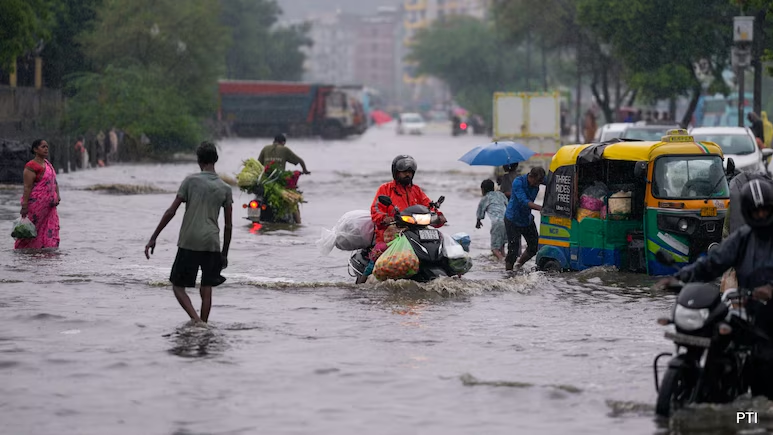
Reliable water supply and effective drainage are among the most basic responsibilities of an urban administration. Yet both can become serious weaknesses when cities expand faster than their supporting infrastructure.
Some neighbourhoods face irregular water supply and depend on storage tanks or private water deliveries. Others experience pressure on groundwater as residential and commercial demand increases. At the same time, inadequate sewage treatment can threaten water quality and place additional pressure on rivers, lakes, and other local water bodies.
Drainage presents a different but connected challenge. Heavy rainfall is a natural event, but the scale of urban flooding is also influenced by human decisions.
Construction over natural drainage channels, encroachment on wetlands, poorly designed stormwater drains, and the dumping of rubbish into waterways can reduce a city’s ability to handle intense rainfall. When roads and open spaces are covered with impermeable surfaces, less water can soak into the ground, increasing the burden on drainage systems.
The consequences can be severe. Flooded streets disrupt work and education, damage homes and vehicles, and make it difficult for ambulances and other emergency services to reach people who need assistance. Standing water can also create conditions that increase certain public-health risks.
This is not simply a problem for coastal cities or major metropolitan centres. Smaller cities with expanding built-up areas face similar planning questions.
Indian infrastructure investment should connect drinking-water supply, sewage networks, wastewater treatment, stormwater drainage, and groundwater management. These systems cannot be planned as unrelated projects because failure in one can undermine the others.
Authorities should map vulnerable areas, protect natural water channels, inspect drains before the monsoon, and publish clear maintenance responsibilities. New developments should be assessed for their effects on runoff and existing public services.
Flood management should begin before the rain arrives, not when roads are already underwater.
7. Bureaucratic Delays and the Accountability Deficit
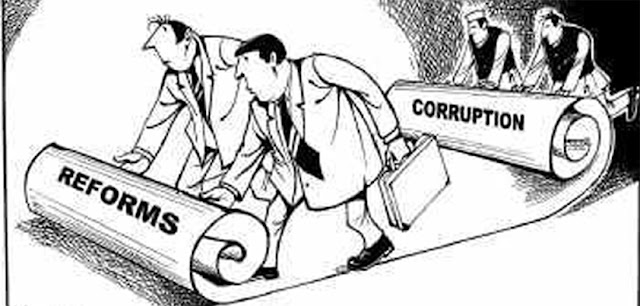
Infrastructure does not fail only because money is unavailable. It can also fail because institutions cannot turn available resources into reliable services.
A road project may be delayed by land disputes, repeated approvals, poor coordination, or weak contractor supervision. A drainage improvement may remain incomplete because one department finishes its work before another begins. A municipal complaint may move between offices without anyone taking responsibility for resolving it.
For residents, the distinction between a lack of resources and a lack of administrative capacity can be difficult to see. They experience the same outcome: a problem remains unresolved.
The criticism of bureaucracy should therefore be precise. Public officials work under different financial, legal, staffing, and political constraints, and many deliver essential services under difficult conditions. The problem is not that every official is inefficient. It is that systems can allow delays and poor performance to persist without clear consequences.
A city needs more than sanctioned budgets and project announcements. It needs competent project management, realistic timelines, transparent procurement, regular inspections, and a way for residents to track progress.
When a road is dug up for water pipes, electricity cables, and telecommunications work, departments should coordinate their schedules to avoid repeatedly damaging the same stretch. When a contractor misses a deadline, the administration should explain the delay and enforce the contract where appropriate.
Digital grievance portals can help, but only when complaints lead to action. A ticket number is not a substitute for a functioning drain or a repaired streetlight.
Indian infrastructure requires stronger local institutions with adequate technical staff, predictable funding, and clear responsibility for outcomes. Municipalities also need better access to engineers, planners, environmental specialists, and data analysts.
The public should be able to ask simple questions and receive verifiable answers: Who is responsible? What is the deadline? How much has been spent? What remains unfinished?
Accountability begins when an administrative promise can be measured against a public result.
8. Urban Expansion Without Enough Affordable Public Services
A growing city attracts people because it offers opportunities. New businesses create jobs, educational institutions attract students, and hospitals draw patients from surrounding districts. But these opportunities can place pressure on public services when population growth is not reflected in investment decisions.
Consider a town that develops a major educational or industrial hub. The surrounding population rises, rental housing expands, and new shops open. Yet the nearest public hospital may still have limited capacity. Government schools may face overcrowding. Public transport routes may remain unchanged, while affordable housing close to employment centres becomes increasingly difficult to find.
The result is a city where economic opportunity expands faster than access to essential services.
These pressures can fall particularly heavily on lower-income households. Families may spend more time travelling, pay more for private transport, or rely on expensive private healthcare because public alternatives are difficult to access. Informal settlements can grow when formal housing supply fails to match demand.
Planning for urban growth must therefore include social infrastructure. Schools, primary healthcare centres, parks, public toilets, accessible streets, and affordable transport should be considered essential parts of city development rather than optional additions.
Housing policy also needs to consider the relationship between employment and transport. Building affordable homes far from jobs can simply replace a housing problem with a commuting problem.
Smaller cities have an opportunity to avoid some of the mistakes made by larger metropolitan areas. They can reserve land for public facilities, protect open spaces, develop mixed-use neighbourhoods, and establish transport links before new districts become densely populated.
The aim is not to make every city look the same. It is to ensure that people can access basic services without facing unreasonable costs or distances.
Economic growth should widen access to opportunity, not make everyday necessities harder to obtain.
9. Digital India, Physical Shortcomings: The Last-Mile Delivery Gap
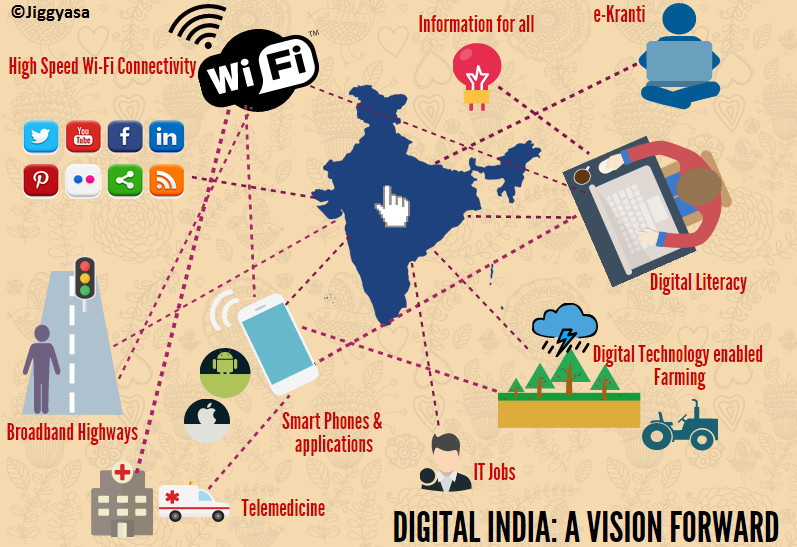
Digital services have created important opportunities for Indian cities. Online payments, electronic records, grievance portals, and technology-assisted monitoring can make public administration more accessible and transparent.
However, digital progress cannot compensate for missing physical infrastructure.
A resident may be able to submit an online complaint about a blocked drain, but the water will not disappear until a team clears it. A city may publish an air-quality dashboard, but the information will have limited value if pollution sources are not controlled. A digital property record can simplify administration, but it cannot replace reliable water supply or proper sewage treatment.
The problem is not technology itself. It is the assumption that introducing a digital platform automatically improves service delivery.
Effective digital governance requires reliable data, trained staff, functioning equipment, clear procedures, and a department that is accountable for acting on the information received.
Smaller cities may also face uneven access to digital services. Residents who lack reliable internet access, digital literacy, or familiarity with official procedures can struggle to use online systems. Essential services should remain accessible through practical offline alternatives.
Municipal authorities should connect digital complaint systems with field inspections, work orders, completion records, and public feedback. Residents should be able to see whether a complaint has been accepted, assigned, investigated, and resolved.
Technology can also help identify recurring failures. If the same road floods every monsoon or the same neighbourhood reports missed waste collection, the administration should investigate the underlying cause rather than repeatedly treating each complaint as an isolated event.
Digital India will deliver its full value when online efficiency produces visible improvements in people’s physical surroundings.
How Smaller Indian Cities Can Build Stronger Civic Foundations
The weaknesses described above are not inevitable. Smaller Indian cities can grow successfully if public investment focuses on the systems residents use every day.
First, municipal planning must become more closely connected to population growth and land development. Authorities should estimate future demand for water, sanitation, transport, schools, healthcare, and emergency services before approving large developments.
Second, cities need dependable maintenance budgets. Constructing a road, drain, or public toilet is only the beginning. Assets require inspections, repairs, cleaning, staff, and long-term funding. A modest project that remains functional for years can provide greater public value than an expensive facility that deteriorates soon after opening.
Third, local governments need stronger technical capacity. Urban planners, engineers, environmental specialists, public-health professionals, and emergency-management teams should be involved in decisions that affect public safety and service delivery.
Fourth, public projects should be measured by outcomes rather than announcements. A city should track whether travel times improve, waste reaches proper treatment facilities, sewage is treated, flooding decreases, and emergency access becomes more reliable.
Fifth, crowd safety must become a non-negotiable requirement for large public gatherings. Attendance estimates, safe capacity limits, emergency routes, trained personnel, and clear communication should be established well before an event begins.
Finally, citizens must have meaningful opportunities to participate in local governance. Public consultations, accessible grievance systems, transparent budgets, and independent performance assessments can help residents identify problems before they become crises.
These changes require coordination between municipal bodies, state governments, central programmes, private developers, and local communities. No single department can deliver effective urban development alone.
The purpose is not to slow economic growth. It is to make growth more durable, safer, and fairer.
Conclusion: India’s Urban Future Needs More Than Concrete and Headlines
India’s smaller cities have a genuine opportunity to become engines of economic growth. Their expanding markets, educational institutions, industrial activity, and growing professional communities can create new pathways to prosperity.
But growth brings responsibilities. As more people live, work, travel, and gather in urban areas, the systems supporting them must become stronger.
The shortcomings of Indian infrastructure are not always visible in photographs of new buildings or ribbon-cutting ceremonies. They appear in the time lost to traffic, the waste left uncollected, the streets flooded after heavy rain, the air people breathe, and the public gatherings where inadequate preparation can have devastating consequences.
These are not minor inconveniences that can be postponed until a city becomes wealthier. They are central questions of public health, safety, economic productivity, and administrative competence.
India has demonstrated that it can undertake ambitious infrastructure projects. The next challenge is to ensure that development reaches the everyday spaces where people actually live.
Smaller cities need better roads, but they also need functioning pavements. They need new housing, but they also need sewage treatment. They need growing commercial districts, but they also need clean air, reliable water, and effective waste collection. Above all, they need institutions capable of planning ahead and accepting responsibility when public systems fail.
The standard for success should be simple: Can a city’s residents live more safely, travel more easily, breathe cleaner air, and access essential services as the economy grows?
If the answer remains uncertain, then the work of development is not finished.
India’s urban future will not be secured by concrete alone. It will depend on whether its civic foundations can keep pace with its ambitions.
Read our new blog “CJP Gen-Z Protests: 6 Explosive Reasons a Promising Movement Lost Its Message and Descended Into Toxicity” where we talked about the new CJP Gen-Z protests and its downfall.
Frequently Asked Questions
1. What are the biggest challenges facing Indian infrastructure in smaller cities?
Smaller cities face a range of interconnected challenges, including traffic congestion, inadequate drainage, inconsistent water supply, poor waste management, air pollution, limited public transport, and insufficient municipal capacity. Rapid urbanisation can make these problems worse when population growth outpaces investment in essential services. The severity of each issue varies by location, and solutions must reflect local conditions.
2. Why is urban growth outpacing civic infrastructure in India?
Urban growth can move faster than public infrastructure planning, funding, and implementation. Housing, commercial buildings, and industrial developments may be completed before roads, drainage, sewage systems, and public transport are upgraded. Fragmented departmental responsibilities and weak coordination can add further delays. Better land-use planning, realistic population forecasts, and stronger municipal institutions can help reduce this gap.
3. How does poor infrastructure affect public health?
Poor infrastructure can expose residents to polluted air, unsafe water, inadequate sanitation, unmanaged waste, and flooding. Congested roads can also delay emergency vehicles and increase exposure to traffic-related pollution. Inadequate crowd management creates additional risks at large public gatherings. Reliable sanitation, clean-air measures, safe mobility, and effective emergency planning are therefore essential public-health investments.
4. Why is crowd management important at religious gatherings?
Large religious gatherings can bring substantial numbers of people into confined spaces over a short period. If entry and exit routes are inadequate or crowd movement is poorly controlled, dangerous pressure can build quickly. Effective planning requires safe capacity limits, clear routes, trained personnel, reliable communication, emergency medical support, and coordination between organisers and authorities. These measures protect devotees while allowing religious events to take place safely.
5. How can India improve infrastructure in Tier 2 and Tier 3 cities?
India can improve infrastructure in smaller cities through integrated urban planning, reliable municipal funding, stronger maintenance systems, better public transport, modern sanitation facilities, improved drainage, and more effective pollution control. Local authorities should also publish measurable service targets and make project performance transparent. The priority should be to ensure that new development is supported by the essential services needed for a healthy, safe, and productive urban life.