America’s Kashmir Version: From Cold War diplomacy and India-Pakistan mediation to Washington’s increasingly India-centric strategic relationship and the 2026 Srinagar moment. The current version is however not necessarily proof that Washington has formally abandoned every element of its longstanding Kashmir position.
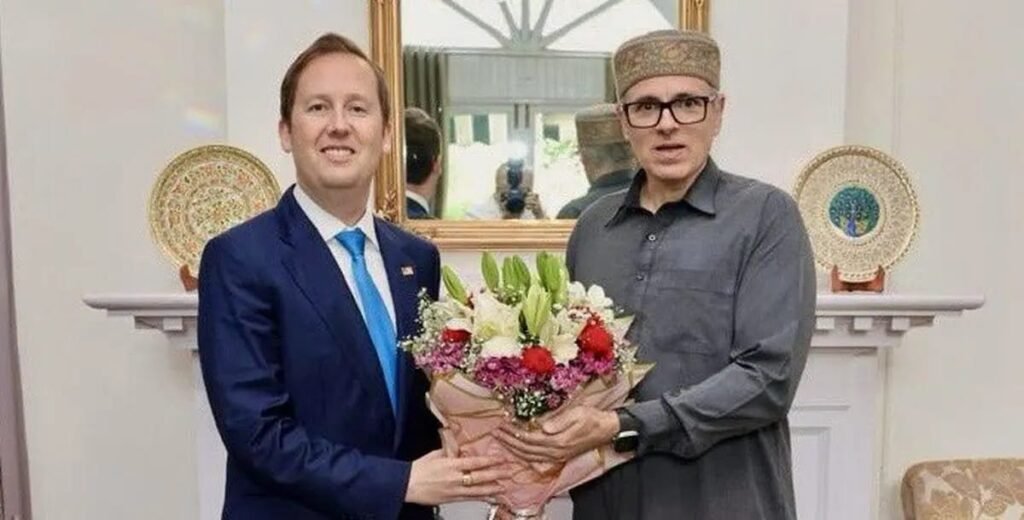
Table of Contents
Why Kashmir Has Always Mattered to Washington
The American Version of Kashmir however states, Jammu & Kashmir never simply remained a territorial dispute between India and Pakistan.
It became a problem sitting at the intersection of geography, nationalism, nuclear deterrence, terrorism, China, and in a wider balance of power in Asia.
That is why America’s approach to Kashmir has repeatedly changed without ever becoming completely detached from the dispute.
During the Cold War, Washington worried about Pakistan’s relationship with the Soviet Union, China’s emergence, and India’s non-aligned foreign policy.
Later, the United States became increasingly concerned about the possibility that an India-Pakistan confrontation could escalate into a nuclear conflict.
The Congressional Research Service has described Kashmir as a potential nuclear flashpoint and noted that the longstanding U.S. policy was to encourage peaceful settlement while balancing relations with both New Delhi and Islamabad.
That history explains why America’s Kashmir policy often looks contradictory when viewed from a single moment.
At one point, Washington could speak about dialogue, mediation, and the wishes of Kashmiris.At another, it could emphasize bilateral negotiations between India and Pakistan.
Later, as the U.S.-India relationship became strategically important, Kashmir increasingly appeared through the lens of regional stability, counterterrorism, and the broader India partnership.
The crucial point is that the United States has not moved in one straight line from “pro-Pakistan” to “pro-India.”
Instead, Washington’s priorities have changed as America’s perception of Asia has changed.
The 2026 Srinagar episode is therefore best understood not as an isolated diplomatic remark but as the latest chapter in a policy evolution that began more than seven decades ago.
From a Regional Dispute to a Nuclear Flashpoint
The Kashmir question became internationalized almost immediately after the partition of British India in 1947, when India and Pakistan fought over the former princely state.
The United Nations subsequently became involved, and Security Council Resolution 47 proposed a sequence involving Pakistani withdrawal, Indian force reductions, and conditions for a plebiscite.
Those conditions were never fulfilled, and the political reality of Kashmir evolved in very different directions over the following decades.
For American policymakers, however, the strategic significance of Kashmir expanded dramatically.
The region became a place where two rival states could move from political confrontation to military conflict, while both eventually developed nuclear weapons.
The wars of 1965, 1971, and 1999 demonstrated that Kashmir could trigger or intensify broader India-Pakistan crises.
The 1999 Kargil conflict was particularly important to Washington because India and Pakistan had tested nuclear weapons only the previous year.
America’s concern was no longer merely whether Kashmir would remain unresolved; it was whether a crisis in Kashmir could produce a catastrophic war between two nuclear-armed states.
The Cold War and America’s Early Kashmir Calculus
During the Cold War, American policy toward South Asia was shaped by calculations that had little to do with today’s India-U.S. strategic partnership.
Washington saw Pakistan as an important security partner, particularly because of its position near the Soviet Union, Afghanistan, Iran, and China. India, meanwhile, pursued non-alignment and maintained a substantial relationship with Moscow.
This did not mean Washington simply ignored India’s importance, but it meant that the strategic balance looked very different from the one familiar today. Kashmir therefore existed within a larger contest over influence in South Asia.
The United States periodically encouraged India and Pakistan to negotiate, but its ability to influence the dispute was constrained by mistrust on both sides and by India’s resistance to external involvement.
Washington and London attempted mediation during 1961 and 1962, including several rounds of talks.
The effort eventually collapsed after India indicated that it would not surrender control over the Kashmir Valley.
The episode illustrates a recurring feature of American diplomacy: Washington could encourage negotiations, but it could not manufacture political compromise where the principal parties considered the territorial issue existential.
India’s opposition to third-party mediation became progressively stronger, while Pakistan continued to favor international involvement because it believed outside pressure could help alter the status quo.
This divergence would shape American diplomacy for decades. The United States could talk about Kashmir, but every attempt to move from observation toward active mediation risked alienating New Delhi.
Why Washington Tried Mediation
The American interest in mediation was not necessarily driven by a single view of who should control Kashmir.
Instead, Washington generally wanted to reduce the possibility that the dispute would generate war and destabilize the wider region.
That objective became especially important whenever military tensions rose along the Line of Control.
From an American perspective, a negotiated settlement promised something more immediate than resolving every historical argument: it could reduce the probability of another India-Pakistan war.
The logic was pragmatic. If diplomacy could prevent shooting, prevent escalation, and keep the two governments talking, Washington had already achieved something strategically valuable.
Yet the problem was that Kashmir was never merely a technical security problem.
For India, territorial sovereignty was inseparable from national identity and constitutional politics.
For Pakistan, Kashmir was tied to the unfinished political consequences of partition and to its own national narrative.
For Kashmiris themselves, the question contained multiple competing aspirations, including autonomy, independence, integration, and different visions of political representation.
American diplomacy therefore encountered a problem that could not be solved through pressure alone. The more Washington appeared to take sides, the less useful it became as an intermediary.
The more neutral it tried to appear, the less leverage it had.
The Limits of Third-Party Diplomacy
The United States eventually learned that Kashmir diplomacy had a credibility problem built into it.
India generally argued that Kashmir was an issue to be handled bilaterally with Pakistan, while Pakistan sought international attention and third-party pressure.
The 1972 Shimla Agreement reinforced India’s preference for bilateralism by committing the two sides to resolve differences through peaceful means and bilateral negotiations or another mutually agreed peaceful method. U.S. historical records noted that the agreement included an understanding on resolving outstanding issues bilaterally and respecting the existing Line of Control.
This created a diplomatic trap for Washington.
If the United States actively mediated, India could accuse it of interfering in a bilateral issue.
If it refused to mediate, Pakistan could argue that Washington was abandoning its traditional role. Consequently, American policy gradually became less about solving Kashmir and more about managing Kashmir-related crises.
That distinction is fundamental to understanding the modern U.S. position.
Washington could encourage dialogue, condemn terrorism, support de-escalation, and raise human-rights concerns without claiming that America possessed the authority to determine the final political status of the territory.
The 1972 Shimla Agreement and the Bilateral Principle
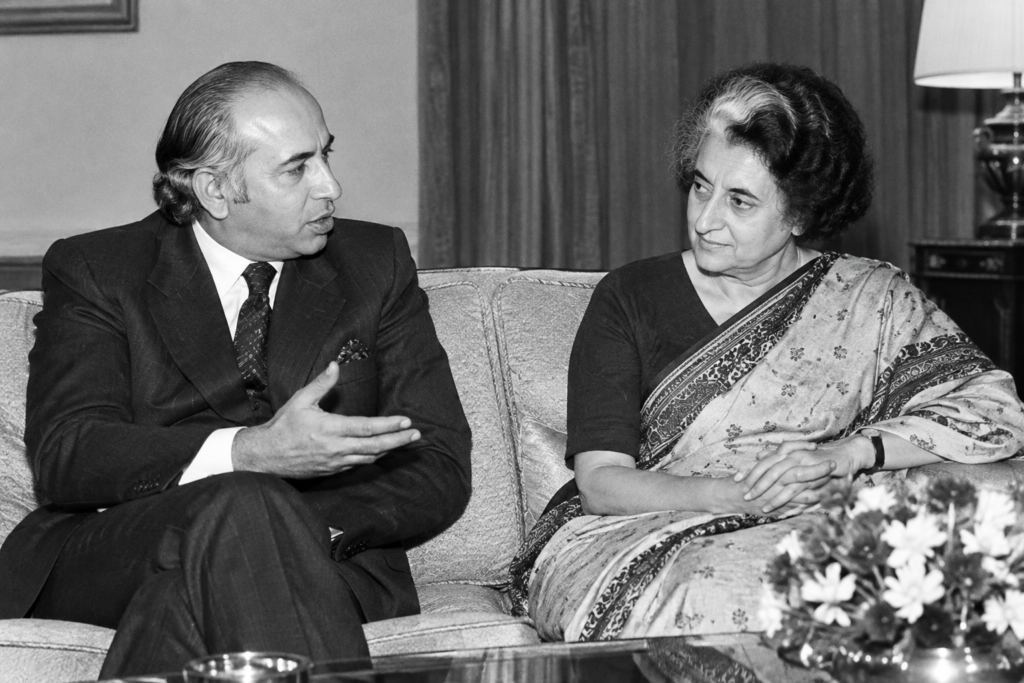
The Shimla Agreement became one of the most important reference points in the evolution of U.S. policy.
Although it did not magically settle the Kashmir dispute, it gave India a powerful diplomatic framework for resisting international mediation.
New Delhi could argue that India and Pakistan had already agreed to address outstanding differences peacefully and bilaterally.
That position became increasingly important as successive American administrations sought to maintain good relations with India without completely abandoning Pakistan.
The bilateral principle also suited a United States that increasingly wanted to avoid becoming permanently responsible for Kashmir.
Washington had many other interests in South Asia: nuclear nonproliferation, Afghanistan, terrorism, economic ties, and relations with China.
A permanent American mediation role would have required political capital that might not produce a settlement. Instead, Washington increasingly treated Kashmir as a crisis-management issue.
When tensions threatened to become dangerous, the United States could intervene diplomatically; when the immediate crisis passed, it could step back.
This pattern became particularly visible during later crises.
America’s objective was not always to define the final status of Kashmir. Often, the priority was much simpler: prevent military escalation, restore communication, and keep India and Pakistan from crossing thresholds that could produce wider conflict.
The 1990s: Kashmir Returns to the Center of U.S. Diplomacy
The end of the Cold War transformed America’s relationship with South Asia. The old strategic logic that had favored Pakistan became less compelling, while India’s economic importance and geopolitical weight became increasingly visible. At the same time, the insurgency in Jammu & Kashmir made the region a persistent security concern. Violence, militant infiltration, India-Pakistan tensions, and nuclear proliferation gradually converged into a problem Washington could not ignore. The United States therefore began approaching Kashmir less as a Cold War diplomatic dispute and more as a regional security challenge.
The 1998 nuclear tests by India and Pakistan dramatically raised the stakes. Suddenly, a conflict that had already produced wars now existed between two declared nuclear powers. The American calculation changed accordingly. A Kashmir crisis could no longer be viewed simply through the lens of conventional military balance. Any major confrontation carried the possibility of nuclear escalation. This helps explain why American presidents could become deeply involved during moments of crisis even when Washington remained reluctant to take ownership of the underlying territorial dispute.
If you want to learn more about the Traditional policies of the American Government towards Jammu & Kashmir from beginning of Independence till date in 2026, read our article on “What Was the Traditional U.S. Position on Kashmir?“
Clinton, Kargil, and Nuclear Risk
The 1999 Kargil War became a defining moment. Pakistani forces and militants crossed into positions on the Indian side of the Line of Control, producing intense fighting. The Clinton administration feared that the conflict could expand, especially because India and Pakistan had conducted nuclear tests the previous year. According to the U.S. State Department’s historical record, American diplomatic efforts included communications with both governments and President Bill Clinton’s July 4 meeting with Pakistani Prime Minister Nawaz Sharif, after which Pakistan agreed to withdraw infiltrators.
Kargil demonstrated what American crisis diplomacy could accomplish—and what it could not. Washington helped push the immediate confrontation toward de-escalation, but it did not resolve Kashmir. That became the template for future U.S. involvement. America could help prevent the fire from spreading without claiming that it could redesign the house. This was strategically useful because it preserved relationships with both governments while reducing nuclear risk. The lesson also strengthened the argument within Washington that Kashmir’s greatest danger was not simply its unresolved status but the possibility that another crisis could spiral beyond diplomatic control.
9/11 and the Changing U.S.-Pakistan-India Equation
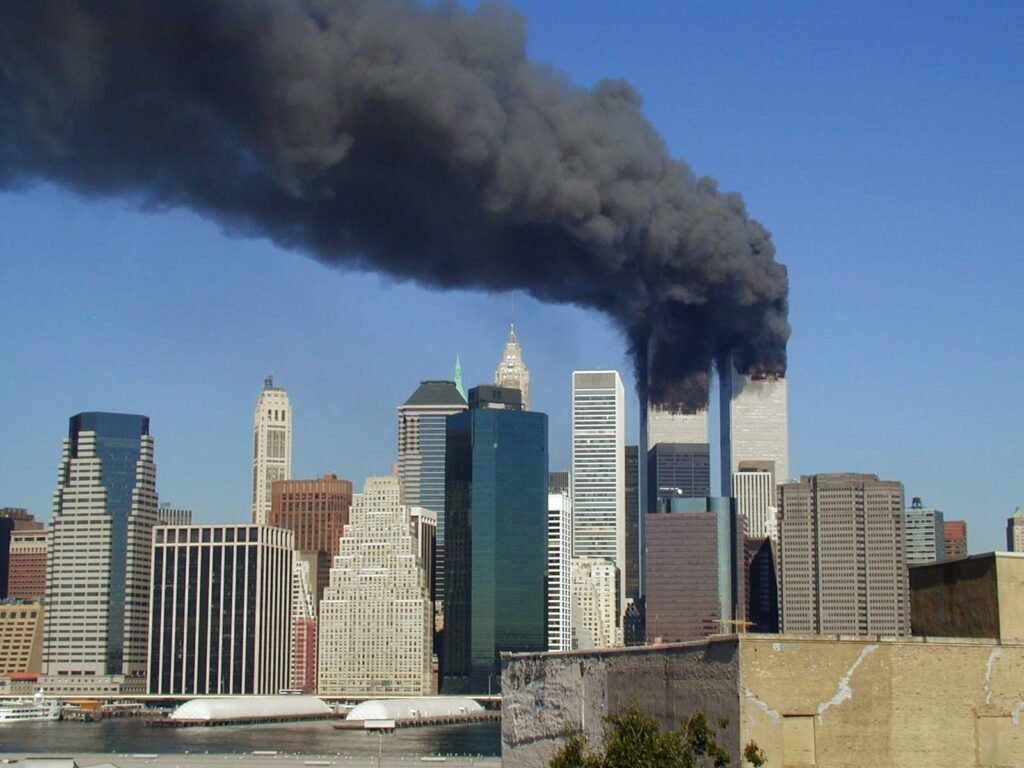
Image: Wikimedia Commons. See the original file page for the photographer, source, and applicable license information.
The September 11 attacks again transformed America’s South Asia policy. Pakistan became indispensable to U.S. operations in Afghanistan, while India increasingly emerged as a major economic and strategic partner. Washington consequently had to maintain two relationships that were becoming harder to balance. Pakistan mattered because of geography, counterterrorism, and Afghanistan. India mattered because of its size, economy, democracy, military capabilities, and growing importance in the Indo-Pacific.
Kashmir became caught between these competing priorities. Washington wanted Pakistan to help counter militant organizations while also encouraging restraint toward India. At the same time, it wanted India to remain a long-term strategic partner without appearing to endorse every Indian policy. This balancing act was especially complicated because militant violence in Kashmir could affect both counterterrorism and India-Pakistan relations. The United States increasingly emphasized terrorism and regional stability alongside the traditional language of dialogue.
The shift was subtle but powerful. Earlier American policy had often asked, “How can Kashmir be settled?” The post-9/11 policy increasingly asked, “How can Kashmir-related violence be prevented from destabilizing South Asia?” Those questions overlap, but they are not the same.
The Strategic Turn Toward India
The most important long-term change in America’s Kashmir policy cannot be understood without considering the broader transformation of U.S.-India relations. Since the early 2000s, Washington and New Delhi have built increasingly extensive cooperation in defense, technology, trade, and regional security. The Congressional Research Service has described the U.S.-India strategic partnership as developing since 2005.
As that relationship deepened, the strategic context surrounding Kashmir changed. Washington still wanted India and Pakistan to avoid conflict, but the relative importance of the two countries to American strategy was no longer what it had been during the Cold War. India became increasingly important to U.S. thinking about the Indo-Pacific and China’s rise. Pakistan remained significant, but its relationship with Washington became more episodic and heavily shaped by security concerns.
This did not automatically make Washington “pro-India” on every issue. Rather, it created a hierarchy of interests. The U.S.-India strategic partnership became a major long-term asset, while Kashmir became one issue within a much larger relationship. That distinction helps explain why Washington’s language could remain formally cautious even as its broader strategic posture increasingly favored deeper engagement with New Delhi.
Obama, Modi, and the New Indo-Pacific Framework
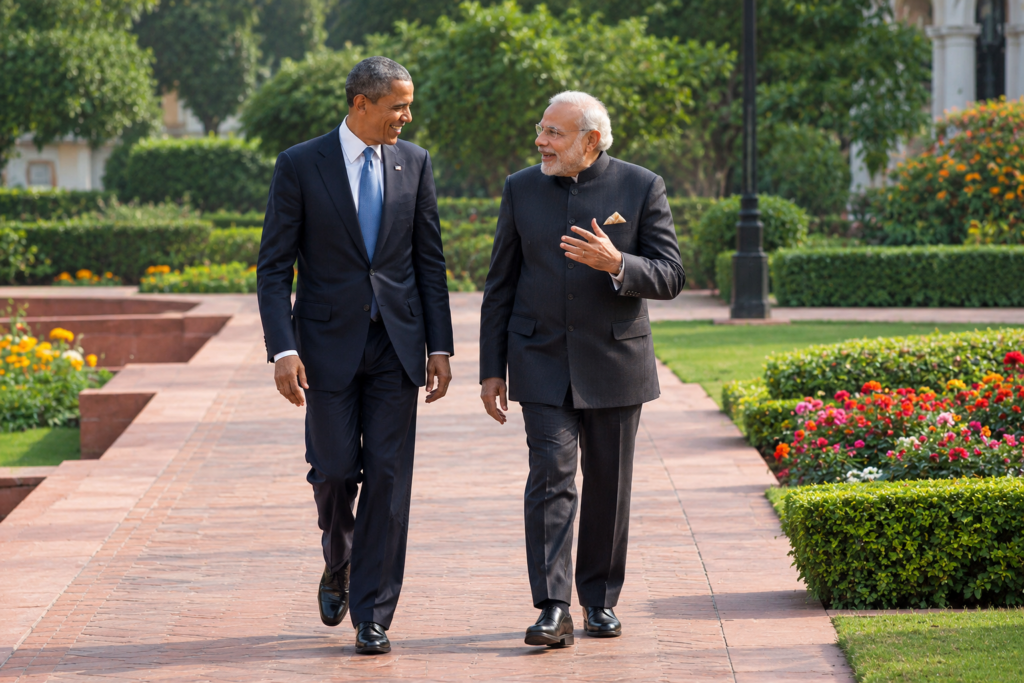
The Obama years accelerated the strategic transformation. The United States and India increasingly viewed each other as important partners in maintaining stability across the Indo-Pacific. The rise of China gave this relationship an additional strategic rationale. By the time Narendra Modi’s government came to dominate Indian politics, Washington’s interest in India extended well beyond South Asia.
Kashmir nevertheless remained sensitive. American officials continued to encourage dialogue and restraint, but the United States increasingly avoided language that could be interpreted as accepting a direct mediation role. This reflected both India’s diplomatic position and Washington’s broader strategic calculation. A government that wanted India as a major Indo-Pacific partner had little incentive to repeatedly challenge New Delhi publicly over Kashmir unless a crisis threatened wider security interests.
The result was a new balance: support India strategically, encourage stability regionally, and avoid unnecessarily internationalizing Kashmir. This formula has survived several administrations because it serves a basic American objective: maintain the strategic relationship with India while preventing India-Pakistan tensions from becoming a major regional crisis.
Trump and the Return of Kashmir Mediation
Donald Trump’s first administration briefly disrupted that pattern. In 2019, Trump publicly offered to mediate the Kashmir dispute, generating strong reactions in both India and Pakistan. India’s position remained that Kashmir should be addressed bilaterally and that outside mediation was unacceptable. The episode demonstrated how quickly presidential rhetoric could reopen an issue that diplomats had spent decades trying to manage carefully. The Congressional Research Service recorded Trump’s July 2019 mediation offer and noted the longstanding American position favoring negotiations between India and Pakistan while considering the wishes of Kashmiris.
The offer was important precisely because it was unusual. Washington had increasingly moved away from an explicit mediation posture, yet the president’s statement suggested that the United States could still return to that role under certain circumstances. The episode also highlighted a recurring tension between presidential diplomacy and institutional continuity. A president can make a dramatic statement in minutes, but American foreign policy is built through years of relationships, bureaucratic practice, congressional positions, and strategic calculations.
The 2019 episode ultimately did not create a durable American mediation process. Instead, it reinforced how politically sensitive the Kashmir issue remained.
Article 370 and Washington’s Difficult Balancing Act
India’s 2019 decision to revoke the constitutional provisions associated with Jammu & Kashmir’s special status and reorganize the former state into two union territories produced another major test for Washington. The move was welcomed by New Delhi as an internal constitutional and administrative decision, while critics argued that the process raised questions about rights, political freedoms, communications restrictions, and the status of a disputed territory. The Congressional Research Service recorded both the Indian government’s explanation and international concerns surrounding the changes.
Washington faced a familiar dilemma. The United States wanted to preserve its growing relationship with India, but American lawmakers and human-rights advocates also raised concerns about developments in Kashmir. Congressional attention included resolutions and hearings focusing on human rights in Jammu & Kashmir.
This episode revealed something important about U.S. policy: strategic partnership does not eliminate disagreement. It changes the political environment in which disagreement occurs. Washington could criticize particular policies while still expanding defense and strategic cooperation with India. The relationship therefore became capable of containing disputes that might once have damaged the partnership more severely.
Biden’s Kashmir Approach: Quiet Diplomacy and Strategic Continuity
The Biden administration largely inherited the strategic architecture built over previous decades. The United States continued strengthening relations with India while maintaining an interest in preventing India-Pakistan conflict. The basic American objective remained crisis prevention rather than an ambitious attempt to impose a settlement.
That approach reflects geopolitical reality. India is too important to Washington’s Indo-Pacific strategy to treat the bilateral relationship as hostage to every disagreement over Kashmir.
At the same time, Pakistan remains a nuclear-armed state whose instability can have consequences far beyond Kashmir. Washington therefore has reasons to preserve communication with Islamabad even as the strategic center of gravity moves toward New Delhi.
This is why the modern American approach can appear ambiguous. Washington wants India to become stronger without wanting India and Pakistan to become more dangerous. Those goals can coexist, but only if the United States maintains enough diplomatic access to both sides to encourage restraint during crises.
Why Washington’s Kashmir Language Has Changed
Language matters enormously in diplomacy, especially on disputed territories. Compare phrases such as “mediation,” “dialogue,” “bilateral negotiations,” “de-escalation,” “terrorism,” and “territorial integrity.” Each carries a different political message. Over time, Washington has increasingly preferred language emphasizing peace, stability, bilateral dialogue, counterterrorism, and regional security rather than promising to determine Kashmir’s political future.
That shift reflects India’s growing strategic importance. It also reflects America’s experience with failed mediation efforts. Washington has learned that there is a difference between having diplomatic influence and having diplomatic authority. The United States can exert enormous pressure during a crisis, but it cannot simply compel India and Pakistan to accept a settlement that contradicts their core political positions.
The result is a policy that looks less dramatic than Cold War mediation but may actually be more sustainable. Rather than trying to solve the Kashmir puzzle directly, Washington increasingly seeks to keep the puzzle from becoming a trigger for war.
Kashmir After the 2025 India-Pakistan Crisis
The security environment surrounding Kashmir has remained volatile. Recent developments have reinforced the importance of crisis management, including continued concerns about militant networks and cross-border security. In August 2026, India’s National Investigation Agency conducted searches at ten locations in Jammu & Kashmir in an investigation involving alleged links to Pakistan-based Lashkar-e-Taiba handlers.
At the same time, political instability in Pakistan-administered Kashmir has demonstrated that the region’s political difficulties are not limited to the India-controlled side. Regional elections in July 2026 were accompanied by deadly clashes and protests over governance, electoral integrity, and economic grievances, according to Reuters.
These developments matter for Washington because they complicate any simplistic India-versus-Pakistan narrative. Kashmir is not merely a line on a military map. It contains societies, political institutions, competing national narratives, security forces, militant organizations, economic grievances, and populations with different political aspirations. Any American policy that focuses exclusively on the India-Pakistan strategic balance risks overlooking those internal dimensions.
The 2026 Srinagar Moment
The most revealing recent episode came in August 2026, when U.S. Ambassador to India Sergio Gor visited Jammu & Kashmir, including Srinagar. During the visit, Gor described Jammu & Kashmir as an “important part of India” and said the United States would reevaluate its travel advisory for the region in light of what he described as improved security conditions.
That statement deserves attention because diplomatic language about sovereignty is rarely accidental. Earlier American policy frequently used formulations that recognized Kashmir as disputed and emphasized negotiations between India and Pakistan. The 2026 Srinagar statement did not amount to a formal treaty or a new legal recognition of India’s sovereignty over every part claimed by India. But politically, it was significant because it placed an American ambassador physically in Srinagar and coupled the visit with language emphasizing Kashmir’s place within India.
The timing was equally important. The visit occurred after years of deepening U.S.-India strategic relations and amid continuing India-Pakistan tensions. The episode therefore became a symbol of the India-centric phase of America’s Kashmir policy. It did not erase Washington’s interest in regional stability, but it demonstrated how far the diplomatic vocabulary had moved from the era when American presidents openly contemplated mediation.
Sergio Gor’s Statement and Its Diplomatic Meaning
Gor’s visit also carried a practical dimension. His comments about potentially revising the U.S. travel advisory suggested that Washington was assessing security conditions on the ground rather than treating Jammu & Kashmir exclusively as a high-risk diplomatic zone.
Indian political leadership, however, emphasized that Kashmir’s issues should be addressed by New Delhi rather than Washington. Jammu & Kashmir Chief Minister Omar Abdullah said ahead of the visit that the region’s problems should be resolved by India’s central government rather than by the United States.
Pakistan responded sharply. Islamabad summoned the U.S. charge d’affaires after Gor’s remarks, objecting to the characterization of Jammu & Kashmir as an important part of India.
That reaction shows why the Srinagar moment matters. A sentence intended in Washington or New Delhi as a sign of strategic friendship can be interpreted in Islamabad as evidence that America’s traditional balancing posture is disappearing.
Why Pakistan Reacted So Strongly
Pakistan’s response makes sense when viewed against the history of U.S. policy. For decades, Islamabad benefited from Washington’s willingness to treat Kashmir as an international dispute requiring dialogue and crisis management. Even when the United States did not support Pakistan’s preferred outcome, the very fact that Washington discussed Kashmir as a dispute gave Pakistan diplomatic space.
A more India-centric American vocabulary reduces that space. If Washington increasingly describes Jammu & Kashmir through the language of Indian territorial administration rather than unresolved bilateral dispute, Pakistan faces a diplomatic disadvantage. This is particularly sensitive because Pakistan has consistently sought international attention for Kashmir, while India has consistently resisted third-party intervention.
The reaction also demonstrates that American neutrality is not perceived equally by all sides. India may see neutrality as unnecessary internationalization. Pakistan may see the same neutrality as recognition that the dispute remains unresolved. The United States has historically tried to navigate between those interpretations. The Srinagar episode suggests that this balancing act is becoming harder to sustain.
Is America Abandoning Its Old Kashmir Position?
Not necessarily—but the center of gravity has clearly shifted. The United States still has strong reasons to oppose escalation between India and Pakistan. The possibility of military confrontation between two nuclear-armed countries remains a serious concern. The historical record shows that crisis prevention has been one of the most durable elements of American policy.
What has changed is the relative importance Washington assigns to the underlying political dispute. Instead of treating Kashmir as a problem that America might eventually help settle, Washington increasingly treats it as one component of a larger strategic relationship with India. That does not mean Washington will support every Indian decision or ignore human-rights concerns. It means that the U.S.-India relationship has acquired enough strategic weight to survive disagreements over Kashmir.
The 2026 Srinagar statement therefore should be read as evidence of policy evolution rather than a complete policy reversal. The United States has moved from active mediation toward crisis management, and from relatively balanced India-Pakistan engagement toward a relationship in which India occupies a much more important strategic position.
Human Rights, Security, and the Limits of Strategic Partnership
There is an important counterweight to the idea that America has simply “chosen India.” The United States has historically faced domestic pressure over human rights, religious freedom, civil liberties, and democratic institutions in South Asia. Congressional attention to Kashmir after the 2019 changes showed that strategic partnership does not eliminate these concerns.
The tension is likely to remain. Washington wants India to be a powerful strategic partner, but American policymakers also understand that the long-term credibility of that partnership depends partly on democratic values. India, meanwhile, strongly resists what it considers external interference in internal affairs. The resulting relationship is therefore neither unconditional support nor permanent criticism.
The practical reality is more complicated. Security cooperation can deepen while political disagreements remain unresolved. That is one of the defining characteristics of contemporary U.S.-India relations. Kashmir sits directly inside this contradiction: Washington may increasingly emphasize India’s territorial and strategic position while still retaining concerns about individual rights and political freedoms.
What Washington Gains From a Stronger India Relationship
The American interest in India extends far beyond Kashmir. India is central to Washington’s efforts to build a stronger balance of power in the Indo-Pacific, diversify strategic supply chains, expand defense cooperation, and respond to China’s growing influence. The Congressional Research Service has documented the long-running expansion of the U.S.-India strategic partnership and the growing importance of India’s regional role.
From this perspective, Washington has little incentive to make Kashmir the defining issue in the bilateral relationship. A more India-centric strategy allows the United States to pursue broader goals while handling Kashmir primarily through crisis prevention. This is strategically rational even if it frustrates Pakistan or critics who want stronger American engagement on the political status of Kashmir.
The danger is that strategic prioritization can create blind spots. If Washington becomes too closely identified with one side, it may lose some of the diplomatic credibility required to manage the next India-Pakistan crisis. Influence depends not only on strategic closeness but also on access and perceived credibility. That is the central challenge facing the United States as its relationship with India becomes deeper.
What the New U.S. Approach Means for Kashmir’s Future
The future of America’s Kashmir policy is unlikely to resemble either the Cold War model or the dramatic mediation efforts associated with earlier presidential diplomacy. The most probable direction is a combination of strategic alignment with India, limited engagement with Pakistan, opposition to terrorism, concern about nuclear escalation, and selective attention to human rights. The 2026 Srinagar episode fits comfortably within that emerging framework.
But Kashmir itself will continue to resist neat diplomatic categories. Political grievances, cross-border militancy, India-Pakistan rivalry, China-related territorial questions, and local aspirations all interact. Developments on both sides of the Line of Control demonstrate that the region’s politics cannot be reduced to a simple contest between New Delhi and Islamabad. Recent unrest in Pakistan-administered Kashmir and continuing security operations in Indian-administered Jammu & Kashmir both underline the complexity.
For Washington, the hardest question is therefore not whether it should support India or Pakistan. It is whether America can build a deeper strategic partnership with India without losing the ability to act as an effective crisis manager between India and Pakistan. If Washington succeeds, it may preserve influence without returning to unpopular mediation. If it fails, its increasingly India-centric posture could make future crises harder to manage.
Conclusion
America’s Kashmir story is ultimately a story about changing American priorities. During the Cold War, Washington viewed South Asia through the prism of alliances, non-alignment, Soviet influence, and regional competition. In later decades, Kashmir became increasingly associated with nuclear danger, terrorism, and crisis management. The 1999 Kargil conflict demonstrated the value of American intervention during moments of acute danger, but it also showed the limits of America’s ability to resolve the underlying dispute.
The strategic rise of India changed the equation again. As Washington and New Delhi built a broad partnership, Kashmir gradually moved from being a central diplomatic problem to being one issue inside a much larger strategic relationship. The United States continued to encourage peace and dialogue, but its appetite for direct mediation diminished. The 2019 Trump mediation episode briefly interrupted that trend, while the Article 370 controversy demonstrated the continuing tension between strategic interests and human-rights concerns.
The 2026 Srinagar moment may ultimately be remembered as another marker in that evolution. Sergio Gor’s visit and his description of Jammu & Kashmir as an important part of India, combined with Washington’s willingness to reconsider travel guidance, signaled a diplomatic posture that is noticeably closer to New Delhi’s framing than the language associated with earlier eras.
Yet America’s Kashmir policy has not become simple. Washington still needs to prevent India-Pakistan escalation, preserve channels with Pakistan, monitor terrorism, and manage the nuclear risks created by the unresolved dispute. The irony is that the stronger the U.S.-India relationship becomes, the more carefully Washington may need to manage its India-Pakistan diplomacy.
That is the real meaning of “America’s Kashmir Version.” It is not a final American answer to who owns Kashmir. It is the story of how Washington moved from trying to influence the destination to concentrating increasingly on managing the journey—and, by 2026, doing so from a strategic position much closer to India than at almost any earlier point in the relationship.
If you wish to learn more about the Kashmiri issues and the entanglements of the Indian – American Interests Read — 1. The Kashmir Issue and the USA Stand
2. Eight reasons why the United States should promote Kashmir peace talks now
Frequently Asked Questions
1. What was the traditional U.S. position on Kashmir?
The longstanding U.S. position emphasized peaceful negotiations between India and Pakistan while taking into account the wishes of the people of Jammu & Kashmir. The Congressional Research Service described this as the established American position, while also noting India’s opposition to third-party mediation and Pakistan’s efforts to internationalize the dispute. Read More.>
2. Why did the United States become closer to India?
The relationship expanded because of India’s economic importance, defense capabilities, democratic institutions, regional influence, and growing strategic significance in the Indo-Pacific. The rise of China has further strengthened the strategic rationale for closer U.S.-India cooperation.
3. Did the United States ever try to mediate Kashmir?
Yes. The United States participated in mediation efforts during the Cold War, and President Bill Clinton played an important crisis-diplomacy role during the 1999 Kargil conflict. President Donald Trump also publicly offered mediation in 2019. These efforts did not produce a permanent settlement of the dispute.
4. CJP Gen-Z Protests: 5 Powerful Questions About the Viral Youth Movement Challenging the System, what you should know to keep ahead of the crowd?
The origins of the CJP Gen-Z Protests were very different from those of a traditional political movement.There was no conventional political party with decades of history behind it.Instead, the movement grew through social media, satire and growing dissatisfaction among young people… Learn More.>
5. Learn about India’s recent Growth Data as the Economy recovers and leaps despite US- Iran tensions?
India Economic Growth has reached a strong 7.8% surge. This growth defies global trouble and shows a big win for the country. Markets and experts now see the nation as a bright spot in a slow world economy. Learn More.>
1 thought on “America’s Kashmir Version: The Powerful and Remarkable Evolution Of U.S. Policy toward Jammu & Kashmir — From Cold War diplomacy and India-Pakistan Mediation to Washington’s Increasingly India-centric Strategic Relationship and the 2026 Srinagar Moment”