Japan’s “Lost Decades” began after the collapse of its asset bubble in the early 1990s, leading to prolonged economic stagnation. Yet Japan remained a wealthy, technologically advanced country with strong financial institutions, major corporations and extensive development expertise.
At the same time, India was opening its economy and urgently needed long-term capital, modern infrastructure and advanced technology. This created a powerful economic connection. Through institutions such as JICA, Japan provided India with highly concessional, long-term financing for major projects, including the Delhi Metro, Western Dedicated Freight Corridor and Mumbai–Ahmedabad High-Speed Rail.
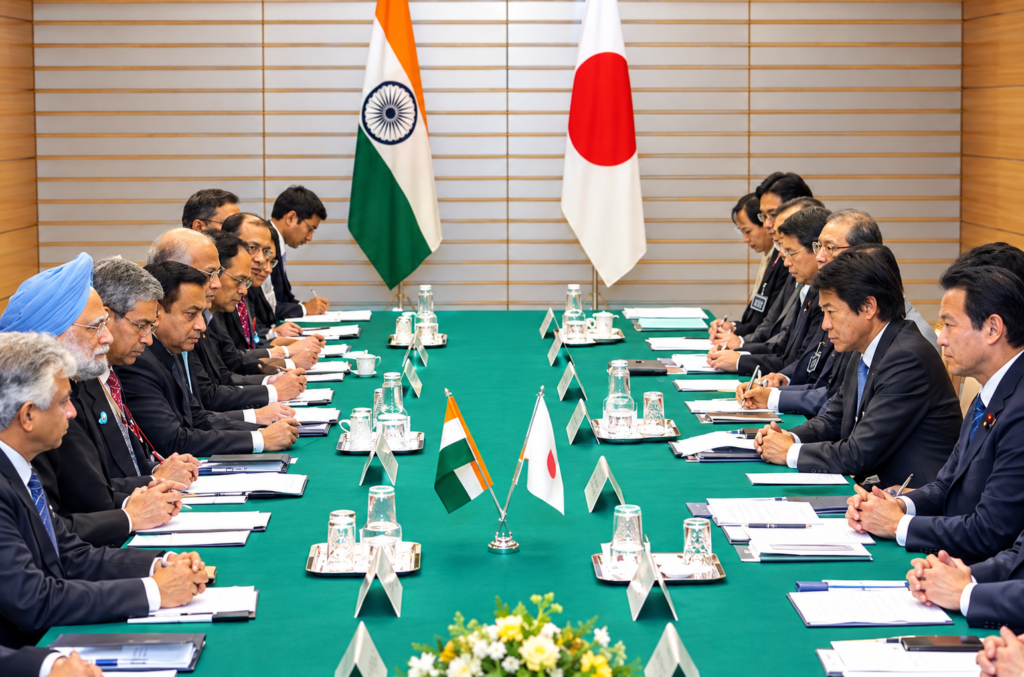
In this sense, How Japan’s Lost Decades Helped Build Modern India is a story of economic timing: Japan’s slower domestic growth coincided with India’s accelerating development, allowing the two countries to build a partnership based on patient capital, infrastructure, technology and long-term investment.
The relationship has now moved far beyond loans. It increasingly includes manufacturing, semiconductors, AI, clean energy and economic-security cooperation—making Japan an important long-term partner in India’s continuing economic transformation.
Table of Contents
How Japan’s Lost Decades Helped Build Modern India
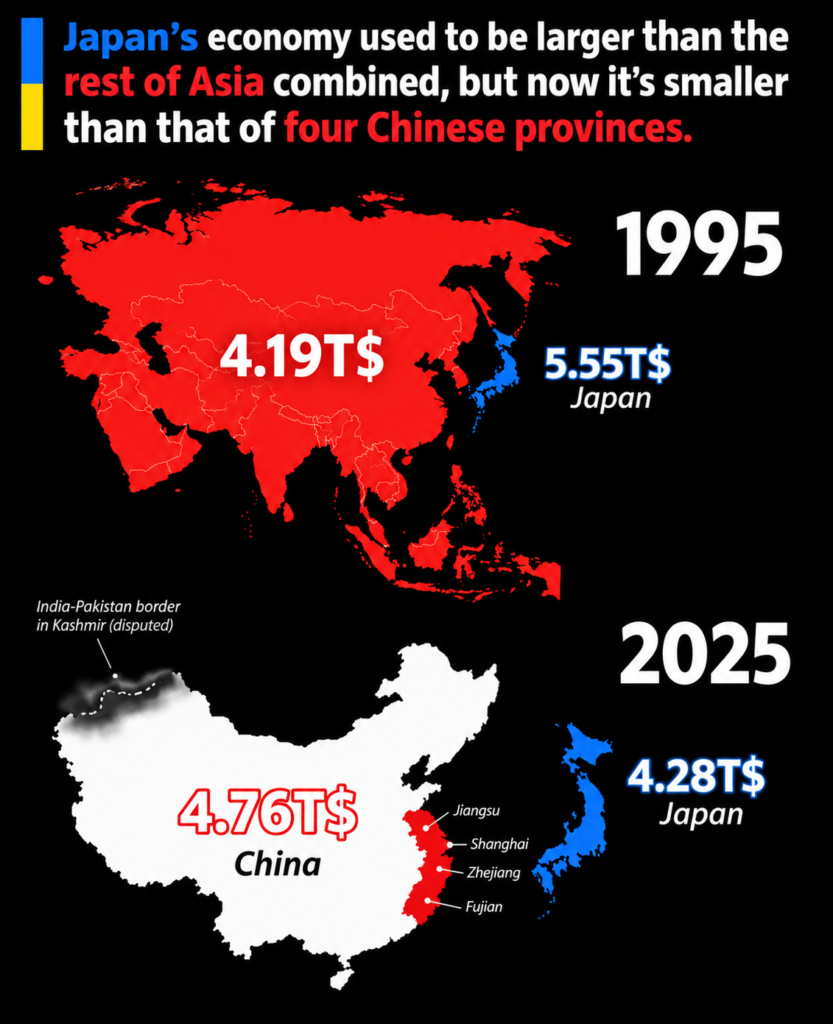
There is an intriguing irony in the story of modern Asia.
Japan, once regarded as an unstoppable economic machine, entered a prolonged period of stagnation after its asset bubble collapsed in the early 1990s. India, meanwhile, was beginning to open its economy, attract foreign capital and rethink how infrastructure could support long-term growth.
The two stories eventually began to intersect.
That does not mean Japan’s economic troubles somehow directly financed India’s rise. That would be far too simple. Japan’s “Lost Decades” were primarily a domestic economic story involving the collapse of asset prices, banking problems, weak investment and prolonged low growth. The IMF noted that Japanese growth slowed from roughly 4% annually in the 1980s to around 1.5% in the 1990s.
But something important happened alongside that stagnation.
Japan remained a wealthy, technologically advanced economy with substantial financial capacity, sophisticated companies and a powerful development-assistance system. Instead of disappearing from Asia’s economic landscape, Japan increasingly used long-term development finance, technology cooperation and private investment to build relationships across the region.
India became one of the major beneficiaries.
Today, the scale is striking. JICA says that, as of December 2024, more than ¥8.339 trillion in Japanese ODA loans had been extended to India across 336 projects.
So the more interesting question is not simply whether How Japan’s Lost Decades Helped Build Modern India.
It is how Japan’s economic transformation created the conditions for a remarkably patient form of financial and technological partnership just as India was searching for capital, infrastructure and industrial know-how.
Japan’s Lost Decades and India’s Emerging Opportunity
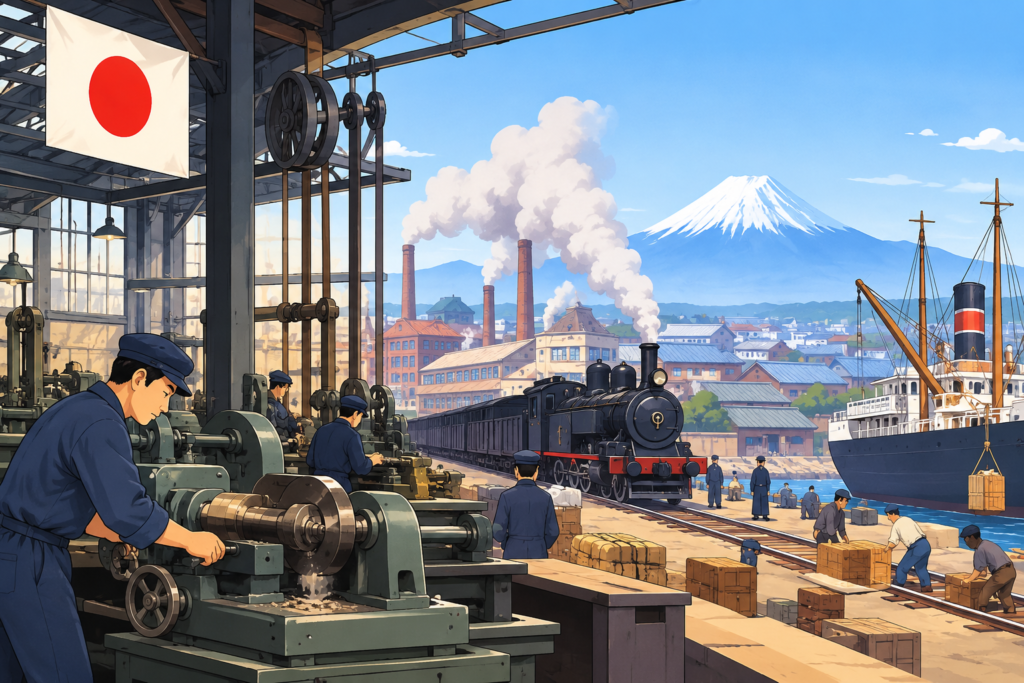
Japan entered the 1990s from an extraordinary position of economic strength.
The country’s post-war transformation had produced globally competitive companies, sophisticated banks, advanced manufacturing capabilities and huge accumulated financial wealth.
Then the bubble burst.
The IMF’s historical analysis describes the collapse of Japanese equity and land prices after 1990 and the resulting pressure on banks, businesses and investment. Business investment declined significantly during the decade, while growth became dramatically slower than in the 1980s.
This was the beginning of what became known as Japan’s Lost Decades.
Yet “lost” can be misleading if it suggests that Japan stopped being economically important.
It didn’t.
Japan still possessed technology that many developing economies wanted, companies capable of operating internationally and institutions capable of providing development finance on unusually long repayment horizons.
India was one of those economies.
India’s economic liberalisation had created a new environment for foreign investment. Infrastructure, however, remained a major constraint.
The country needed roads, ports, railways, metros, industrial corridors, power infrastructure and better urban transportation.
That created an unusual complementarity.
Japan had capital, technology and experience.
India had scale, demographics, an expanding market and increasingly ambitious infrastructure requirements.
The relationship was therefore not simply about one country giving money to another.
It became a meeting point between Japanese capital and Indian opportunity.
From Japanese Stagnation to Indian Infrastructure
This is where the central idea behind How Japan’s Lost Decades Helped Build Modern India needs some nuance.
Japan’s stagnation did not automatically make loans cheaper for India.
Japanese ODA has its own policy objectives, institutional processes and commercial considerations. Financing decisions are influenced by Japan’s development strategy and the feasibility and importance of individual projects.
Still, Japan’s position as a mature, capital-rich economy allowed it to provide something extremely valuable to India: patient money.
Infrastructure does not normally produce returns overnight.
A metro line can take years to construct.
A freight corridor requires enormous upfront investment before its economic benefits become visible.
A high-speed railway needs not only tracks but also stations, signalling, land, engineering systems and trained personnel.
Japanese development finance has often been designed around precisely this long horizon.
That distinction matters.
India did not simply need foreign money.
It needed financing that could remain aligned with projects whose economic returns would emerge over decades rather than quarters.
The First Billion-Dollar Connection: Japan’s Long-Term ODA Loans
The numbers tell part of the story.
JICA’s India programme had extended more than ¥8.339 trillion in cumulative ODA loans by December 2024. The organisation describes India as its largest development partner.
That is not a symbolic relationship.
It represents decades of financing across transport, urban development, environmental projects, industrial development and social infrastructure.
And the financing has continued.
In March 2025, JICA signed six ODA loan agreements with India worth up to ¥191.736 billion, equivalent at the time to roughly ₹11,181 crore. The projects covered areas including urban infrastructure, environmental conservation and livelihood improvement.
The structure of these loans is also important.
Consider the 2023 financing for the Mumbai–Ahmedabad High-Speed Rail project. JICA’s fifth tranche amounted to ¥400 billion, with a stated annual interest rate of 0.1%, a 50-year repayment period and a 15-year grace period.
That is dramatically different from the kind of financing a government might seek for a normal commercial project.
The message is simple: build today, develop over decades, repay over a very long period.
That kind of financial patience can matter enormously for a country undertaking infrastructure transformation.
Why Cheap, Patient Japanese Financing Mattered
Imagine trying to build a massive railway with a credit card.
The project might be economically sensible, but the financing structure would make little sense.
Infrastructure needs time.
This is one reason Japan’s development-finance model became important for India.
The objective was not simply to inject money into the economy. It was to finance projects capable of increasing productivity over a much longer period.
That distinction can be seen in India’s urban transportation projects.
A metro system can reduce commuting times.
Better transport can connect workers with jobs.
Freight infrastructure can lower logistics costs.
Industrial corridors can make factories more attractive.
And better connectivity can encourage private investment around public infrastructure.
In other words, Japanese financing often targeted the economic plumbing underneath growth.
You might not notice plumbing when it works.
But without it, everything becomes harder.
That is one of the clearest ways How Japan’s Lost Decades Helped Build Modern India can be understood—not as a story of Japan’s failure directly creating Indian success, but as a story of Japan’s post-bubble financial capacity becoming connected to India’s infrastructure needs.
The Second Connection: Delhi Metro and India’s Urban Transformation
Few projects illustrate the relationship better than the Delhi Metro.
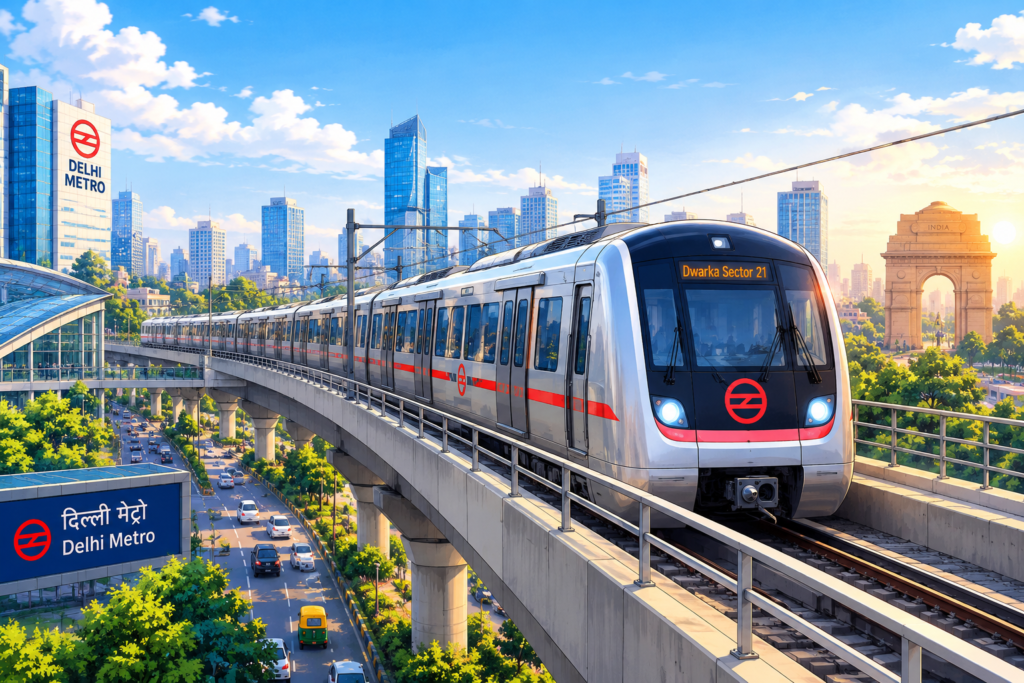
For millions of people, international economic cooperation can sound abstract.
A multi-billion-yen loan agreement sitting in a government document is difficult to visualise.
A metro train arriving at a station is not.
Japanese ODA played a major role in the development of Delhi’s mass rapid transit system, making the Delhi Metro one of the most recognisable examples of India-Japan infrastructure cooperation.
JICA itself has described the Delhi Metro as a project that transformed urban connectivity and helped provide safer and more affordable mobility, particularly for women.
The importance of such a project goes beyond trains.
Urban transportation determines how efficiently a city functions.
If workers spend hours stuck in traffic, businesses effectively lose productive time.
If industrial districts are poorly connected to residential areas, companies face higher labour and logistics costs.
If public transport is unreliable, private vehicle dependence rises.
So a metro system can influence economic productivity even when its contribution does not appear directly in GDP statistics.
This is why Japanese infrastructure cooperation has been significant.
It has frequently focused on projects where the economic benefits can spread across an entire urban ecosystem.
And that is an important part of India’s modernisation story.
The Metro Effect Goes Beyond the Rails
The real legacy of the Delhi Metro is not just the physical railway.
It is the idea that large Indian cities can build modern mass-transit systems at scale.
That idea subsequently appeared in Mumbai, Bengaluru and other metropolitan areas.
Japan’s role has continued into the present.
In March 2026, JICA announced a ¥92.4 billion ODA loan for Mumbai Metro Line 11. The planned project covers approximately 17.51 kilometres and 14 underground stations, connecting important parts of Mumbai’s evolving transport network.
This is what makes the relationship interesting.
It is not simply historical.
The same partnership model that helped shape earlier infrastructure projects is still being used for new urban challenges.
India has become a much larger economy than it was when many of these relationships began.
Yet the infrastructure gap remains enormous.
That gives Japan a continuing role.
The Third Connection: The Mumbai–Ahmedabad High-Speed Rail
Then comes the project that has perhaps captured the public imagination more than any other: the Mumbai–Ahmedabad High-Speed Rail.
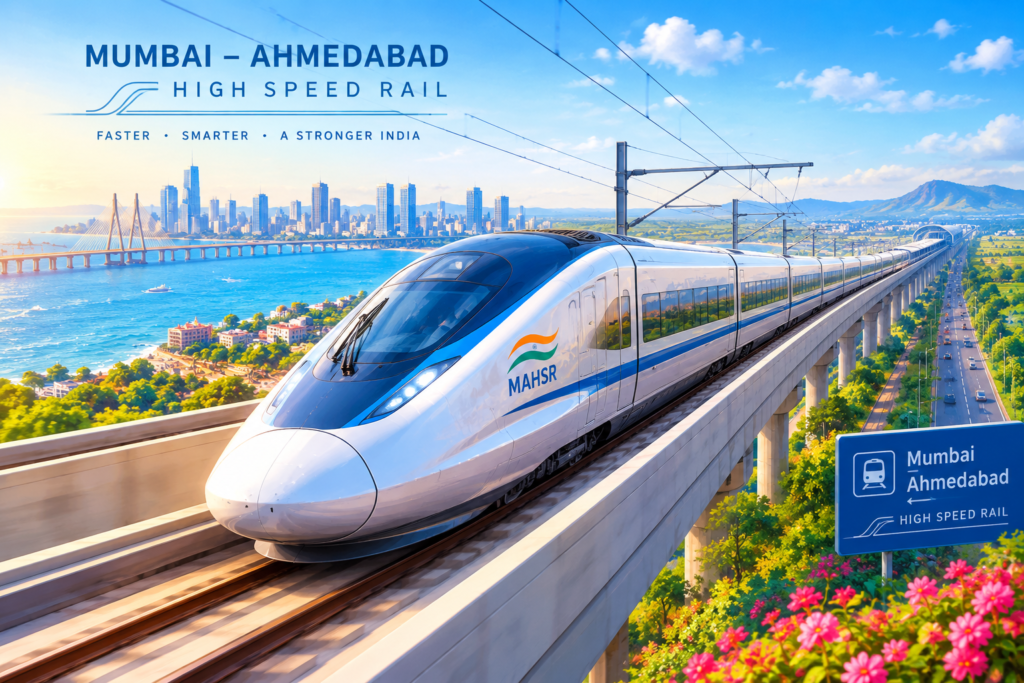
It is India’s attempt to introduce Shinkansen-style high-speed rail technology.
JICA has supported the project through multiple large ODA commitments.
By December 2023, cumulative JICA commitments to the project had reached ¥1.05 trillion, with the fifth tranche alone worth ¥400 billion. JICA also provided technical assistance, training and support involving Japanese Shinkansen expertise.
That is why calling this merely a railway project misses the bigger picture.
It is also a technology-transfer project.
It is an engineering project.
It is a human-capital project.
And it is a demonstration of whether two countries can combine Japanese systems expertise with Indian execution capacity at enormous scale.
The railway stretches for approximately 500 kilometres between Mumbai and Ahmedabad. JICA describes the project as part of broader regional economic development and improved transportation connectivity.
The economic logic is straightforward.
Faster connections can bring cities closer together.
Closer cities can expand labour markets.
Expanded labour markets can support businesses.
Businesses can increase investment.
And investment can create new economic activity.
That chain does not guarantee success, but it explains why infrastructure can have effects far beyond the project itself.
Why the Shinkansen Project Represents More Than a Railway
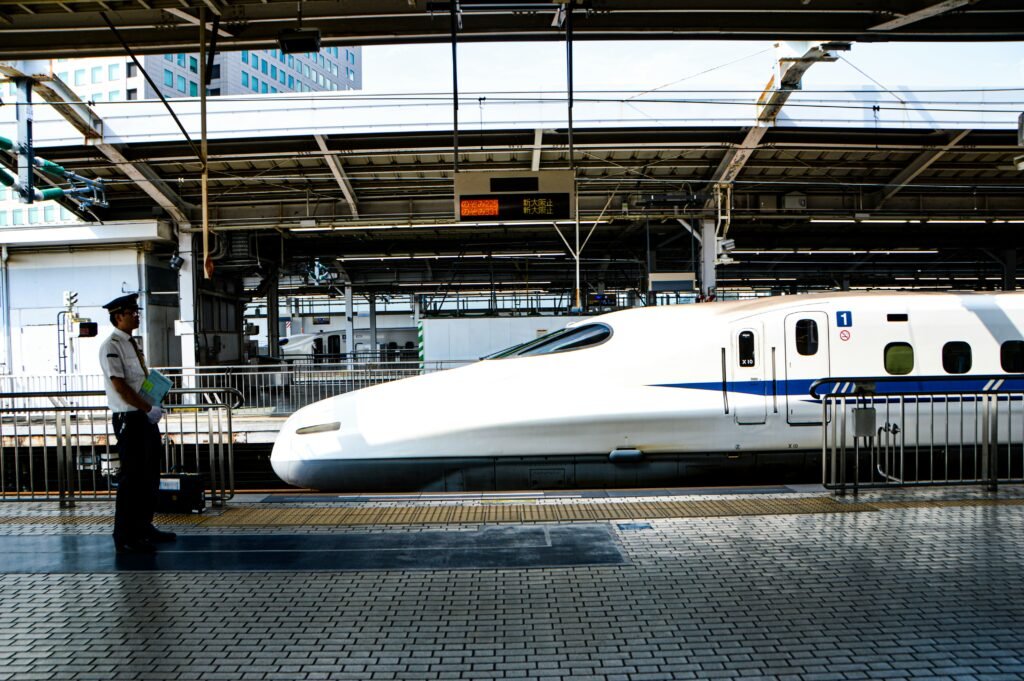
The most important asset being transferred may not be the train.
It may be the knowledge surrounding the train.
High-speed rail requires extremely demanding standards in engineering, signalling, safety, operations and maintenance.
India therefore gains exposure to systems that took Japan decades to refine.
Japanese engineers gain experience working within India’s enormous and complicated infrastructure environment.
Indian personnel receive training.
Companies interact.
Standards evolve.
Relationships deepen.
This is how economic partnerships become institutional rather than transactional.
A loan agreement can end.
A trained engineer remains.
A supplier relationship can continue.
A technical standard can influence future projects.
That is the deeper significance of the high-speed rail connection.
The Fourth Connection: Freight Corridors and India’s Manufacturing Ambition
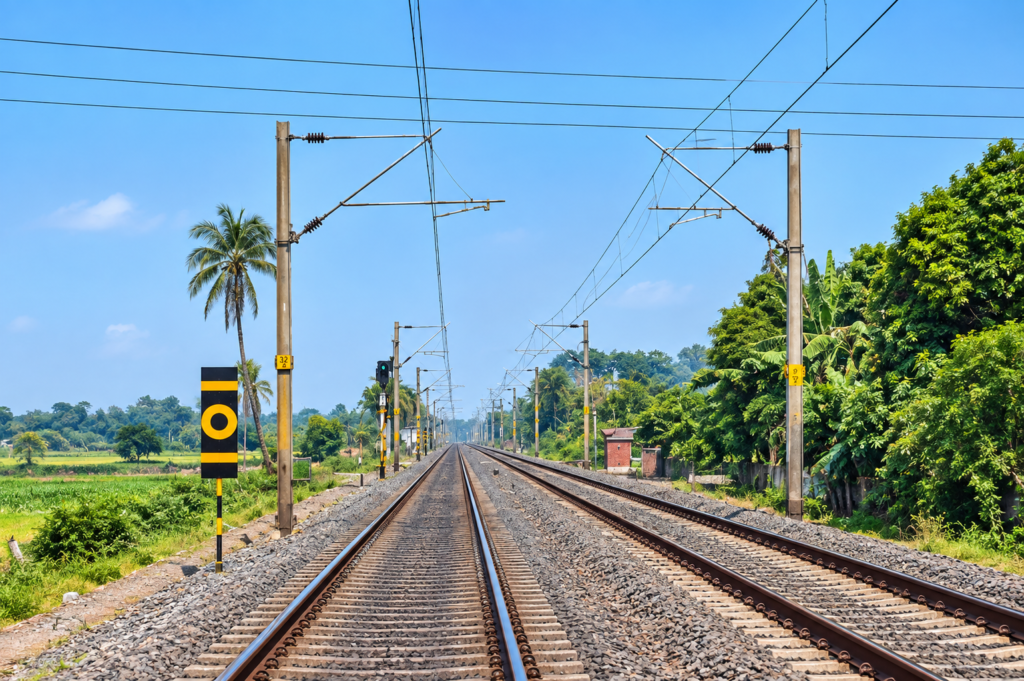
Passenger trains are highly visible.
Freight infrastructure is less glamorous—but arguably just as important for an industrial economy.
India’s Western Dedicated Freight Corridor offers a powerful example.
In 2026, JICA announced the completion of the Western Dedicated Freight Corridor, a 1,506-kilometre network connecting Dadri in Uttar Pradesh with Jawaharlal Nehru Port near Mumbai. JICA says it provided cumulative ODA loans of ¥620.787 billion, equivalent to approximately ₹37,658 crore, to support DFCCIL’s modernisation and connectivity efforts.
Think about what that means.
A factory does not exist in isolation.
Raw materials must arrive.
Components must move.
Finished products must reach ports.
Exports must leave the country.
Every delay adds cost.
Every bottleneck reduces competitiveness.
Freight corridors attack those bottlenecks.
This is particularly important as India seeks to expand manufacturing and become more deeply integrated into global supply chains.
The Japanese relationship therefore increasingly fits into a larger economic strategy.
Japan is not merely helping India build infrastructure.
It is helping create the physical conditions in which manufacturing can become more competitive.
That is a much larger proposition.
The Fifth Connection: Japanese Companies and India’s Investment Story
Infrastructure is only one side of the relationship.
Private investment is the other.
Japanese companies have steadily expanded their presence in India.
According to Japan’s Ministry of Foreign Affairs, around 1,439 Japanese companies had branches in India in 2021. Japan was also India’s fifth-largest investor in FY2021 according to the same source.
The investment figures have also become substantial.
Japanese direct investment into India reached approximately ¥924 billion in 2024, according to Japanese government data.
That represents an important shift.
Japan’s economic relationship with India is no longer primarily about government-to-government development assistance.
It increasingly involves companies, supply chains, factories, technology partnerships and private capital.
That is a sign of economic maturity.
A successful development relationship should eventually create conditions where private businesses want to participate.
Japan’s experience in manufacturing gives this relationship another layer.
Indian policymakers have long sought to increase manufacturing capabilities.
Japanese companies bring knowledge of quality control, production systems, supply-chain management and industrial organisation.
India, meanwhile, offers a huge domestic market and a potentially important production base.
The combination is obvious.
From Toyota-Style Manufacturing to Industrial Ecosystems
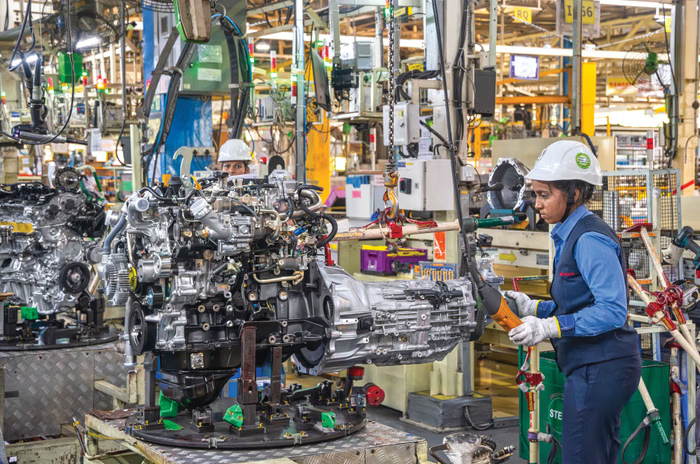
Japanese manufacturing has influenced India in ways that are sometimes difficult to measure.
The famous Japanese emphasis on precision, process discipline and continuous improvement has become relevant to Indian manufacturing beyond individual factories.
The objective is not to copy Japan mechanically.
India has different labour conditions, market structures, consumer patterns and industrial challenges.
But manufacturing ecosystems benefit from reliable processes.
When one company improves quality, its suppliers often have to improve too.
When suppliers improve, logistics providers and component manufacturers may follow.
The result can be an industrial ecosystem rather than a single factory.
That is where foreign direct investment becomes more valuable.
The factory itself is only the beginning.
The Sixth Connection: Japan’s Technology Meets India’s Scale
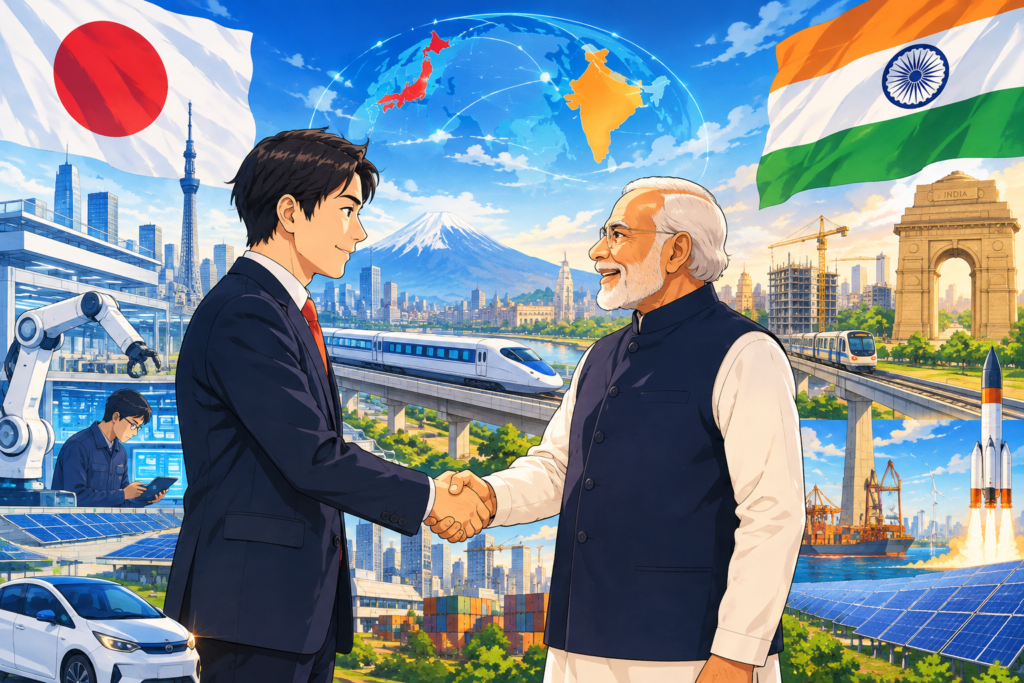
There is a particularly powerful economic combination at work here.
Japan has technological depth.
India has scale.
Japan has ageing demographic pressures and a highly developed industrial base.
India has a large workforce and one of the world’s biggest consumer markets.
Japan needs new growth opportunities.
India needs technology, capital and industrial capacity.
That does not make the relationship automatically successful.
But it creates strong incentives for cooperation.
The partnership is now expanding beyond traditional infrastructure.
Japan and India have been discussing cooperation in areas such as semiconductors, artificial intelligence, clean energy, hydrogen, ammonia, telecommunications and supply-chain resilience. Japanese and Indian institutions have also increasingly framed their relationship through economic security.
This represents a significant evolution.
The relationship is moving from roads and railways toward technology and strategic industries.
And that is where India’s future economic ambitions become particularly relevant.
If India wants to move up global value chains, it will need more than cheap labour.
It will need advanced manufacturing.
It will need technology.
It will need reliable infrastructure.
It will need skilled workers.
It will need international partners.
Japan can contribute to several of those requirements.
The Seventh Connection: Economic Cooperation Becomes Strategic Partnership
The economic relationship has gradually become part of a much wider India-Japan partnership.
The two countries established diplomatic relations in 1952, and their relationship has expanded considerably over subsequent decades. Japan describes India as an important partner sharing fundamental values and strategic interests, with the relationship upgraded to a Special Strategic and Global Partnership in 2014.
Economic cooperation has been central to that transformation.
In 2022, the two governments set a target of ¥5 trillion in public and private investment and financing from Japan to India over five years.
The target was subsequently reported by the Japanese government as having been achieved in three years.
A new target of ¥10 trillion in private investment was then established.
That is an extraordinary evolution from development assistance toward investment partnership.
The relationship now includes infrastructure, manufacturing, technology, energy, economic security and supply-chain resilience.
The financial relationship helped build trust.
The trust encouraged investment.
Investment encouraged deeper industrial cooperation.
Industrial cooperation strengthened strategic ties.
That is how an economic relationship can gradually become a geopolitical partnership without economics disappearing from the centre of the story.
From Infrastructure Finance to Economic Security
The next chapter may be even more consequential.
Global supply chains have become more vulnerable to geopolitical shocks.
Countries increasingly want alternative sources of critical components, technologies and materials.
India wants greater manufacturing capacity.
Japan wants resilient supply chains and reliable economic partners.
The incentives overlap.
Japanese and Indian business organisations have identified areas including semiconductors, artificial intelligence, batteries, pharmaceuticals, solar energy and critical industrial technologies as important areas for economic-security cooperation.
This is where How Japan’s Lost Decades Helped Build Modern India becomes more than a story about the past.
The partnership created infrastructure.
Infrastructure created connectivity.
Connectivity attracted investment.
Investment strengthened industrial capacity.
And industrial capacity is now becoming part of India’s broader economic-security strategy.
The relationship has effectively moved several levels upward.
Why Japan’s Economic Failure Was Not the Whole Story

Zhang Xiaoyu/Xinhua/Getty Images)
There is one important correction that should be made to the popular narrative.
It would be misleading to say that Japan’s “terrific failure” directly allowed India to secure cheap loans.
Japan’s Lost Decades were not a single event.
They were the result of a complex combination of factors following the collapse of the late-1980s asset bubble. Banking weaknesses, falling asset prices, weak investment and structural problems contributed to prolonged stagnation.
Japan did not suddenly become generous because its economy was struggling.
Its development-assistance institutions had existed before the Lost Decades.
Japan also remained a major advanced economy with substantial financial and technological capabilities.
The stronger argument is therefore more subtle.
Japan’s post-bubble experience coincided with a period in which its domestic economy was mature, capital was abundant and its institutions increasingly looked outward.
At the same time, India was becoming more open, more ambitious and increasingly hungry for infrastructure.
The timing mattered.
The economic circumstances created room for a relationship that might otherwise have developed differently.
But the relationship still required political trust, Indian demand, Japanese policy choices and years of institutional cooperation.
That is a much more defensible interpretation.
What India Actually Gained From the Partnership

Money is the easiest benefit to identify.
It is not necessarily the most important.
India gained access to long-term development finance.
It gained technical expertise.
It gained exposure to Japanese engineering standards.
It gained training opportunities.
It attracted Japanese companies.
It developed infrastructure with Japanese participation.
And it strengthened a relationship with one of Asia’s most technologically advanced economies.
The cumulative numbers are impressive.
JICA’s India portfolio exceeded ¥8.339 trillion in ODA loans by December 2024.
But numbers alone cannot capture the relationship’s full impact.
Delhi Metro changed urban mobility.
The freight corridor is changing the movement of goods.
The high-speed rail project is introducing new railway technology.
Japanese investment is contributing to manufacturing ecosystems.
New cooperation in semiconductors, AI and clean energy is pointing toward the next phase.
That is why it would be too narrow to describe Japan merely as a lender.
Japan became something closer to a long-term economic partner.
The Billion-Dollar Relationship Is Now Much Bigger
Look at the relationship today and the original picture becomes almost unrecognisable.
Japan’s economic relationship with India now involves trade, direct investment, ODA, infrastructure, technology, manufacturing, energy and economic security.
Japanese government data show that Japan’s exports to India reached about ¥2.651 trillion in 2024, while India’s exports to Japan were about ¥1.059 trillion. Japanese direct investment into India was approximately ¥924 billion that year.
These are not the numbers of a relationship built around aid alone.
They describe an increasingly complex commercial ecosystem.
And there is another interesting development.
Japan’s infrastructure financing has not simply remained concentrated in India’s biggest cities.
Recent cooperation has extended into areas including India’s Northeast, rural development, environmental management, healthcare and state-level investment promotion. Japanese ODA agreements have included projects connected to regions such as Tamil Nadu and India’s Northeastern states.
That matters because India’s next phase of growth will not be created by Mumbai and Delhi alone.
The country needs broader regional development.
It needs better logistics.
It needs industrial clusters.
It needs cities that can handle rapid population growth.
It needs stronger connections between producers, consumers and ports.
Japan’s patient infrastructure model fits naturally into that challenge.
Conclusion
The story behind How Japan’s Lost Decades Helped Build Modern India is ultimately not a story about one country’s failure producing another country’s success.
It is a story about timing, opportunity and complementary strengths.
Japan suffered an extraordinary economic slowdown after the bursting of its asset bubble. Yet even during those difficult years, Japan retained enormous technological capabilities, financial resources and institutional expertise.
India was travelling in the opposite direction.
Economic liberalisation was creating new opportunities, but infrastructure remained a major obstacle.
That created an opening.
Japan could provide long-term financing, engineering expertise and technology.
India could provide scale, demand, investment opportunities and a rapidly expanding economic environment.
Over time, the relationship became much larger than a collection of loans.
Delhi Metro became a symbol of urban transformation.
The Western Dedicated Freight Corridor became a symbol of industrial connectivity.
The Mumbai–Ahmedabad High-Speed Rail became a symbol of technology transfer.
Japanese companies became part of India’s manufacturing story.
And today’s cooperation in AI, semiconductors, clean energy and supply-chain resilience points toward an even more ambitious future.
So, How Japan’s Lost Decades Helped Build Modern India is best understood as an economic paradox.
Japan’s own growth machine slowed dramatically.
But Japan’s accumulated wealth, technology and development institutions did not disappear.
Instead, some of those capabilities found a new expression in India’s infrastructure and industrial transformation.
The most fascinating part is that the story is still being written.
Japan once represented Asia’s economic future.
India increasingly represents another part of that future.
Their partnership shows what can happen when one country’s technological maturity meets another country’s enormous growth ambitions.
And sometimes, the most important economic relationships are built not during an era of perfect growth—but during periods of profound economic change.
FAQs
1. Did Japan’s Lost Decades directly finance India’s economic growth?
Not directly. Japan’s prolonged stagnation did not automatically create loans for India. The more accurate explanation is that Japan remained a wealthy, technologically advanced economy with substantial development-finance capacity while India was increasingly seeking infrastructure investment. Over time, Japanese ODA, private investment and technology cooperation became important parts of India’s development story. JICA reports more than ¥8.339 trillion in cumulative ODA loans to India as of December 2024.
2. How much Japanese ODA has India received?
According to JICA, cumulative ODA loans to India exceeded ¥8.339 trillion as of December 2024, supporting 336 projects. JICA identifies India as its largest development partner.
3. What is the most important India-Japan infrastructure project?
There is no single project that captures the entire relationship. Delhi Metro, the Western Dedicated Freight Corridor and the Mumbai–Ahmedabad High-Speed Rail project each represent different dimensions of cooperation. Together, they demonstrate Japanese involvement in urban mobility, freight connectivity, technology transfer and long-term infrastructure financing.
4. Why are Japanese loans important for India’s infrastructure?
Japanese ODA can provide long repayment periods and concessional financing for projects whose economic benefits take many years to materialise. For example, the fifth tranche of the Mumbai–Ahmedabad High-Speed Rail project was structured with a 50-year repayment period and a 15-year grace period.
5. Is India-Japan cooperation still growing?
Yes. The relationship has expanded beyond traditional infrastructure into private investment, manufacturing, economic security, AI, semiconductors, clean energy and supply-chain resilience. Japan reported that the ¥5 trillion public-private investment and financing target announced in 2022 was achieved in three years, after which the two countries set a new ¥10 trillion private-investment target.