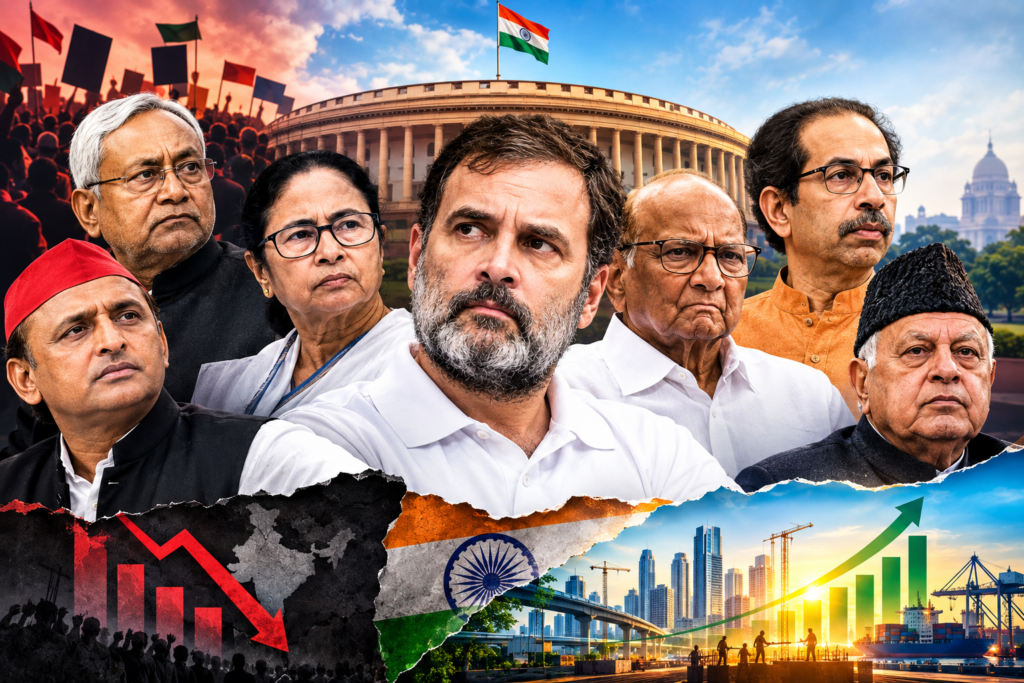
India’s democracy needs a strong opposition.
That is not a weakness. It is a necessity.
A government that faces no serious questions can become less accountable. Opposition parties have an important role in challenging policies, exposing weaknesses, raising public concerns, and demanding answers.
But there is another side to the story.
Opposition politics can also become counterproductive when political battles begin to overshadow issues that directly affect the country’s future.
This is where the debate around the Indian Opposition becomes increasingly important.
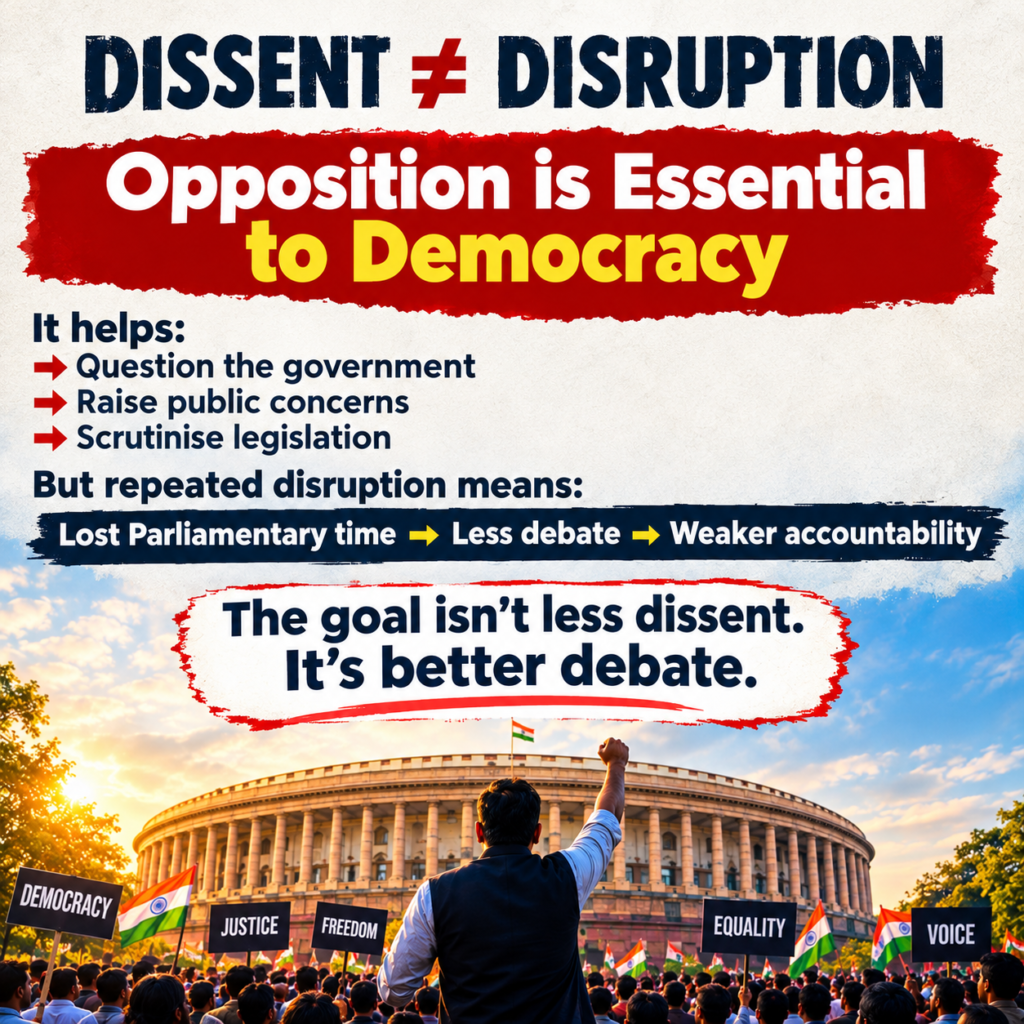
The harder question is how that opposition is exercised.
Does it lead to better legislation?
Does it force greater accountability?
Does it offer credible alternatives?
Or does political confrontation sometimes become an objective in itself?
For a country pursuing ambitious economic and development goals, these questions deserve serious attention.
Table of Contents
Indian Opposition: 7 Red Flags
The phrase Indian Opposition: 7 Red Flags is not an argument against opposition itself.
It is a way of examining certain political patterns that can weaken meaningful democratic debate.
The Indian Opposition represents millions of voters who do not support the government.
That mandate matters.
But an electoral mandate to oppose also comes with a responsibility to scrutinize intelligently and constructively.
Here are seven warning signs worth watching.
1. When Disruption Replaces Debate
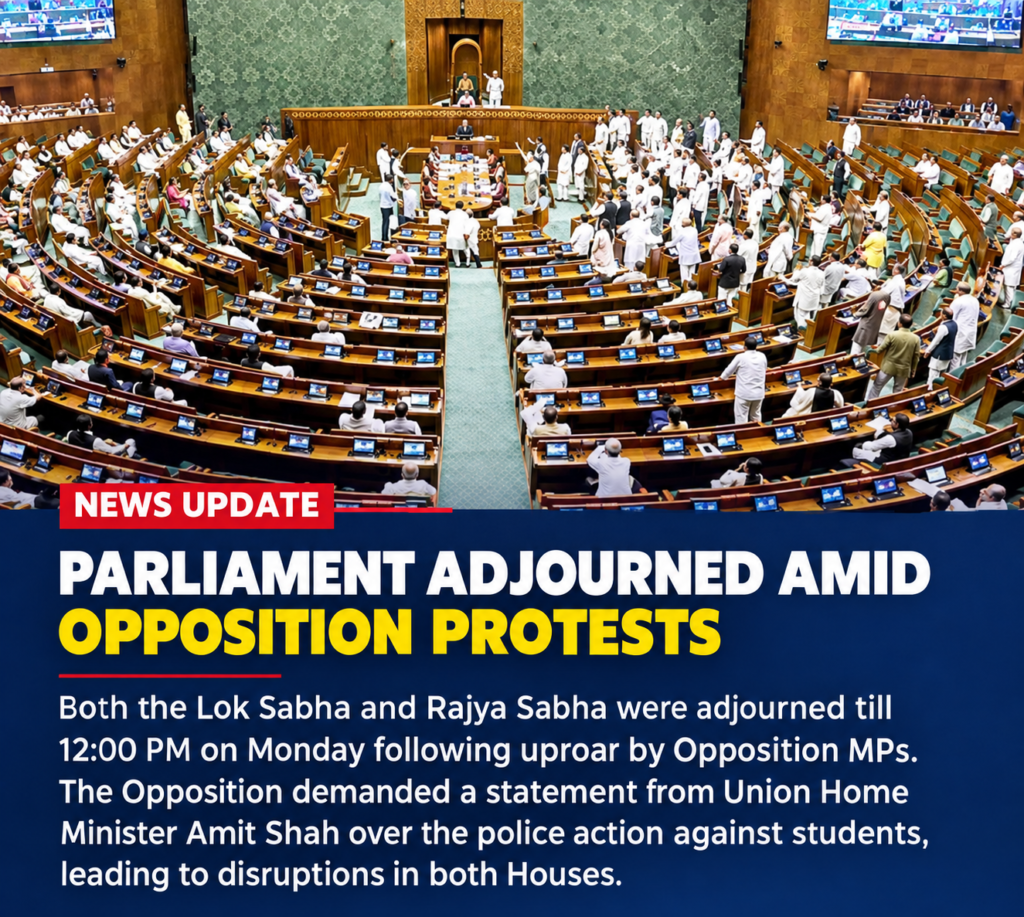
Parliament is supposed to be a place where disagreements are debated.
It is not supposed to be free of political confrontation.
Protests, walkouts and strong criticism can all be legitimate parliamentary tactics.
The problem begins when disruption becomes so frequent that meaningful debate suffers.
During India’s 2026 Monsoon Session, Lok Sabha functioned for only 15% of its scheduled time, while Rajya Sabha functioned for 33%, according to PRS Legislative Research.
That figure deserves attention.
When parliamentary proceedings are repeatedly disrupted, MPs lose opportunities to question ministers, debate legislation and examine government decisions.
The Indian Opposition can—and should—ask difficult questions.
But the most powerful questions are not necessarily the loudest ones.
They are the ones that force detailed answers.
2. When Every Government Policy Becomes a Political War
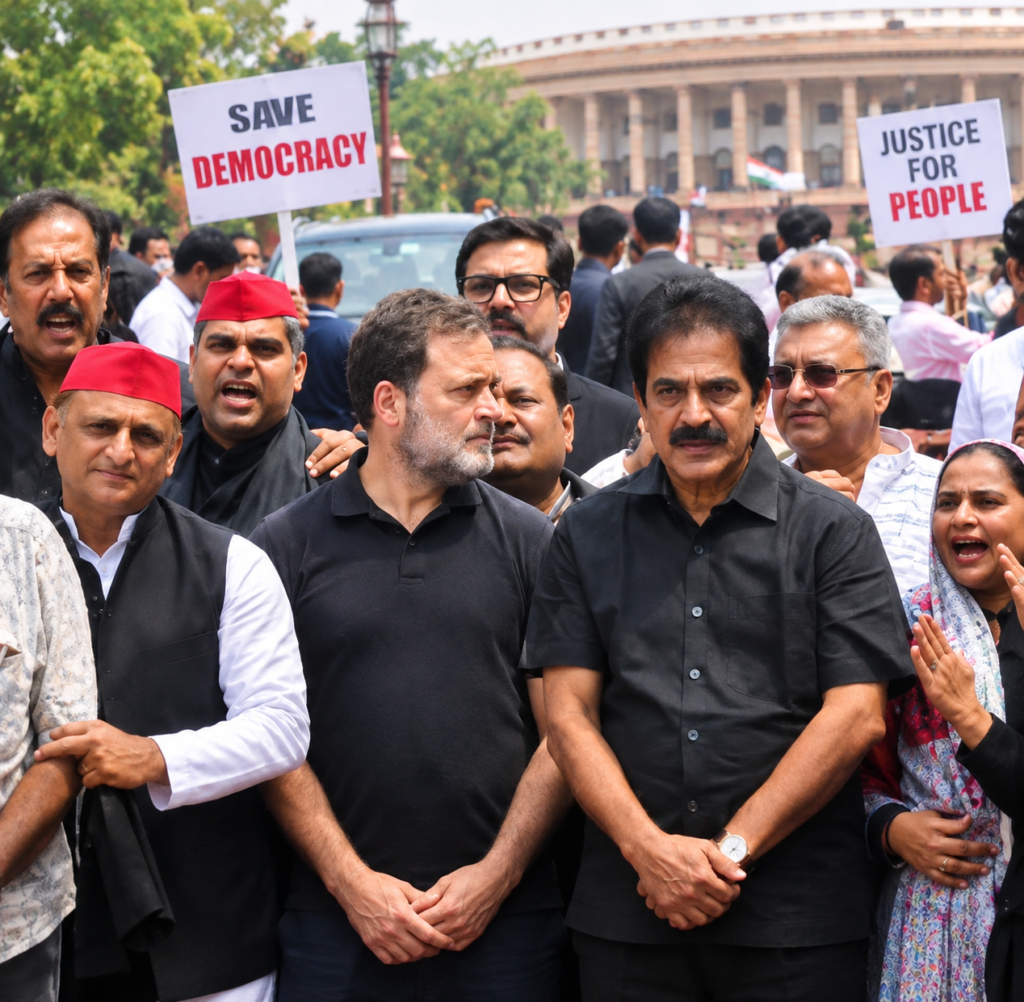
That distinction is critical.
India’s economy requires long-term thinking.
Infrastructure projects take years.
Industrial investment requires confidence.
Employment policies require sustained implementation.
Technology and manufacturing strategies cannot be redesigned every time political temperatures rise.
A responsible Indian Opposition should therefore distinguish between policies that need to be rejected and policies that need to be improved.
That requires evidence.
It requires expertise.
And most importantly, it requires alternatives.
Simply saying “no” is easy.
Explaining what should replace it is much harder.
3. When Political Headlines Become More Important Than Policy
Modern politics rewards attention.
A provocative statement can become a headline within minutes.
A detailed policy proposal may struggle to attract attention at all.
That creates a dangerous incentive.
Political actors can become more interested in winning the day’s news cycle than winning the policy argument.
This affects both government and opposition.
For the Indian Opposition, the challenge is particularly important.
If a party wants voters to believe it can govern the country, criticism alone is not enough.
It must demonstrate what it would actually do.
How would it create jobs?
How would it attract investment?
How would it strengthen manufacturing?
How would it improve education?
How would it manage public finances?
These questions matter far more to ordinary citizens than another political shouting match.
4. When Parliamentary Time Is Treated as Political Currency
Every minute of Parliament has a public value.
MPs are not simply politicians speaking to television cameras.
They are representatives of citizens.
Parliament provides opportunities to question ministers, debate legislation, examine expenditure and raise constituency concerns.
When proceedings are repeatedly interrupted, those opportunities can disappear.
This creates an uncomfortable contradiction for the Indian Opposition.
A party may demand greater government accountability while participating in actions that reduce the time available for parliamentary accountability.
That does not mean disruption is always unjustified.
There can be moments when opposition parties believe that extraordinary protest is necessary.
But extraordinary tactics should not become ordinary practice.
The credibility of opposition ultimately depends on whether it can use institutions effectively.
5. When Economic Issues Disappear Behind Political Noise

India’s growth story is too important to become secondary to political theatre.
The country needs serious discussions about jobs, investment, infrastructure, exports, manufacturing, productivity, technology and human capital.
The Indian Opposition has every right to challenge the government’s economic record.
In fact, it should.
But economic criticism becomes much more valuable when it comes with an alternative economic vision.
What would opposition parties do differently?
Which policies would they retain?
Which would they change?
What would those changes cost?
What would their expected benefits be?
These questions turn political criticism into serious policymaking.
Without answers, opposition politics risks becoming reactive rather than constructive.
6. When Opposition Politics Becomes Permanently Reactive
There is a major difference between opposing a government and simply reacting to it.
A reactive opposition waits for the government’s next announcement.
A proactive opposition sets its own agenda.
It publishes detailed proposals.
It explains its economic priorities.
It challenges government assumptions with evidence.
It tells voters what it would do differently.
That distinction matters.
The Indian Opposition should not have to wait for the government to define every political debate.
It can define debates itself.
If unemployment is a concern, present an employment strategy.
If inflation is a concern, explain the proposed solution.
If industrial policy is being criticized, present a credible alternative.
If public spending is questioned, identify where spending should increase or decrease.
That is how political competition becomes useful to voters.
7. When Political Victory Becomes More Important Than Institutional Credibility
Every political party wants electoral success.
There is nothing unusual about that.
But political victories are temporary.
Institutions are supposed to last.
Parliament is larger than any one government.
It is also larger than any one opposition party.
The standards applied to democratic institutions should therefore remain consistent.
If a tactic is criticized when used by one political side, it should not automatically become acceptable when the political roles are reversed.
This is one of the most important tests facing the Indian Opposition.
The goal should not simply be to defeat the government on every issue.
The goal should be to ensure that institutions work better.
That requires discipline as well as confrontation.
The Indian Opposition Has a Necessary Job
None of this means India needs a quieter opposition.
India needs an effective opposition.
Those are very different things.
A strong Indian Opposition can expose government failures before they become larger problems.
It can challenge questionable legislation.
It can force ministers to explain decisions.
It can represent citizens who feel ignored.
It can bring alternative ideas into national debate.
But effectiveness should not be confused with constant confrontation.
The ability to create political noise is not the same as the ability to create political accountability.
That distinction deserves much more attention.
The Government Also Has Responsibilities
There is another side that cannot be ignored.
Criticism of the Indian Opposition should never become an excuse for the government to avoid scrutiny.
The government has its own responsibilities.
It must answer legitimate questions.
It must explain major decisions.
It must provide space for parliamentary examination.
It must engage with criticism rather than dismissing every challenge as political obstruction.
Democracy cannot function properly when either side stops listening.
The government needs opposition.
The opposition needs functioning institutions.
And citizens need both sides to take their responsibilities seriously.
India’s Growth Agenda Is Bigger Than Political Battles
India is trying to build an economy capable of competing on a much larger global stage.
That requires patience.
It requires investment.
It requires infrastructure.
It requires skilled workers.
It requires innovation.
And it requires policies that survive beyond individual political cycles.
Political disagreement will inevitably continue.
It should.
A democracy without disagreement is not a healthy democracy.
But disagreement becomes damaging when it prevents institutions from performing their basic functions.
That is the central concern behind Indian Opposition: 7 Red Flags.
The answer is not to weaken opposition.
The answer is to make opposition more effective.
More evidence-driven.
More policy-focused.
More willing to present alternatives.
And more conscious of the institutional responsibilities that come with representing millions of citizens.
The Real Test for the Indian Opposition
Ultimately, the Indian Opposition should be judged by more than how aggressively it challenges the government.
It should also be examined by the quality of the alternatives it presents.
Can it explain them clearly?
Can it propose workable solutions?
Can it hold the government accountable without making parliamentary institutions dysfunctional?
Can it disagree without losing sight of the country’s larger priorities?
These are difficult questions.
But they are necessary ones.
India’s political battles are unlikely to disappear.
Nor should they.
The country needs competing political visions.
It needs scrutiny.
It needs debate.
It needs dissent.
But India also needs a political system capable of keeping its eyes on the future.
The Indian Opposition has an important role in that system.
Its greatest contribution may not come from making the most noise.
It may come from asking the hardest questions, presenting the strongest alternatives, and ensuring that political competition ultimately produces better governance.
That is the difference between opposition for political survival and opposition that genuinely strengthens democracy.
And for a rapidly changing India, that difference matters.